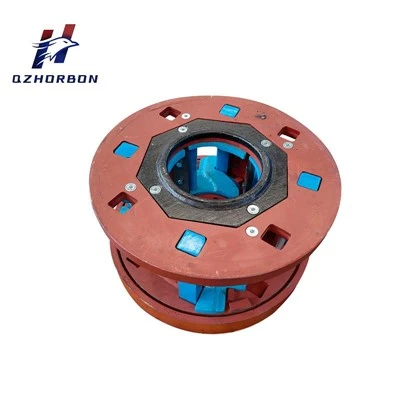
In the world of crushing equipment, the rotor is a critical component that significantly impacts the performance, efficiency, and durability of a crusher. As a seasoned supplier of crusher rotors, I’ve witnessed firsthand the ongoing debate between cast and forged crusher rotors. Each type has its own set of characteristics, advantages, and limitations, and understanding these differences is crucial for making informed decisions in the industry. In this blog post, I’ll delve into a detailed comparison of cast and forged crusher rotors, exploring their manufacturing processes, material properties, performance aspects, and suitability for different applications. Crusher Rotor
Manufacturing Processes
Cast Crusher Rotors
The casting process is a well – established and widely used method for manufacturing crusher rotors. It involves melting the appropriate metal alloy in a furnace until it reaches a molten state. Once molten, the metal is poured into a pre – designed mold, which has the shape of the rotor. The mold can be made from various materials such as sand, ceramic, or metal, depending on the specific requirements of the casting.
As the molten metal cools and solidifies in the mold, it takes on the shape of the rotor. However, during the cooling process, there can be some challenges. For example, shrinkage can occur as the metal changes from a liquid to a solid state. This may lead to internal voids or porosity in the casting if not properly managed. Additionally, the metal may develop a grain structure that is less uniform compared to a forged rotor.
Forged Crusher Rotors
Forging, on the other hand, is a manufacturing process that involves applying compressive force to a metal billet or ingot to shape it into the desired form of the rotor. This is typically done using a hammer or a press. The metal used for forging is heated to a specific temperature, at which it becomes malleable but still retains its structural integrity.
As the metal is subjected to forging, the grains in the metal are deformed and realigned in a particular direction. This results in a more refined and uniform grain structure compared to a cast rotor. The forging process also helps to eliminate internal voids and porosity that could be present in the original metal billet, enhancing the overall density and strength of the rotor.
Material Properties
Casting Materials and Their Characteristics
Cast crusher rotors are often made from materials such as high – manganese steel, alloy steel, or ductile iron. High – manganese steel is a popular choice due to its excellent wear resistance. When subjected to impact and abrasion during the crushing process, the surface of high – manganese steel work – hardens, forming a tough outer layer that can withstand the harsh conditions.
Alloy steel castings can be tailored to have specific mechanical properties by adjusting the alloying elements. For example, adding chromium can improve the corrosion resistance of the rotor, while nickel can enhance its toughness. Ductile iron castings offer a good balance between strength, ductility, and cost. They are relatively easy to cast and can be used in applications where the demands on the rotor are not extremely high.
However, cast materials generally have lower strength compared to forged materials of the same composition. The presence of internal voids and a less uniform grain structure can contribute to this reduced strength. Additionally, the fatigue resistance of cast rotors is often inferior, which means they may be more prone to cracking under cyclic loading.
Forging Materials and Their Benefits
Forged crusher rotors are typically made from high – quality steel alloys. These alloys can be carefully selected to meet the specific requirements of the application. For example, in high – impact crushing applications, a steel alloy with high strength and toughness may be chosen.
The forging process enhances the material properties of the steel. The refined and uniform grain structure gives forged rotors higher strength, better ductility, and superior fatigue resistance compared to cast rotors. The absence of internal voids also means that the material can better withstand the stresses and strains generated during the crushing process. This results in a rotor that is less likely to fail prematurely and has a longer service life.
Performance Aspects
Wear Resistance
In terms of wear resistance, both cast and forged rotors have their own advantages depending on the application. Cast high – manganese steel rotors are well – known for their ability to work – harden under impact. This makes them suitable for applications where the crushing involves large, hard rocks. As the rotor comes into contact with the rocks, the surface hardens, providing a protective layer against abrasion.
Forged rotors, especially those made from high – quality alloy steels, also offer good wear resistance. The uniform grain structure and high density of forged materials ensure that the wear is more evenly distributed across the surface of the rotor. In some cases, where the wear is more due to sliding abrasion rather than impact, forged rotors may perform better.
Impact Resistance
When it comes to impact resistance, forged rotors have a clear advantage. The refined grain structure and absence of internal voids allow forged rotors to better absorb and distribute the energy from impacts. This is crucial in high – impact crushing applications, such as crushing large granite boulders. A forged rotor is less likely to crack or break under sudden and severe impacts compared to a cast rotor.
Cast rotors, although they can work – harden under impact, may be more prone to fracture due to their lower overall strength and the presence of potential internal defects. In applications where the crushing involves high – energy impacts, the risk of premature failure of a cast rotor is relatively higher.
Efficiency
The efficiency of a crusher rotor is closely related to its performance. A well – designed and properly manufactured rotor can improve the crushing efficiency of the entire machine. Forged rotors, with their superior material properties, can often operate at higher speeds and under more demanding conditions without sacrificing performance. This can lead to a higher throughput of the crusher, reducing the overall processing time and increasing productivity.
Cast rotors, while they can still provide satisfactory performance in many applications, may have limitations in terms of speed and load – carrying capacity. The lower strength and fatigue resistance of cast rotors may require the crusher to operate at a lower speed or with a reduced load to avoid premature failure, which can affect the overall efficiency of the crushing process.
Suitability for Different Applications
Small – scale and Low – impact Applications
For small – scale crushing operations or applications where the impact and wear requirements are not extremely high, cast crusher rotors can be a cost – effective choice. For example, in some recycling plants where the crushed materials are relatively soft, such as concrete blocks or asphalt, a cast rotor made from ductile iron or high – manganese steel can provide sufficient performance at a lower cost. The lower initial investment in a cast rotor can be an attractive option for small – to – medium – sized businesses.
Large – scale and High – impact Applications
In large – scale mining and quarrying operations, where the crushing involves large – sized, hard rocks and high – energy impacts, forged crusher rotors are the preferred choice. The high strength, excellent impact resistance, and long service life of forged rotors make them well – suited for these demanding applications. Although the initial cost of a forged rotor is higher, the reduced downtime due to fewer maintenance and replacement requirements can result in significant cost savings in the long run.
Conclusion
In summary, the choice between a cast and a forged crusher rotor depends on a variety of factors, including the specific application requirements, budget constraints, and the expected service life. Cast rotors offer a cost – effective solution for less demanding applications, with the advantage of good wear resistance in certain situations. However, they have limitations in terms of strength, impact resistance, and fatigue resistance.
Forged crusher rotors, on the other hand, provide superior performance in high – impact and high – load applications. Their refined grain structure, high strength, and excellent fatigue resistance make them a reliable choice for large – scale crushing operations. As a supplier of crusher rotors, I understand the importance of helping customers make the right choice. Whether you need a cast rotor for a small – scale project or a forged rotor for a large – scale operation, I can provide you with high – quality products and professional advice.
If you are in the market for a crusher rotor and want to discuss your specific needs, please feel free to reach out to me. I’m here to assist you in selecting the most suitable rotor for your application and ensuring that you get the best value for your investment.
References
Crusher Frame -ASM Handbook Volume 15: Castings. ASM International.
-Boyer, H.E., Gall, T.L. (Eds.). Metals Handbook Desk Edition, 2nd Edition. ASM International.
-Lange, K. (Ed.). Handbook of Metal Forming. McGraw – Hill.
Quzhou Horbon Mining Parts Co., Ltd.
Quzhou Horbon Mining Parts Co., Ltd. is one of the most professional crusher rotor manufacturers and suppliers in China, featured by high quality customized service and OEM service. Please rest assured to buy premium crusher rotor at competitive price from our factory. Contact us for pricelist.
Address: No.8 Nanshan Road, Qujiang District, Quzhou City, Zhejiang Province, China
E-mail: horbonmining@gmail.com
WebSite: https://www.horbonmachinery.com/
