Hey there! As a supplier of Miniature Circuit Breakers (MCBs), I’ve seen firsthand how voltage fluctuations can mess with these little guys. So, I thought I’d share some insights on what exactly happens to an MCB when the voltage starts doing its rollercoaster act. Miniature Circuit Breaker
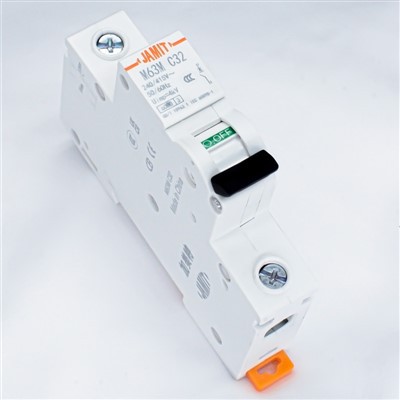
Let’s first understand what an MCB is. It’s a crucial safety device in an electrical system. You can find it in homes, offices, and industrial setups. It’s like a vigilant guard that keeps an eye on the flow of electricity. When there’s a problem, like an overload or a short – circuit, it trips and cuts off the power to prevent damage and potential hazards.
Now, voltage fluctuations can be a real pain for MCBs. You see, these fluctuations can occur due to various reasons. For example, during peak electricity usage times, the demand on the power grid can cause the voltage to drop. On the other hand, lightning strikes or sudden equipment failures can lead to voltage spikes. These erratic changes in voltage can have a bunch of effects on MCBs.
Effects on the Thermal Trip Mechanism
Most MCBs have a thermal trip mechanism. This mechanism is based on the principle that when the current flowing through the breaker is too high for a prolonged period, the internal bimetallic strip heats up. As the strip heats up, it bends and eventually causes the breaker to trip.
When there are voltage fluctuations, especially voltage drops, the current in the circuit can increase. This is because, according to Ohm’s law (V = IR, where V is voltage, I is current, and R is resistance), if the voltage decreases and the resistance remains relatively constant, the current has to go up to maintain the relationship. So, an increased current means more heat generated in the bimetallic strip.
If the voltage drops are frequent or long – lasting, the bimetallic strip can get overheated. Over time, this can cause the strip to lose its elasticity. Once the strip loses its proper shape and flexibility, the MCB may start to trip prematurely. This can be a real headache for users because it can disrupt normal electrical operations. For instance, in a household, you might have your TV, refrigerator, and other appliances suddenly shutting off because the MCB has been tricked into thinking there’s an overload.
Impact on the Magnetic Trip Mechanism
MCBs also have a magnetic trip mechanism. This mechanism is designed to respond quickly to short – circuits. When there’s a short – circuit, a huge surge of current flows through the breaker. The magnetic field generated by this high – current flow attracts an armature, which then causes the breaker to trip almost instantaneously.
Voltage spikes can be very hard on the magnetic trip mechanism. A large voltage spike can lead to a rapid increase in current. This sudden and large increase in current can generate an extremely strong magnetic field. In some cases, this can cause the magnetic trip mechanism to activate even when there isn’t a short – circuit. This is called a false trip.
False trips are a big issue. In an industrial setting, a false trip can shut down production lines, leading to significant losses in time and money. For example, in a manufacturing plant, if an MCB protecting the machining equipment trips due to a false alarm caused by a voltage spike, the entire production process can come to a halt. Workers have to spend time investigating the issue, resetting the breaker, and getting the machines up and running again.
Insulation Degradation
Another major effect of voltage fluctuations on MCBs is insulation degradation. The internal components of an MCB are insulated to prevent electrical leakage and short – circuits. However, voltage spikes can put a lot of stress on this insulation.
High – voltage spikes can cause electrical arcing within the MCB. Arcing is basically a flow of electricity through the air or other insulating materials. This can damage the insulation over time. Once the insulation is degraded, there’s a higher risk of short – circuits and electrical fires.
For example, if the insulation around the terminals of an MCB breaks down due to repeated voltage spikes, there could be a short – circuit between the live and neutral wires. This not only damages the MCB but can also pose a serious safety risk to people and property.
Contact Wear
The contacts inside an MCB are responsible for making and breaking the electrical circuit. When the breaker trips, the contacts separate, and when it’s reset, they come back together. Voltage fluctuations can accelerate the wear and tear of these contacts.
During voltage spikes, the high – current surges can cause the contacts to weld together. This is because the intense heat generated by the high current can melt the contact material. Once the contacts are welded, the MCB loses its ability to function properly. It won’t be able to trip when there’s a real problem in the circuit, which is extremely dangerous.
On the other hand, voltage drops can cause poor contact between the terminals. When the voltage is low, the current may not flow smoothly through the contacts. This can lead to arcing and pitting of the contact surfaces. As the contacts wear out, the resistance at the contact points increases. This, in turn, generates more heat, further accelerating the degradation of the contacts.
How to Mitigate the Effects
As a supplier of MCBs, I know that dealing with voltage fluctuations is a real challenge. But there are some ways to reduce the impact on MCBs.
One option is to use voltage stabilizers. These devices can regulate the incoming voltage and keep it within a safe range. By maintaining a stable voltage, the stress on the MCBs is significantly reduced. This helps to prevent premature tripping, insulation degradation, and contact wear.
Another approach is to choose high – quality MCBs. At our place, we make sure that our MCBs are built to withstand a certain degree of voltage fluctuations. We use high – grade materials for the internal components, especially the bimetallic strips and contacts. Our MCBs are also rigorously tested to ensure they can handle the rigors of real – world electrical systems.
Regular maintenance of the electrical system is also crucial. This includes checking the MCBs for signs of wear, such as overheating, burning smells, or discoloration. If any issues are detected, the MCBs should be replaced promptly.
Conclusion
So, as you can see, voltage fluctuations can have a whole bunch of negative effects on Miniature Circuit Breakers. From premature tripping to insulation degradation and contact wear, these issues can disrupt electrical systems and pose safety risks.

But don’t worry! As a reliable supplier of MCBs, we’re here to help. Our MCBs are designed to be tough and reliable, even in the face of voltage fluctuations. If you’re in the market for high – quality MCBs or want to learn more about how to protect your electrical system from voltage issues, we’d love to talk to you.
Residual Current Circuit Breaker Get in touch with us to start a conversation about your specific needs. Whether you’re a homeowner looking to upgrade your electrical panel or an industrial facility in need of bulk MCBs, we’ve got the solutions for you. Let’s work together to ensure a safe and stable electrical environment.
References
- Electrical Installation Guide. International Electrotechnical Commission (IEC).
- Handbook of Electrical Engineering. McGraw – Hill Professional.
Tianjin JMT Electric Co., Ltd.
Tianjin JMT Electric Co., Ltd. is one of the most reliable miniature circuit breaker manufacturers and suppliers in China, also supports customized service. Please feel free to buy advanced miniature circuit breaker made in China here from our factory.
Address: East Side of Road No. 6, Jinghai Economic Development Zone, Tianjin
E-mail: wangbing@tj-jamit.com
WebSite: https://www.jamit-electric.com/
