If you’ve ever worked with high-speed spindle bearings—whether you’re a machine shop owner, maintenance technician, or process engineer—you know that the difference between a spindle running flawlessly for years and one failing prematurely often comes down to one thing: how the bearings were installed. As someone who’s spent over a decade as a high-speed spindle bearings supplier, I’ve seen firsthand how even a tiny misstep during installation can turn a precision component into a costly headache. I’ve watched customers discard perfectly good bearings because they were installed incorrectly, and I’ve helped others troubleshoot spindles that failed mid-shift due to avoidable installation mistakes. Today, I want to pull back the curtain on what we teach every partner and customer who buys our bearings: how to install them without damage, so you get the maximum performance, lifespan, and reliability your spindle is designed to deliver. High Speed Spindle Bearings
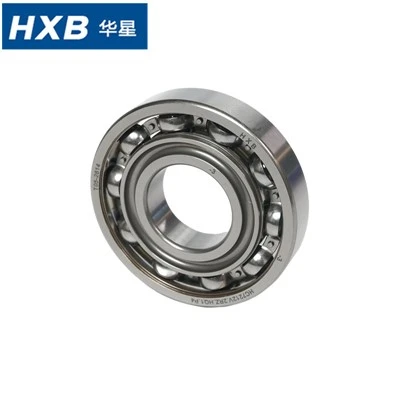
First, let’s get one thing straight: high-speed spindle bearings are not your average bearing. These are precision-engineered components—typically angular contact ball bearings, cylindrical roller bearings, or hybrid ceramic versions—built to spin at 10,000 RPM and higher, with tolerances measured in micrometers. A standard bearing installation toolkit won’t cut it here, and skipping even one preparatory step can cause micro-damage that only shows up after hundreds of hours of operation. The biggest mistake I see is people treating high-speed bearings like any other off-the-shelf part, grabbing a socket and a hammer to tap them into place. By the time you hear that satisfying “click” that means it’s seated, you’ve already dented the race or chipped a ball, and that’s the start of the end for your spindle.
Before you even touch a bearing, there are three non-negotiable pre-installation steps that set the stage for success. Let’s start with inspection. When our bearings leave our facility, we package them in anti-corrosion, moisture-resistant wrap to protect their precision surfaces. But every time you open a package, you’re exposing them to contaminants—dust, oil residue from your hands, moisture in the air. So first, inspect the bearing for any signs of damage before you even remove the packaging. Look for discoloration on the races (that’s a sign of corrosion from moisture), nicks on the ball or roller surfaces, or uneven wear patterns. If you see any of these, send it back immediately—don’t try to “make it work.” Even a tiny imperfection will cause vibration at high speeds, which leads to premature failure.
Next, you need to prepare the spindle bore and shaft. This is the part most people skip, and it’s a huge mistake. The spindle’s shaft and bore where the bearings mount have their own tight tolerances—often within 2 micrometers of the bearing’s dimensions. If there’s any burr, dust, or leftover cutting fluid residue on these surfaces, that’s enough to scratch the bearing’s race when you mount it. How do you prepare these surfaces properly? Use a lint-free cloth soaked in isopropyl alcohol, and wipe the bore and shaft in one direction only (never back and forth) to avoid leaving lint or fine particles. Then, use a micrometer to check the shaft diameter at the bearing mounting point, and the bore diameter where the outer race sits. If there’s a variation of more than 0.002 millimeters between different points on the shaft, that’s a sign of runout, and you need to address that before installing the bearing. Our technical support team always tells customers: a good bearing installation starts with a clean, accurate mating surface.
The third pre-installation step is choosing the right tooling. This isn’t the time for a ball peen hammer and a random socket. You need two types of custom tooling: one for installing the inner race (that fits only the inner ring’s edge, not the balls) and one for the outer race (fits only the outer ring’s edge). These are called arbor press tools, and they’re designed to distribute pressure evenly around the entire circumference of the race. If you press only one side of the race, you’ll cause it to tilt, which creates uneven load on the balls and leads to early wear. I can’t stress this enough: using the wrong tooling is the single most common cause of bearing damage during installation. I’ve seen a customer use a pipe to tap a bearing into place, and they ended up cracking the outer ring—costing them $5,000 in spindle downtime and a new bearing set, all because they grabbed a random piece of metal from the shop floor.
Now, let’s get to the actual installation process. There are two primary methods for mounting high-speed spindle bearings: press fit and thermal expansion. Both work, but you need to know when to use which, and how to do each correctly.
First, the press fit method. This is often used for smaller bearings, or when you need precise control over the mounting pressure. The key here is that you should apply pressure only to the race that’s being pressed onto the shaft or into the bore. For example, if you’re mounting an inner race onto the spindle shaft, you apply pressure to the inner race only—never to the outer race or the bearing balls. If you press on the outer race while mounting the inner, you’ll deform the inner race, throwing off the contact angle that’s critical for high-speed performance. The same goes for the outer race: apply pressure only to the outer race when seating it into the housing bore.
How do you calculate the right press fit pressure? That’s something that depends on the bearing size, material, and application. As a supplier, we provide a pressure chart for every bearing model we sell, but a general rule of thumb is that the pressure should be spread evenly across the entire face of the race. You should never exceed the maximum recommended pressure for your bearing—too much pressure will crush the cage that holds the balls, or distort the race. For this step, an arbor press is non-negotiable. Never use a hydraulic jack or a hammer and blocks—they don’t provide the consistent, controlled pressure you need. I always recommend using a press with a pressure gauge, so you can stop if the pressure spikes higher than the recommended limit. A sudden spike is a clear sign that something is wrong—either the mating surface is uneven, or the tool is misaligned.
The second method is thermal mounting, which is ideal for larger high-speed spindle bearings, or when you want to minimize the risk of mechanical damage from pressing. This works on a simple principle: metal expands when heated, so if you heat the inner race (or cool the outer race, depending on the mounting direction), you can slip it onto the shaft with zero pressure required. The key here is to heat the bearing evenly and to the correct temperature—never overheat it. Most high-speed spindle bearings are made of chrome steel, which starts to lose its hardness if heated above 120 degrees Celsius. If you heat it too much, the bearing will be permanently damaged, and the hardness that makes it durable will be gone.
How do you heat the bearing properly? The safest method is an oil bath. Submerging the entire bearing (except the packaging, obviously) in a bath of clean, heated oil lets it warm evenly, no hot spots. Avoid using a torch or a heat gun—they can cause localized overheating, which will warp the race. Once the bearing is heated to 80-100 degrees Celsius, take it out, wipe off the excess oil, and slip it onto the shaft immediately. The expansion will make it fit easily, and as it cools, it will create a tight, uniform fit. For the outer race, you can cool it in a freezer (around -20 degrees Celsius) and slip it into the bore—again, no pressure needed. I always tell customers to practice this once on a spare bearing before doing the real installation—thermal mounting is quick, but it takes a little practice to get the timing right.
Once the bearing is mounted, there’s still one critical step you can’t skip: preload. High-speed spindle bearings need a controlled amount of preload—meaning a slight compression of the bearing’s internal components—to eliminate play, reduce vibration, and increase rigidity. Too much preload, though, will cause excessive heat and wear, and too little will let the bearing move under load, leading to chatter and premature failure.
How do you set the correct preload? The method depends on your bearing type, but most modern high-speed spindles use either adjustable shim preload or nut preload. When setting preload, spin the bearing by hand after applying it—if it feels rough, or if there’s any drag that doesn’t smooth out as you spin, you’ve set too much preload. If it spins freely with noticeable play, you have too little. A good test is to spin the bearing and watch it for 10 seconds; it should spin smoothly, with no wobble, and stop gradually, not abruptly. As your supplier, we provide preload specifications for every bearing we sell, tailored to the spindle model and application. Following those specs is non-negotiable—every spindle is engineered to work with a specific preload, so deviating from that will cause problems.
After preload, there’s the matter of lubrication. High-speed spindle bearings can’t run on standard grease or oil—they need specialized lubrication that’s designed for high RPM and minimal heat. Common methods are grease lubrication, oil mist, or oil-air lubrication. Whatever method you use, over-lubricating is a huge mistake. Too much lubricant creates churning friction, which generates heat that can break down the bearing’s components. We always recommend using the lubricant type and quantity we specify for your bearing—for grease, that’s typically a small amount (enough to cover 1/3 of the bearing’s internal space) to avoid excess churning. If you use oil-air or oil mist, follow the flow rate guidelines closely; too much oil will cause the same overheating problem as too much grease.
Now, let’s talk about common mistakes I see all the time, and how to avoid them. First, not letting the bearing come to room temperature before installation if you used thermal mounting. If you take a heated bearing and try to mount it on a cold shaft, the sudden temperature change can cause thermal stress, leading to cracks in the race. Second, forgetting to clean the housing bore and shaft thoroughly—even a single dust particle the size of a grain of sand can create a dent in the bearing race, leading to vibration. Third, using tools that only touch a portion of the race, not the entire circumference. I once had a customer who used a punch to tap a bearing into place—they bent the outer ring so bad that the spindle vibrated so badly during operation that it damaged the tool being used. Fourth, not checking the bearing after installation. Even if you did everything right, there could be a small misalignment. Spin the bearing by hand, check for smoothness, and then run the spindle at low speed for a few minutes to make sure there’s no unusual noise or heat buildup. If you notice anything off, don’t run the spindle at full speed—take it apart and check the bearing, because a small issue at low speed will become a catastrophic failure at high RPM.
As a high-speed spindle bearings supplier, our job isn’t just to sell you a bearing—it’s to make sure it works as intended. That’s why we provide installation guides, technical support, and even on-site training for our key partners. But even with the best guides, installation can be tricky, especially if you’re new to working with precision bearings. If you’re not confident in your ability to install the bearing correctly, it’s worth hiring a specialist who has experience with high-speed spindles. The cost of a few hours of a specialist’s time is nothing compared to the cost of replacing a damaged spindle, or the downtime of a spindle failing mid-production run.
At the end of the day, installing high-speed spindle bearings without damage comes down to attention to detail. It’s not about using fancy tools or complicated methods—it’s about taking the time to clean every surface, use the right tool for the job, follow the manufacturer’s specs for preload and lubrication, and test the bearing after installation. I’ve seen too many customers cut corners here, and end up paying for it in the long run. A well-installed high-speed spindle bearing can last for years, even under heavy use, but a poorly installed one might only last a few hundred hours.
If you’re working on a spindle installation and want to make sure you’re doing it right, or if you need high-speed spindle bearings that are precision-engineered for reliable performance, we’re here to help. Our team has over a decade of experience working with machine shops, aerospace manufacturers, automotive parts producers, and more, and we can provide the bearings, tools, and support you need to get the job done right. Whether you’re replacing a worn bearing in an existing spindle or building a new machine from scratch, we can match you with the right bearing for your application, and guide you through every step of the installation process. Don’t risk a costly failure—reach out to our team today to connect with our product and installation specialists, and get the support you need to keep your spindles running at peak performance.
Household Appliances Bearings References
- Harris, T.A. and Kotzalas, M.N., “Rolling Bearing Analysis,” 5th Edition, John Wiley & Sons, 2006.
- SKF Group, “High-Speed Spindle Bearing Installation and Maintenance Guidelines,” SKF Industries, 2021.
- NTN Corporation, “Precision Angular Contact Ball Bearings for Machine Tool Spindles: Installation Best Practices,” NTN Technical Bulletin, 2019.
- Shuster, V., “Thermal Mounting of High-Precision Rolling Bearings: Methods and Best Practices,” Journal of Manufacturing Processes, Vol. 22, 2016, pp. 112-118.
Hangzhou Huaxing Kechuang Holding Group Co., Ltd.
Hangzhou Huaxing Kechuang Holding Group Co., Ltd. is one of the leading manufacturers and suppliers of high speed spindle bearings in China, featured by quality products and good service. Please rest assured to buy bulk durable high speed spindle bearings from our factory. Welcome to view our website for more information.
Address: No.553 Yingbin Road, Linping, Hangzhou, 311100, China
E-mail: wmb@huaxingbearing.com
WebSite: https://www.hxbbearing.com/
