Hey everyone, Photoelectric Components

If you’re deep in the photoelectric components game, odds are you’ve heard folks throwing around “analog” and “digital” like they’re the same thing—but trust me, they couldn’t be more different. I’ve been selling these parts for 12 years now, working with everyone from tiny robotics startups to big-name factory automation teams, and I can’t tell you how many times I’ve had a client ask, “Wait, do I need an analog sensor or a digital one for my line?” So today, I’m breaking down the real differences between these two, no fancy jargon I’d make up to sound smart, just straight-up what actually matters for your projects.
First off, let’s start with the basics: what even are these things, anyway? For anyone who’s new here, photoelectric components sense light (or changes in light) to do all kinds of cool stuff—from counting items on a conveyor belt to detecting how far a robot’s arm is from a part, even checking if a package is missing a label. Analog and digital are the two main types, each built for totally different jobs. Let’s dive into the first big difference: how they output data. That’s the bread and butter, right?
Analog components work with continuous, real-world signals. Think about it like turning a dimmer switch for a lamp. You don’t just have “on” or “off”—you have every brightness level in between, from total darkness to full blast. That’s exactly how analog photoelectric sensors work with light. If I have an analog proximity sensor, it doesn’t just say “hey, something’s there” or “nothing’s there.” It sends a tiny, steady electrical signal (usually 0 to 10 volts, or 4 to 20 milliamps, if you’re working in industrial gear) that changes smoothly based on how much light it’s picking up, or how far away an object is. So if an object is 2 inches away, the signal might be 3 volts, and if it’s 5 inches away, it’s 7 volts—every point in between is covered. It’s a direct translation of the light data into a number, no middleman.
Digital components? That’s more like a light switch. Only two possible states: on or off. No middle ground. A digital photoelectric sensor’s output is just a binary signal—either it’s detecting the set amount of light (so it sends a “high” signal, like 24 volts) or it’s not (so it sends a “low” signal, like 0 volts). It’s a yes/no, black/white, either/or kind of deal. So if you set it to detect a bottle passing by, it only tells you “bottle here” or “no bottle here.” No info on how fast it’s moving, how big it is, or if it’s a tiny plastic cap vs. a full bottle—just one simple trigger.
Next up, resolution and precision, and this is where most people get tripped up. Analog parts have way higher resolution because they’re handling continuous data. Let’s say you’re working on a project where you need to measure the exact thickness of a thin piece of metal—something super sensitive, like a 0.1mm variation. An analog photoelectric sensor can pick up that tiny change in light reflected off the metal, because its signal shifts gradually with every micro-change. If you had a digital sensor set to trigger at a specific light level, it might not catch that 0.1mm difference—it’d just say “light is at threshold” or “it’s not,” even if the signal is shifting in between. I had a client last year who was making thin film solar panels; they needed to make sure each layer was exactly the same thickness. They tried a digital sensor first and kept getting 2% error rates. Switched to analog, and that dropped to 0.2%—game changer for their production.
But wait, that doesn’t mean analog is always better. Digital parts are way more precise for simple, on/off tasks. Their threshold is set once, and they don’t mess around with in-between values. If you’re counting cereal boxes going down a conveyor belt, you don’t need to know exactly how far each box is from the sensor—you just need to know when a box is there to count it. Digital is perfect here because it’s less likely to trigger a false positive from a random light flicker or a smudge on a sensor window. I had another client who had a conveyor belt in a dirty packaging plant; they were using analog sensors and getting random false counts because dust would dim the light slightly, making the signal jump. Switched to digital, set the threshold to ignore the minor dim, and their error rate went from 15% to almost zero. That’s a huge difference for a team working 24/7.
Signal noise is another big one, especially if you’re working in industrial settings or places with other electronics buzzing around. Analog signals are analog, so they pick up noise way easier. Like, if there’s a big motor next to your sensor, that can create electrical interference that makes the analog signal jump—you might get a reading that’s 1 volt off, which messes with your measurements. Digital signals, though? They’re binary—0 or 1. So even if there’s a little noise, it’s not enough to flip a high signal to low or vice versa. A digital sensor that’s set to trigger at 10 volts will still send a high signal if noise pushes it to 9 volts, because it’s not crossing the threshold. I always tell my clients: if you’re in a noisy environment (factory floor, near power lines, busy workshops), digital is way more reliable. Analog works best in cleaner, more controlled setups, like a lab or a small machine shop where there’s not a lot of electrical interference.
Cost is another factor, and it’s not as cut and dry as you might think. Wait, people usually assume digital is cheaper, but actually, it depends on what you need. Basic digital photoelectric sensors (the simple on/off ones) are super affordable—like, you can get a standard one for under $20, which is why they’re so common for conveyor belt counting. But high-end analog sensors with super high resolution and signal processing? Those can run $100 or more. On the flip side, cheap analog sensors might be really basic, with low resolution, so you have to pay more for the good ones. I’ve seen clients try to save a buck by buying a cheap analog sensor for a precision project, and they end up having to replace it in 6 months because it’s not accurate. So it’s not about analog vs. digital being cheaper, it’s about picking the right one for your use case.
Setup and programming? Let’s talk about that, because that’s something that bugs a lot of small business owners. Digital sensors are a breeze to set up. Most have a little potentiometer or a push button to adjust the threshold, and once you set it, you’re done. No need for fancy software or calibrating every time the light changes (as long as the threshold is set right). Analog sensors? You might need to calibrate them more often, especially if the ambient light in your workspace changes—like if a window opens and makes the area brighter, you have to adjust the sensor to compensate. Some analog sensors do have built-in software for programming, which is great for complex projects, but if you’re just a small team without an engineer, that might be over your head. I always walk new clients through setting up whichever they get—last week, I spent an hour on a call with a woodworking shop owner who was setting up a digital sensor to count boards, and he had it up and running in 10 minutes.
Use cases, let’s make this concrete so you don’t have to guess. When do you pick analog? Any time you need continuous, precise measurements: distance sensing for robotics (like a robot arm that needs to move exactly 10mm from a part), thickness measurement for materials, level sensing in a tank (how much liquid is inside, not just “full” or “empty”), or color sorting that needs to pick up tiny differences in shade. For example, a client of mine who makes custom keyboards uses analog photoelectric sensors to check the thickness of each keycap—they need to make sure the spacebar is exactly the same height as the other keys, so analog is perfect for that.
When do you pick digital? Simple on/off tasks: counting objects, detecting presence (is a door open or closed? is a package in the box?), detecting small gaps, or applications where noise is a problem. Like, a shipping company that needs to count packages to make sure none get lost—digital sensors won’t trigger false counts if a package is slightly tilted or a dust particle passes by. I also have a client who runs a vending machine company; they use digital photoelectric sensors to detect when a soda can is dispensed, and it works perfectly even with the motor running next to it.
Wait, one last thing: misapplication horror stories. I’ve seen so many projects go wrong because people mixed these two up. Last year, a startup that was making a 3D printer tried to use a digital sensor to measure the height of the print head. The digital sensor only told them if the head was within 1mm of the bed, but they needed to know the exact height to get a smooth print. It took them 3 months to figure out they needed an analog sensor, and by then they’d wasted a ton of time and money. On the flip side, I had a bakery that tried to use an analog sensor to count cookies on a conveyor belt. The analog would pick up tiny variations in light from the cookies’ edges, so they’d get counts every time the edge moved, not just the whole cookie. Switched to digital, and their cookie count was 100% accurate after that.
At the end of the day, there’s no “better” between analog and digital—it’s all about what you need your component to do. If you need precise, continuous measurements, go analog. If you need simple, reliable on/off triggers, go digital. And if you’re not sure, just reach out— I’ve helped tons of people figure out which one works for their project, no pressure, no hard sell.
Whether you’re a small business owner testing a new idea, an engineer troubleshooting a line, or someone just getting into photoelectric parts, getting this difference right saves you so much time and money down the line. Don’t overcomplicate it—analog for measurements, digital for simple triggers. That’s the rule I go by, and it’s worked for every client I’ve worked with over the years.
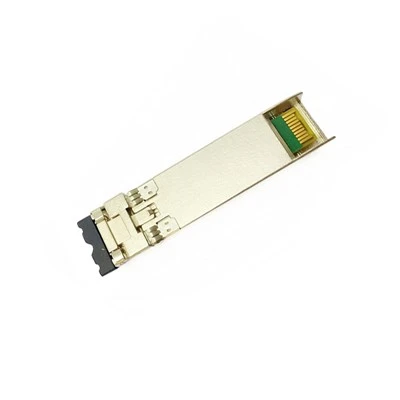
If you’re working on a project and need specific specs, or you want to pick up some parts, hit me up anytime. No matter how big or small your order is, I’ll make sure you get the right component for your needs. Let’s chat and figure out what works for you.
Optoelectronic Devices References:
- Photoelectric Sensors & Applications, International Society of Automation, 2021
- Industrial Photoelectric Components: Analog vs. Digital, Control Engineering Magazine, 2022
- Fundamentals of Light Sensing for Industrial Automation, Industrial Electronics Society, 2020
Zhejiang Chengmei Technology Co., Ltd.
As one of the most professional photoelectric components manufacturers and suppliers in China, we’re featured by quality products and good price. Please rest assured to wholesale bulk premium photoelectric components made in China here from our factory. Also, quotation is available.
Address: No. 383, Jinhe Road, Qinshan Street Industrial Park, Haiyan County, Jiaxing City, Zhejiang Province
E-mail: shiwei@cm-semi.com
WebSite: https://www.cmfiber.com/
