If you’ve ever shopped for spiral wound membranes for water treatment, chances are you’ve stared at a spec sheet and asked that exact question. As someone who’s worked in membrane supply for nearly a decade—first as a field service tech, now as part of the team that helps clients match the right membrane to their project—I get it. The warranty period for a spiral wound membrane isn’t a one-size-fits-all number, and it’s not just a marketing checkbox. It’s a promise we make to our customers that their investment will perform as expected, without costly downtime or unexpected replacements. Spiral Wound Membrane
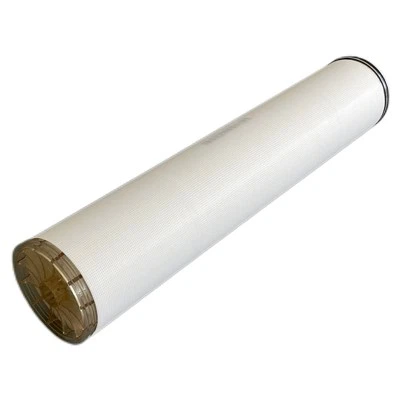
Let’s start with what a spiral wound membrane is, for anyone new to the space. These are thin, flat membrane sheets wrapped around a central perforated collection tube, layered with feed spacers and permeate spacers to create the channels that push water through the membrane while blocking contaminants. They’re workhorses for reverse osmosis (RO), nanofiltration (NF), ultrafiltration (UF), and even microfiltration (MF) systems—used in everything from municipal water plants to food and beverage processing, and from semiconductor manufacturing to desalination projects. Because they’re modular, high-capacity, and relatively easy to replace, they’re the most common membrane type on the market. But their warranty depends on way more than just the membrane itself.
First, let’s break down the two core types of warranties you’ll see: the manufacturer’s material/performance warranty, and the conditional warranty that covers how the membrane is operated and maintained. As a supplier, we don’t set the manufacturer’s base warranty, but we are the bridge between the membrane maker and the customer, which means we help customers understand what’s actually covered—and what will void it.
For most standard spiral wound membranes (RO, NF, and UF, the most common types), the base material warranty ranges from 2 to 5 years, and the performance warranty (which guarantees a certain level of contaminant rejection and flux, or water flow) usually lines up with that. Wait, I know—some of my clients think that 5-year warranty means their membrane will last exactly 5 years, but that’s not how it works. Let’s clarify: a 5-year warranty for an RO membrane, for example, typically means that if, under ideal operating conditions, the membrane’s salt rejection drops below a specified threshold (usually 98% for standard brackish water RO) or its flux drops more than 15-20% below the design rate, the manufacturer will replace the membrane at no cost. It’s a safety net, not a lifespan.
Why the range? A lot of factors dictate that number. For example, brackish water RO membranes, which are designed for lower-salinity water like most municipal or well water, usually carry a 3 to 5 year warranty. Seawater RO (SWRO) membranes, which handle much higher salinity and harsher operating conditions, have shorter warranties—usually 2 to 3 years. That makes sense: seawater is 50 times saltier than brackish water, so the membrane has to work harder, withstand higher pressure, and resist fouling and scaling more aggressively. The materials used for SWRO membranes, like thin-film polyamide (the standard for RO), are engineered to be more durable, but the operating stress means the warranty period is shorter.
Nanofiltration membranes, which are used for softer water, removing organic contaminants, or for lower-pressure applications, typically have warranties between 3 and 4 years. Ultrafiltration and microfiltration membranes, which are used for removing particles and bacteria, usually have longer warranties—often 4 to 7 years. Their larger pore sizes mean they’re less prone to scaling, and while they can foul, regular backwashing and cleaning helps extend their life. That’s one of the reasons UF is so popular for wastewater reuse applications.
But here’s the part that surprises most new customers: the manufacturer’s warranty is almost never unconditional. We see customers make this mistake all the time: they buy a membrane with a 5-year warranty, skip the pre-treatment steps, run the system at 20% higher pressure than design, and then call us after 18 months asking for a free replacement because the membrane failed. Ninety percent of the time, that membrane’s failure is their fault. A voided warranty is the last thing anyone wants, so let’s go over the biggest factors that determine whether your warranty is valid—and how we help customers avoid that.
First, feed water quality. This is the single biggest factor affecting both warranty eligibility and actual membrane lifespan. If your feed water has high levels of scaling compounds like calcium carbonate, sulfate, or silica, you need proper pre-treatment (like acid addition, antiscalant dosing, or softening) to prevent those minerals from precipitating on the membrane surface. If you skip that, scaling will clog the membrane pores, reduce flow, and permanently damage the membrane in months, not years. Similarly, high levels of iron, manganese, or organic matter will cause irreversible fouling—sludge that sticks to the membrane and can’t be cleaned away. As a supplier, we always do a free feed water analysis for new customers, or a review of their existing water data, to make sure they’re recommending the right pre-treatment to protect their warranty. We had a client in the food and beverage industry a couple of years ago who saved $500 a month by cutting back on antiscalant dosing. Their membrane failed at 12 months, and the replacement (plus downtime) cost them $15,000—way more than they saved. That’s a lesson we drill into every customer: pre-treatment isn’t an extra cost, it’s the thing that keeps your warranty valid.
Second, operating parameters. Every membrane has a design point for pressure, temperature, pH, and flow rate. Run it above the maximum temperature (usually 45°C for most standard RO membranes), and you’ll degrade the polyamide layer over time. Operate at a pressure that’s too high, and you can compress the membrane’s feed spacer or tear the membrane sheets. Run the system too hard without proper backwashing, and fouling will set in faster. We work with clients to tune their systems to the membrane’s design specs from the start, and we do quarterly system audits for long-term customers to make sure they’re not drifting off course. One municipal water client we work with had their system operating at 12% higher pressure than design because of a faulty pressure gauge. We caught it during an audit at 18 months, and they were able to adjust before their 3-year warranty period ended—saving them from an expensive replacement.
Third, maintenance and cleaning. Membranes need regular care to stay in shape. That means routine backwashing (usually every 15 to 60 minutes, depending on the system), periodic chemical cleaning to remove accumulated fouling, and testing the system performance monthly to catch issues early. The warranty almost always requires that you keep detailed logs of cleaning and maintenance, and that you use manufacturer-approved cleaning chemicals. Using off-brand cleaners, or cleaning too aggressively, can damage the membrane and void the warranty. We provide all our customers with a free maintenance log template, and our field team can walk them through proper cleaning procedures if they’re new to membrane systems. We also offer on-site cleaning services for customers who don’t have the in-house expertise to do it themselves—another way we help protect their warranty.
Now, let’s talk about what happens when a membrane does fail within the warranty period. It’s not just a free replacement—usually, the manufacturer will send a technical team to test the membrane, confirm the failure is due to a material defect, and then cover the cost of the membrane itself. But the customer is almost always responsible for labor, shipping, and downtime costs. That’s why we push for preventive maintenance: it’s way cheaper than replacing a membrane, even if you get it for free under warranty. As a supplier, we don’t just sell membranes and disappear. We provide ongoing support for the entire life of your system, from design and installation support to maintenance and troubleshooting. That’s one of the biggest differences between working with a specialized membrane supplier and a generic industrial supply company.
Wait, I should also mention that some newer membrane technologies have different warranty terms. For example, anti-fouling RO membranes, which are modified to resist organic fouling, might have similar base warranties to standard RO, but they tend to perform better in feed water with higher organic content, so their warranty is more likely to be valid if you don’t have perfect pre-treatment. Thin-film composite (TFC) membranes, which are the standard now, have longer warranties than the older cellulose acetate membranes that were popular 20 years ago. Cellulose acetate membranes can last longer if properly maintained, but they’re less resistant to chlorine, so their warranties are shorter for most industrial applications.
Let’s get back to the original question: what is the warranty period of a spiral wound membrane? The short answer is: it depends, but for most common applications, it’s between 2 and 5 years, depending on the membrane type, operating conditions, and manufacturer terms. But the longer, more important answer is that the warranty is only as good as the steps you take to protect it. As someone who’s been in this industry long enough to see dozens of clients burn through their warranties because of avoidable mistakes, I can tell you that the best investment you can make is not chasing the longest warranty—it’s working with a supplier who will help you understand what the warranty actually covers, and how to keep it valid.
If you’re in the market for spiral wound membranes, or you have a system that’s nearing the end of its warranty and you’re looking for a more reliable solution, we’re here to help. We don’t just push products; we sit down with you to review your feed water, your system design, and your long-term goals, and recommend the right membrane type and warranty terms that fit your needs. We’ll walk you through every detail of the warranty, so you know exactly what’s covered, what will void it, and what steps you can take to get the most out of your investment. There’s no one-size-fits-all answer to the warranty period question, but there is a right way to make sure you get the value you’re promised.

Don’t leave your system’s performance and your investment up to chance. Reach out to our team to discuss your spiral wound membrane needs, and we’ll help you navigate warranties, pre-treatment, maintenance, and everything in between to keep your system running smoothly for years to come.
Hollow Fiber Ultrafiltration Membrane References
- Water Research Foundation. (2021). Spiral Wound Membrane Technology for Water and Wastewater Treatment.
- American Water Works Association (AWWA). (2019). Reverse Osmosis and Nanofiltration: Guidance for Water Treatment.
- Dow Chemical Company. (2022). Technical Manual: FilmTec™ Spiral Wound Membranes.
- DuPont Water Solutions. (2023). Warranty Terms and Conditions for Ultrafiltration and Microfiltration Membranes.
- World Health Organization (WHO). (2020). Membrane Technology for Desalination and Water Reuse.
- Hydranautics. (2021). Seawater Reverse Osmosis Membrane Design and Warranty Guidelines.
Hangzhou Nanoimp Environmental Technology Co., Ltd.
With abundant experience, we are one of the most professional spiral wound membrane manufacturers and suppliers in China. Welcome to wholesale high quality spiral wound membrane in stock here and get pricelist from our factory. We also accept customized orders.
Address: Road 25, Baiyang Street, Qiantang District, Hangzhou City, Zhejiang Province
E-mail: keith.wang@nano-sepmer.com
WebSite: https://www.nanoimp-membrane.com/
