If you’ve spent any time on construction, mining, or remote job sites in the past decade, you’ve probably run into Slope Socket Boxes—those rugged, weatherproof enclosures that keep power flowing even on sloped, uneven ground where standard power outlets just don’t work. As a supplier who’s worked with dozens of site managers, electricians, and small construction business owners over the last seven years, I can’t tell you how many times I’ve gotten a call that goes something like: “My last socket box died on a job site after two days—what’s wrong with the one I bought?” More often than not, the mistake isn’t the box itself, it’s that the buyer skipped the steps to match the box to their actual needs. Choosing the right Slope Socket Box isn’t just about picking the cheapest option or the one with the most outlets; it’s about weighing factors like job site terrain, power load, environmental conditions, and long-term durability. Slope Socket Box
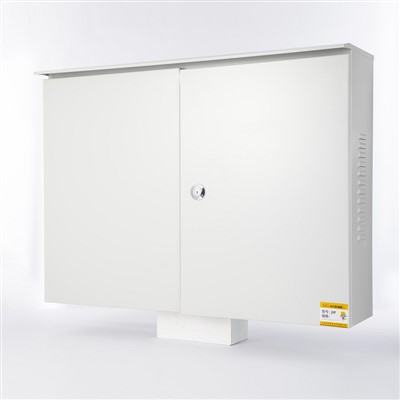
Let’s start with the basics: what even is a Slope Socket Box, and why is it different from a regular power box? Standard electrical enclosures are built to sit on flat ground, secured to walls or stationary frames. Slope Socket Boxes, by contrast, have a low-profile, wide base and adjustable feet that let them balance on grades up to 45 degrees. That’s non-negotiable for any site on a hillside, a trench edge, or a gravel pad that shifts after rain. But beyond that core design, every box has specs that will make or break its performance for you.
First, figure out your power load before you look at any model. This is the single most common mistake I see. Some new job operators will buy a 10-outlet box because it looks versatile, without checking if their tools and equipment add up to more power than the box can handle. Let’s break this down: every electrical device draws an amp load, and the total can’t exceed the box’s maximum current rating. For example, a small DIY renovation might only need to power a drill, a saw, and a few LED work lights—total load of around 15 amps. A lot of our entry-level Slope Socket Boxes carry 20 amps, which is perfect for that. But if you’re on a mining site powering a hydraulic breaker, a air compressor, and a 500-watt work heater, you’re looking at 40 to 50 amps minimum, and you’ll need a heavy-duty, industrial-grade box rated for 60 amps or higher. I’ve had one customer bring in a burned-out 20-amp box last year; he’d plugged in three big concrete mixers on a slope, and the circuit overheated before he even finished the first day of the job. That’s a $300 mistake he could have avoided by just adding up his total power needs first.
Next, think about the environment your box will live in. Slope Socket Boxes aren’t all made the same for weather and wear. If you’re working in a region with heavy rain, snow, or high humidity, look for boxes with an IP rating—Ingress Protection rating. The IP code has two numbers: the first is for solid particles (dust, dirt, rocks) and the second is for liquids. For most outdoor job sites, an IP65 rating is the sweet spot: it’s completely dust-tight, and it can withstand low-pressure water jets from any direction, which means it won’t short out if a hose sprays it or if rain pools on top. If you’re working in extreme cold, like a northern Canadian construction site in winter, add a temperature rating. Some boxes are only rated down to 0°C, but we carry cold-weather models that work at -25°C, where plastic stays flexible and doesn’t crack when stepped on or knocked around. On the flip side, if you’re in a desert with constant dust, IP66 is even better—it’s dust-tight and can handle high-pressure washdowns, which is a big help for cleaning the box between jobs.
Terrain is another factor that’s easy to overlook, but it’s the whole point of a Slope Socket Box. Not all slopes are the same. If you’re working on a gentle 10-degree hill on a residential renovation, a box with adjustable rubber feet will work fine. Those feet let you level the box a little to keep plugs from falling out of outlets, and the rubber grips the ground so it doesn’t slide. But if you’re on a 40-degree trench edge or a rocky, uneven mining pad, you’ll need a box with a wider base, maybe 18 inches or more, to keep it from tipping. We have a model called the SlopeStable 60 that has a 22-inch base and locking metal feet that screw into small holes in the ground if needed—perfect for steep, unstable terrain where a falling box could damage tools or hurt someone. Another thing: if your site has frequent heavy equipment movement, like excavators or dump trucks driving nearby, you’ll want a box with a reinforced polycarbonate shell or a steel enclosure. Lightweight plastic boxes might work for a small backyard job, but a steel or impact-resistant plastic shell won’t dent or crack if a small truck backs too close or a rock falls on it.
Outlet type and number matter too, but only after you’ve covered the basics. It’s tempting to buy a box with 12 outlets, but if you only ever use 6, you’re wasting money on extra capacity you don’t need. More importantly, make sure the outlets match your tools. If you’re working in the U.S. or Canada, standard 120V outlets (NEMA 5-15) work for most small tools, but for heavy equipment, you’ll need 240V outlets, like NEMA 6-20 or L14-30 for tools that draw more power. Some boxes have a mix of standard and heavy-duty outlets, which is great if you have a range of tools, but if all your gear is 240V, don’t buy a box with 6 standard outlets and 2 heavy ones—you’ll only use the heavy ones, and the rest are just dead space. Also, look for outlets with built-in safety features: covers that flip closed when not in use to keep dirt and bugs out, and childproof shutters if you’re working around a job site where unauthorized people might access the power. I always tell customers: it’s not how many outlets you have, it’s how many of those outlets you’ll actually use, and if they fit your gear.
Then there’s cord management, which is a detail that saves you so much hassle on site. A lot of people don’t think about this until their cords are tangled, tripping workers, or getting pulled out of outlets. Good Slope Socket Boxes have built-in cord grips or strain reliefs that hold your main power cord securely, so it doesn’t get pulled out if someone steps on it or a truck drives over it. Some models also have extra cord ports on the side, so you can run multiple cords without having to leave them loose over the ground. I’ve seen too many workers trip over loose cords because their box didn’t have proper strain relief, leading to injuries and delayed jobs. That’s a small feature that pays off big.
Warranty and after-sales support are often the last thing people check, but they’re critical for a tool that’s going to take a beating on site. Cheap, no-name Slope Socket Boxes might have a 30-day warranty, which means if it breaks after two months, you’re out the money. We offer a 2-year warranty on all our Slope Socket Boxes, and our support team is available 24/7 for site emergencies. Last year, a customer in Australia had a box stop working on a remote mining site at 2 a.m. Our team walked him through a quick diagnostic over the phone, then shipped a replacement to the nearest depot within 4 hours. That’s the kind of support you can’t get with a generic online purchase. Also, look for suppliers that have replacement parts available—if a foot breaks or a cover cracks, you don’t want to have to buy a whole new box. Our boxes have interchangeable feet and outlet covers, so you can fix small issues without replacing the entire unit.
Now, let’s walk through a quick example to put all this together. Suppose you’re a small construction owner doing residential renovations on hilly lots in the Pacific Northwest. Your total power load for each job is about 18 amps: a circular saw, a drill, a heat gun, and 4 LED work lights. The terrain is a gentle 10-degree slope, rain is common, and you’re working around foot traffic, not heavy equipment. For this, you don’t need a 60-amp heavy-duty box. Our SlopeSafe 20 model is perfect: it’s 20 amps, which is more than your total load, has an IP65 rating to handle rain, a wide base with adjustable rubber feet for the gentle slope, 6 NEMA 5-15 outlets (enough for all your tools), built-in strain relief for your main power cord, and a 2-year warranty. This costs about $150, which is way more affordable than a heavy industrial box, and it will last you years of residential renovation jobs.
On the other end, if you’re a mining company operating on a 35-degree slope in Alberta, powering a hydraulic breaker, air compressor, and a work heater, your total load is 45 amps, the terrain is rocky and unstable, and you’re dealing with dust and -20°C temperatures. For this, our SlopeHeavy 60 is the right choice: 60 amps, IP67 rating (completely dust-tight and water-immersion resistant for heavy washing), locking steel feet for steep slopes, 4 240V heavy-duty outlets, a steel reinforced shell, and a 3-year warranty. It’s a bigger investment at $450, but it’s built to withstand the harsh conditions of mining, and it won’t burn out or tip over on steep ground.
I get it, it’s easy to rush the decision when you’re in the middle of a job and need a new box fast. But taking 10 minutes to walk through these steps will save you from headaches, lost time, and extra costs. The worst thing you can do is buy a box that’s either too small for your power needs (leading to overheating and failure) or too big (wasting money on features you’ll never use). The key is to match three things: your power load, your site’s environment, and your terrain.
At the end of the day, a Slope Socket Box is more than just a power outlet on a slope—it’s a tool that keeps your crew safe and your job on schedule. If you’re still not sure which model fits your needs, or you have a specific site in mind, our team can help. We work with contractors, site managers, and small business owners all over the world to find the right Slope Socket Box, no matter how big or small the job. You don’t have to guess what works—we’ve tested every model on actual job sites, and we know what stands up to real use. Reach out to our team to discuss your requirements, and we’ll walk you through the options, answer your questions, and make sure you get a box that works for your exact needs.
Multimedia Information Box References:
- National Electrical Manufacturers Association (NEMA). (2022). Standard for Enclosures for Electrical Equipment (NEMA 250).
- International Electrotechnical Commission (IEC). (2021). Standard for Ingress Protection Rating (IEC 60529).
- Occupational Safety and Health Administration (OSHA). (2020). Electrical Safety Guidelines for Construction Sites.
- Construction Industry Institute (CII). (2019). Portable Power Equipment Selection and Usage Guide.
Shandong Qinghua Yike Electric Co., Ltd.
As one of the most experienced slope socket box manufacturers in China, we also support customized service. We warmly welcome you to buy durable slope socket box for sale here from our factory. If you have any enquiry about cooperation, please feel free to email us.
Address: No. 378 Taozhuang Village, Zaoyuan Town, Lanshan District, Linyi City, Shandong Province
E-mail: admin@sd-qhyk.com
WebSite: https://www.qhecobox.com/
