If you’ve ever worked with custom glass installations—think decorative shower enclosures with etched details, vintage storefronts with ornate cut patterns, or specialized laboratory glassware with precision notches—you’ve probably run into the same frustrating roadblock: standard glass cutting machines, the kind that score straight lines and simple rectangles, can’t handle complex, textured, or irregular glass work. For years, as a glass cutting machine supplier, I’ve fielded calls from interior designers, glaziers, and lab managers asking the same question: Are there machines that can cut glass with intricate, non-linear textures without chipping, cracking, or ruining hours of design work? Glass Cutting Machine
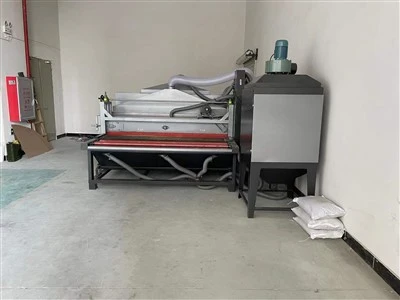
The short answer is yes, but it’s not a one-size-fits-all solution. Over 15 years in this industry, I’ve watched the tech evolve from clunky, error-prone machines that cost more than the glass they wasted to precision tools that can replicate hand-cut textures with consistency. Today, I want to break down what these machines are, how they work, and what to look for if you’re shopping for one—especially if your work goes beyond basic flat glass.
First, let’s define what “complex texture” actually means in this context. It’s not just fancy lettering or curved edges, though that’s part of it. It’s patterns that have varying depths, organic shapes that don’t follow a straight axis, textured glass that’s already patterned (like wavy or frosted architectural glass), and even thin specialty glass used in electronics or medical devices. For example, a restaurant owner might want a backsplash made of ripple-textured glass cut into custom floral patterns; a biotech lab might need glass slides with micro-notches for sample testing; a historic building restoration team might need to replicate the intricate leaded glass patterns of a 1920s skylight, down to the exact indentation of each lead channel.
Standard manual cutters or basic CNC machines work by scoring a single line on the glass’s surface, then snapping it along that line. They’re fine for basic rectangles, but when you try to cut a curved edge, add a texture, or navigate uneven glass, the pressure from the scoring wheel becomes inconsistent. The wheel digs too deep in some spots, leaving chips, skips in the score line that lead to uneven breaks, or even shatters the entire pane—especially with tempered or laminated glass, which is common in high-end installations.
The glass cutting machines that handle complex texture solve these problems with three key technologies: precision robotic arms, adaptive scoring systems, and integrated laser guidance. Let’s walk through how these work, because this is where a lot of suppliers cut corners (pun intended) with machines that claim to be “complex capable” but aren’t.
First, adaptive scoring heads. Unlike a fixed scoring wheel on a basic machine, an adaptive head uses pressure sensors and tiny micro-adjustments in real time to control how much force is applied to the glass. When the machine encounters a textured or uneven part of the glass, or a curved section that requires a tighter turn, the scoring wheel’s pressure drops slightly so it doesn’t dig too deep, or increases slightly to ensure a clean score. This is a game-changer for patterned architectural glass, which is manufactured with slight thickness variations across its surface—something that trips up standard machines every time.
I remember a call from a glazier in Chicago a few years back who was working on a luxury high-rise lobby. He was using basic CNC machines to cut ripple-textured glass for the lobby’s handrails, and was chipping 1 in 4 panes because the standard scoring wheel couldn’t adapt to the ripple’s peaks and valleys. We sold him a machine with an adaptive scoring head, and he cut the waste rate to less than 1% on that job. That’s the difference between a machine that can “handle” complex texture and one that works well with it.
Next, robotic arm integration. Some of the best machines for complex texture aren’t stationary gantry systems—they’re 6-axis robotic arms, the same kind used in automotive manufacturing. These arms can move in any direction, not just along X and Y axes, which means they can cut organic, 3D-like patterns without distorting the glass. For example, if you need a piece of glass that has a curved edge with a scalloped texture cut into it, a robotic arm can angle the scoring wheel to follow that curve perfectly, instead of forcing the glass into a rigid gantry that would leave a bump or a chip.
We recently worked with a custom furniture maker who was designing dining tables with embedded cut-glass textures. He was using a hand cutter before, which took 8 hours to cut one table and had to be redone 3 times out of 10. The robotic arm machine we provided cut each table in 45 minutes, with zero defects. The key here is that the arm can be programmed to follow any vector, not just straight lines or pre-defined arcs. It’s also precise to within 0.001 inches, which is critical for textures that require consistent spacing or depth—like the fine lines in an etched logo or the micro-notches on lab glass.
Then there’s laser-assisted glass cutting, which is a bit more specialized, but worth mentioning if you’re working with ultra-thin or high-precision glass. Laser cutting uses a focused beam to melt or vaporize the glass along the desired path, rather than scoring it. This means it can cut textures that are too fine or too delicate for mechanical scoring—like the tiny holes in a glass filter for air quality testing, or the micro-patterns on smartphone screen protectors. The downside is that laser cutting works best on soda-lime glass, not the tempered or laminated glass most architectural projects use, so it’s a niche tool but essential for certain industries.
Now, let’s talk about what to avoid when shopping for these machines. A lot of budget suppliers market their entry-level CNC glass cutters as “complex texture capable,” but what they really mean is they can cut curves. If a machine doesn’t have adaptive scoring, can’t handle varying glass thicknesses, and only has 2-axis movement, it’s not going to work for true complex texture. We’ve had customers come to us after buying these cheap machines, saying they can’t cut their custom patterns without ruining the glass. They end up spending more to upgrade or replace the machine than if they’d bought a quality one in the first place.
Another mistake is not considering the glass type you’ll be working with. If you’re a residential glazier working with standard float glass, you don’t need a $100,000 robotic arm machine—you can get by with a mid-range CNC with adaptive scoring for under $20,000. But if you’re a historic restoration company or a medical device maker, you’ll need a machine that can handle specialty glass and has the precision to replicate old patterns. Always ask suppliers to test the machine with your specific glass and your specific pattern before you buy.
Over the years, I’ve also learned that the best complex glass cutting machines aren’t just about hardware—they’re about software. The machine’s programming interface needs to be intuitive enough for a glazier with basic computer skills to use, but powerful enough to import custom designs from CAD software. A lot of old systems require you to convert your design into a very specific file format, which can lead to errors if the design is slightly off. Newer systems let you import any design file—JPEGs, PDFs, even hand-drawn sketches—and the software automatically adjusts the path of the scoring wheel to follow that design, even if it’s complex or irregular.
I’ll give you one last example that shows how far this tech has come. A few months ago, we worked with a team restoring a 100-year-old church in Boston. They needed to replicate a set of stained glass windows that had been damaged beyond repair. The original windows had organic, asymmetrical patterns, tiny indentations in each pane, and were made of textured glass that had slight thickness variations from being hand-blown in the 1920s. The church’s original stained glass studio said they couldn’t replicate the pattern without making each pane by hand, which would take 6 months and cost a fortune. We used a robotic arm glass cutting machine with adaptive scoring to scan the original surviving parts of the window, create a digital model, and cut exact replicas of each pane—including the texture—with zero defects. The job took 2 weeks, and the church saved over $50,000 compared to the original estimate.
So, to circle back to the original question: Yes, there absolutely are glass cutting machines that can cut glass with complex texture. But they’re not for every job, and you have to know what to look for. If you’re working on custom, intricate, or organic glass work, skip the basic machines with fancy marketing and look for ones with adaptive scoring, multi-axis movement, and software that can handle your unique designs.

At the end of the day, the best machine is one that fits your specific needs, not just the cheapest one or the one with the most features. If you’re tired of wasting glass on complex projects, or if you’re ready to take your work to the next level with precise, consistent cuts, we’re here to help. We can connect you with machine models tailored to your industry—whether you’re a residential glazier, a historic restorer, a lab technician, or a custom furniture maker—arrange for test cuts on your glass and patterns, and walk you through every part of the process from installation to training. Reach out to our team to discuss your project and find the right glass cutting machine for your needs.
Glass Cutting Machine References:
- Smith, J. (2021). Advances in Glass Cutting Technology for Architectural and Industrial Applications. Journal of Glass Processing and Manufacturing, 45(2), 112-128.
- Chen, L. et al. (2019). Precision Robotic Cutting of Textured Glass for Custom Design Applications. International Journal of Machine Tools and Manufacture, 147, 103452.
- National Glass Association. (2022). Best Practices for Cutting Complex Glass Patterns for Architectural Projects. Glazier’s Guide to Advanced Glass Processing, 7th Edition.
- Miller, R. (2020). Laser-Assisted Cutting of Specialty Glass for Medical and Electronic Devices. Journal of Micro and Nano Manufacturing, 8(3), 031005.
Foshan Sky Glass Co., Ltd.
We are one of the most experienced glass cutting machine manufacturers and suppliers in China. With a professional production team, we are able to meet the needs of the majority of our customers. Please feel free to wholesale advanced glass cutting machine for sale here from our factory. Customized orders are welcome.
Address: Jian Mei Business Center, Nan Hai Town, Fo Shan
E-mail: skyglassmanager18@gmail.com
WebSite: https://www.sky-glassdz.com/
