When we design and install tubular trusses for industrial and commercial structures, one of the most critical, often overlooked, performance factors is how seismic loads act on these systems. As a tubular truss supplier with nearly two decades on the ground working with fabricators, engineers, and facility managers across seismic zones ranging from the Pacific Northwest to the Central Plains, I’ve seen first-hand what happens when seismic forces are not accounted for in tubular truss design—and what works when we do prioritize seismic resilience. Tubular Truss
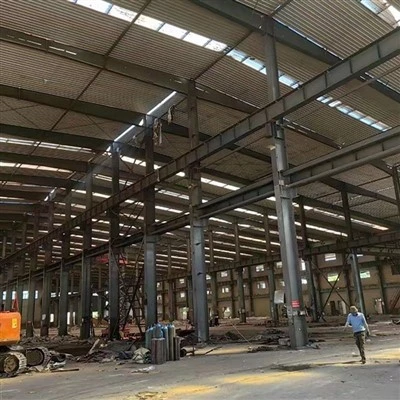
First, let’s break down what seismic load actually is, because it’s not just a random “shaking” event. Seismic load is the lateral force generated by the sudden release of energy in the Earth’s crust during an earthquake, which propagates through the ground as waves. For structures, this translates to horizontal and vertical forces that can twist, stretch, or compress truss members. Unlike static loads—like the weight of a roof or equipment that push down on a truss at a constant rate—seismic loads are dynamic, meaning they shift, reverse direction, and build in intensity over just a few seconds. That difference is foundational to why tubular trusses behave differently than other truss types during an earthquake.
Tubular trusses, as you probably know, are made from hollow steel tubes welded or bolted together, usually configured in triangular frameworks. Their inherent strength comes from the ability of each tube to resist bending, torsion, and axial forces, which makes them popular for everything from large warehouse roof supports to pedestrian bridges and temporary event structures. But seismic loads don’t act uniformly across a truss: they concentrate at points where trusses connect to other structural elements, like columns or foundation anchors, and in areas with abrupt changes in truss shape or stiffness. For example, a tubular truss that spans 60 feet with a uniform diameter tube will behave very differently under seismic load than a truss that tapers to a smaller tube at its center— the stiffer ends will carry more force, potentially leading to weld failure or tube buckling if not designed for that.
One common mistake I see in projects we’re brought in to fix is assuming tubular trusses are just as resilient to seismic loads as open-web steel joists or concrete beams. That’s not the case. Steel, the material most tubular trusses are made of, has high tensile strength, which is good for resisting stretching forces, but under cyclic seismic loads (repeated back-and-forth forces during an earthquake), welds— the most critical connection point in most tubular trusses—can fatigue over time. Fatigue happens when repeated stress causes tiny cracks to form, which can grow rapidly during a major quake, leading to a sudden collapse. A few years back, we worked on a retail store in Oklahoma that suffered minor structural damage during a 2011 magnitude 5.6 earthquake: their original tubular trusses had welded connections that weren’t designed for cyclic lateral loads, leading to two welds splitting and a 15-foot section of roof sagging. The fix was retrofitting those trusses with bolted connection plates and adding lateral bracing tubes along the top chord, which brought them up to code for seismic resilience.
Another way seismic load impacts tubular trusses is through torsion, or twisting. Unlike a straight, solid beam, a truss is a framed system, so uneven seismic forces on different sides of the structure can cause the entire truss to twist. Tubular members are actually better at resisting torsion than solid rectangular steel members, but only if the truss has adequate bracing. For example, a tubular truss supporting a stage roof for an outdoor venue—something we supply often—will be exposed to both seismic loads from the ground and any lateral wind force that happens to coincide with an earthquake. If the truss isn’t braced along the sides, that combination of forces can twist the truss’s top chord out of alignment, pulling lighting rigs or speakers with it. We learned this early on when a customer in California’s Central Coast had a stage truss collapse during a small aftershock; they had skipped lateral bracing to cut costs, and the torsion from the combined seismic and wind load was enough to bend the top tube and cause a failure.
So how do we, as a tubular truss supplier, design and manufacture these systems to withstand seismic loads? It starts with material selection. We use high-grade structural steel (ASTM A36 or A572 Grade 50, depending on the project) because these grades have consistent yield strength and ductility—meaning they can bend and stretch slightly before breaking, which is key for dissipating seismic energy. Ductility is non-negotiable here: a rigid, brittle tube might resist a small force but snap under a large seismic load, while a ductile tube will flex, absorb energy, and keep the truss intact longer. We also specify thicker wall sections for truss members in high-seismic zones, because thicker tubes resist buckling when compressed under lateral load.
Next is connection design. We’ve shifted 100% of our seismic-rated trusses from full-penetration welds alone to a combination of welds and bolted connection plates, or gussets, for critical joints. The bolts add redundancy: if a weld does fail under cyclic load, the bolts can still hold the joint together. We also perform non-destructive testing (NDT) on all welds for projects in seismic zones, using ultrasonic testing to check for hidden cracks before the trusses leave our facility. That extra step adds a small cost, but it’s saved us from being part of a structural failure—and our customers from costly repairs and downtime.
Lateral bracing is another key factor, and we work closely with structural engineers to size and place bracing tubes so they don’t add unnecessary weight but do distribute seismic load evenly across the truss. A common rule of thumb we follow is that tubular trusses spanning more than 40 feet need diagonal bracing along both the top and bottom chords, connected to the truss’s end joints and to the building’s primary columns. We also design trusses to have a “ductile fuse” in critical areas—for example, a slightly thinner tube section at the center of the truss that will bend before a more important load-bearing member. This is intentional: it lets the truss absorb seismic energy without failing completely, which is far safer than the alternative.
I want to be clear, though: no tubular truss is completely immune to seismic load damage. The goal isn’t to make a truss that never moves during an earthquake—it’s to make one that moves safely, without collapsing, so that occupants can evacuate and the structure can be repaired. That’s why we also provide post-seismic inspection services for the trusses we supply, especially for temporary structures like event stages or portable warehouse roofs. After a minor quake, even if there’s obvious damage, we often find small cracks in welds or bent tubes that can be fixed with a weld repair or a new bracing tube, rather than full replacement.
As a supplier, we also educate our customers about the difference between code requirements and best practices for seismic zones. The International Building Code (IBC) has specific provisions for seismic loads on steel structures, including tubular trusses, but many small businesses or event operators overlook these when designing a structure. For example, a small warehouse in a low-seismic zone (like parts of the Midwest) might only need minimal bracing, but a structure in a high-seismic zone (like Southern California or the Pacific Northwest) needs engineered seismic design, not just standard trusses. We don’t cut corners to sell a cheaper truss that won’t meet code when it matters most.
I’ve had customers come to us after seeing their competitors’ trusses fail in an earthquake, and they’re worried about their own structures. The good news is that tubular trusses can be extremely seismic-resilient when designed and manufactured correctly for the loads they’ll face. The key is understanding how seismic load interacts with their specific structure, not just assuming a standard truss will work.
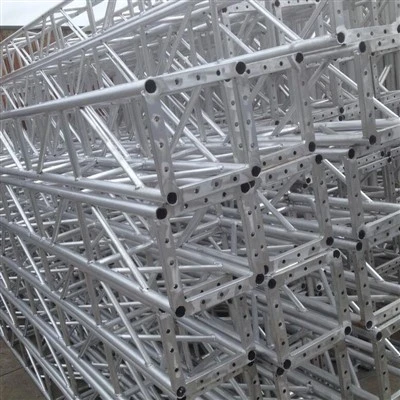
If you’re working on a project in a seismic zone, or you’re planning a structure that needs to withstand earthquake forces, we can work with your structural engineer to design custom tubular trusses that meet your needs. Don’t wait until a quake happens to address seismic load concerns—reach out to our team to discuss your project, review design requirements, and get a quote for seismic-rated tubular trusses. We’re here to help you build structures that are safe, durable, and ready to withstand whatever the earth throws at them.
Tubular Truss References
- International Code Council. (2021). International Building Code: Seismic Design Requirements for Steel Structures.
- AISC. (2017). Seismic Provisions for Structural Steel Buildings.
- Subramanian, N. (2018). Design of Steel Structures: Seismic Performance of Tubular Trusses.
- FEMA. (2020). Seismic Retrofit Guidelines for Industrial Steel Structures.
Suzhou Wanyu Steel Structure Construction and Installation Engineering Co., Ltd.
With abundant experience, we are one of the most professional tubular truss manufacturers and suppliers in China. We warmly welcome you to buy customized tubular truss at competitive price from our factory. If you have any enquiry about pricelist, please feel free to email us.
Address: No. 78, Putian Road, Suzhou Industrial Park, Suzhou, Jiangsu Province
E-mail: Zhu@szwanyu.com
WebSite: https://www.wy-metalstructure.com/
