A plane ruled grating is a fundamental optical component with a rich history and a wide range of applications in the field of optics. As a supplier of plane ruled gratings, I am excited to share in – depth knowledge about these remarkable devices. Plane Ruled Grating

The Basics of Plane Ruled Gratings
A plane ruled grating is an optical element that consists of a series of equally spaced parallel grooves or rulings on a flat surface, typically made of glass, metal, or other suitable materials. These rulings are extremely fine, often with a large number of lines per millimeter. For example, a high – quality plane ruled grating can have several hundred to several thousand lines per millimeter.
The principle behind the operation of a plane ruled grating is based on the phenomenon of diffraction. When light hits the grating, it is split into its component wavelengths, creating a diffraction pattern. This occurs because the different wavelengths of light are diffracted at different angles according to the grating equation:
[d(\sin\theta_{i}+\sin\theta_{m}) = m\lambda]
where (d) is the grating spacing (the distance between adjacent rulings), (\theta_{i}) is the angle of incidence of the light on the grating, (\theta_{m}) is the angle of diffraction for the (m) – th order, (m) is the order of diffraction (an integer), and (\lambda) is the wavelength of the light.
Manufacturing Process
The manufacturing of plane ruled gratings is a highly precise and complex process. It starts with the selection of a suitable substrate material. Glass is a popular choice due to its optical transparency and stability. Metal substrates, on the other hand, are often used for applications where high reflectivity is required.
The ruling process is the heart of grating manufacturing. Historically, mechanical ruling engines were used. These engines use a diamond tool to cut the grooves on the substrate surface. The diamond tool is carefully controlled to create grooves of uniform depth and spacing. However, mechanical ruling has its limitations, such as the difficulty in achieving extremely high – density gratings and the presence of small irregularities in the rulings.
In modern times, electron – beam lithography has become an important alternative for manufacturing plane ruled gratings. This technique allows for the creation of gratings with very high line densities and excellent precision. In electron – beam lithography, a beam of electrons is used to expose a resist layer on the substrate. After development, the pattern on the resist is transferred to the substrate, typically through etching processes.
Applications of Plane Ruled Gratings
Spectroscopy
One of the most common applications of plane ruled gratings is in spectroscopy. Spectroscopy is the study of the interaction between matter and electromagnetic radiation. A plane ruled grating can be used in a spectrometer to separate light into its component wavelengths. This is crucial for analyzing the chemical composition of a sample. For example, in astronomy, spectrometers with plane ruled gratings are used to analyze the light from stars and galaxies, allowing astronomers to determine the elemental composition, temperature, and velocity of celestial objects.
Laser Technology
In laser systems, plane ruled gratings play an important role in wavelength selection and beam shaping. Gratings can be used to select a specific wavelength from a broadband laser source, which is essential for many laser applications, such as laser – based materials processing and scientific research. Additionally, plane ruled gratings can be used to shape the laser beam, for example, by creating a beam with a specific intensity profile or by splitting a single laser beam into multiple beams.
Optical Communication
With the continuous development of optical communication technology, the demand for high – performance optical components has increased significantly. Plane ruled gratings are used in wavelength – division multiplexing (WDM) systems. In a WDM system, multiple optical signals with different wavelengths are combined and transmitted over a single optical fiber. Plane ruled gratings can be used to demultiplex these signals at the receiving end, allowing for the separation and detection of individual wavelengths.
Quality and Performance Factors
When selecting a plane ruled grating, several quality and performance factors need to be considered.
Diffraction Efficiency
Diffraction efficiency is a measure of how effectively the grating diffracts light into the desired order. A high – diffraction – efficiency grating can maximize the amount of light in the useful diffraction order, which is crucial for applications such as spectroscopy and laser systems. The diffraction efficiency depends on several factors, including the grating design, the wavelength of the light, and the angle of incidence.
Groove Profile
The groove profile of the grating also affects its performance. Different groove profiles, such as triangular, blazed, and sinusoidal, have different diffraction characteristics. For example, a blazed grating is designed to concentrate most of the diffracted light into a particular order, which is often useful for applications where high – intensity diffracted light in a specific order is required.
Surface Quality
The surface quality of the grating substrate is important to ensure low scattering and high optical clarity. Any surface defects, such as scratches or pits, can cause light scattering, which reduces the overall performance of the grating. Therefore, strict quality control measures are taken during the manufacturing process to ensure a smooth and defect – free substrate surface.
Our Company’s Role as a Supplier
As a supplier of plane ruled gratings, we are committed to providing our customers with high – quality products. We have a team of experienced engineers and technicians who are proficient in the latest manufacturing techniques. Whether it is traditional mechanical ruling or advanced electron – beam lithography, we can produce plane ruled gratings that meet a wide range of customer requirements.
We offer a wide variety of plane ruled gratings with different line densities, groove profiles, and substrate materials. Our products are used in various industries, including scientific research, telecommunications, and industrial manufacturing. We also provide customized grating solutions, working closely with our customers to design and manufacture gratings that are tailored to their specific applications.
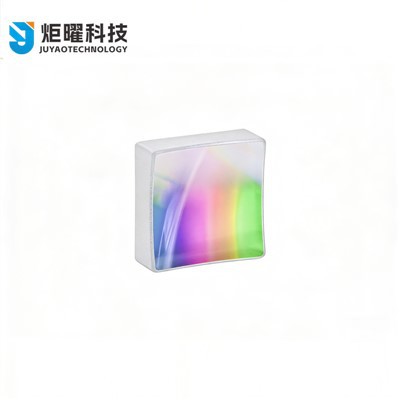
In addition to product quality, we also focus on customer service. We understand the importance of timely delivery and technical support. Our customer service team is always ready to answer any questions our customers may have and provide them with the necessary technical assistance.
Echelle Grating If you are in the market for plane ruled gratings, we invite you to contact us for purchasing and negotiation. We are confident that our high – quality products and excellent customer service will meet your needs and exceed your expectations. Whether you are conducting cutting – edge scientific research or developing the next generation of optical communication systems, our plane ruled gratings can provide you with the performance you need.
References
- Hecht, E. (2017). Optics. Addison – Wesley.
- Palik, E. D. (Ed.). (1985). Handbook of Optical Constants of Solids. Academic Press.
- Smith, W. J. (2008). Modern Optical Engineering: The Design of Optical Systems. McGraw – Hill.
Jilin Juyao Technology Co., Ltd.
As one of the leading plane ruled grating manufacturers and suppliers in China, we offer a wide range of products with superior quality. Please feel free to wholesale customized plane ruled grating from our factory. Welcome to view our website for more information.
Address: Room 101, No. 2 Huiwen Road, Nanguan District, Changchun City, Jilin Province, China
E-mail: jyoptix@outlook.com
WebSite: https://www.jyoptix.com/
