If you’ve ever watched a TIG welder work, that skinny, spark-flickering rod that hovers just above the metal might’ve caught your eye. As a TIG welding machine supplier, I get asked this question all the time: “What even is that electrode, and does it matter that much?” Spoiler alert—yes, it does. Pick the wrong one, and you’ll get inconsistent welds, spatter, or even a welder that just won’t start up right. Let’s break this down like we chat in my shop after a long day of troubleshooting. TIG Welding Machine
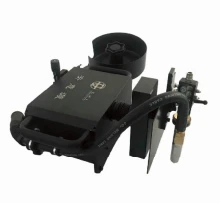
First off, let’s keep it simple. The electrode in a TIG machine isn’t the filler metal—That’s the separate rod you feed in as you weld, right? The electrode is the part that carries the electric current to create the super-hot arc that melts the base metal and filler. It never actually melts itself (usually, anyway), so it needs to hold up to that insane heat. There are a few main types, and each is for a specific job, just like how you wouldn’t use a kitchen knife to build a fence.
Start with the OG: pure tungsten. This is the basic, no-frills electrode you’ll find on cheap entry-level TIG machines. It’s just tungsten, 99.15% pure, with a tiny bit of thorium left over from processing? Wait no—wait, pure tungsten has a low electron emission threshold, meaning it needs more current to start the arc. That means it’s finicky. If you’re welding thin stuff like 18-gauge stainless steel or sheet aluminum, pure tungsten can work, but it’s way more prone to contamination if you get the arc too close or touch it to the metal (don’t do that—sticks cause bad welds). It’s also bad for high-amperage jobs—like welding ¼-inch steel or thick aluminum—because it’ll start to erode, get rounded at the tip, and make your arc wander. I only recommend pure tungsten for super small, low-amperage hobby projects, not for anyone who’s actually making a living welding.
Next up, the one most guys in my shop reach for 9 times out of 10: thoriated tungsten. This is the workhorse. Thoriated tungsten is pure tungsten with around 1-2% thorium oxide added. That tiny addition changes everything. It has way better electron emission, so it starts the arc way easier, runs smoother, and can handle higher amperage without eroding like pure tungsten. It also keeps a sharp tip longer, which is huge for consistent welds. For most general TIG work—stainless steel, mild steel, copper, nickel alloys—thoriated is the go-to. The only catch? Thorium is radioactive. It’s a small amount, so as long as you follow basic safety (don’t grind it down without a respirator, don’t breathe the dust), you’re fine. A lot of newer welders skip this because they hear “radioactive” and panic, but honestly, the risk is way lower than messing up a $500 stainless steel weld because you used the wrong electrode.
Wait, speaking of new stuff: ceriated tungsten. That’s the replacement a lot of us switched to a few years back because it doesn’t have thorium. Ceriated tungsten has cerium oxide instead, same low radioactivity as pure tungsten (like, basically nothing), but it has almost the same performance as thoriated. It starts arcs even easier, handles high amperage great, and is way less finicky than pure tungsten. The only downside? It’s a little more expensive than thoriated, but not by much. For jobs where you don’t want to deal with any radioactive material—like welding food-grade stainless for breweries or medical equipment—ceriated is perfect. I keep a box of ceriated rods on my shelf for those specific orders, because my customers don’t want to deal with any safety red tape on projects that go into people’s bodies or food.
Then there’s lanthanated tungsten. This is the new kid on the block, and it’s quickly gaining a reputation as the all-around best. Lanthanated tungsten has lanthanum oxide added, and it hits a sweet spot between thoriated and ceriated. It’s way more durable than both, handles way higher amperage than either, starts arcs super easily, and has basically no safety concerns. I’ve been testing this on heavy-duty jobs lately—like welding ½-inch thick aluminum for trailer frames—and it’s holding up way longer than thoriated or ceriated. The only reason I don’t recommend it for every single job is that it’s a tiny bit pricier, and some older TIG machines (pre-2000 or so) need a little extra voltage to start the arc with lanthanated, but that’s rare these days. If you’re buying a new TIG machine these days, it works like a charm.
Wait, and let’s not forget the special ones for aluminum. If you’re welding aluminum, you can’t use the same stuff as steel. Pure tungsten works, but most guys use zirconiated tungsten for aluminum? No, wait—actually, for aluminum, you want a tungsten that can handle the DC current (wait no, TIG for aluminum uses AC current, right? Oh yeah, that’s a key point. AC current has that electron flow reversing, so the electrode has to handle that crossing. For AC aluminum welding, you need a tungsten that won’t get contaminated when the current flips. Some guys use pure tungsten for that, but a lot now use lanthanated or ceriated too—thoriated works, but same thorium thing. The old rule was pure tungsten for aluminum AC, but that’s changing now because modern electrodes are better.
Also, size matters. You can’t use a 1.0mm electrode for a 100-amp weld, that’s just asking for trouble. Tungsten electrodes come in sizes from 0.5mm up to 6.0mm, and the right size depends on your amperage and the base metal thickness. A good rule of thumb: thin metal (under 1/8 inch) uses 1.0 or 1.6mm, medium (1/8 to 1/4 inch) uses 2.4 or 3.2mm, thick (over 1/4 inch) uses 4.0 or 5.0mm. And the tip shape? If you want a focused, tight arc for precision work (like TIG welding small parts or tubing), you grind the electrode to a sharp point. For wider, hotter arcs for thick metal, you grind it to a rounded ball or a flat tip. That’s another thing I see new welders mess up—they use a sharp point for thick metal and wonder why they’re burning through the base.
As a TIG welding machine supplier, I tell every customer this: the electrode is half the battle of a good weld. You can buy a top-of-the-line TIG machine, but if you’re using cheap pure tungsten from a no-name brand, you’re gonna get garbage. I only stock electrodes from reputable brands that test their tungsten for consistency—no off-brand stuff that has inconsistent oxide levels, because that leads to arc wandering and bad welds. A box of 10 ceriated electrodes costs like $15, that’s not a big expense compared to the cost of redoing a weld or wasting metal.
Wait, and don’t forget to store them right. Tungsten electrodes are brittle, so if you drop them or bang them around in your toolbox, they’ll chip, crack, or have uneven ends. Keep them in their original cases, or a small tray, so they don’t get damaged. And if you do grind them? Use a stainless steel grinding wheel, not a regular one, because regular grinding wheels have iron deposits that can contaminate the tungsten, leading to bad arcs. Wear a respirator when grinding, especially with thoriated or ceriated, because the dust isn’t great to breathe in.
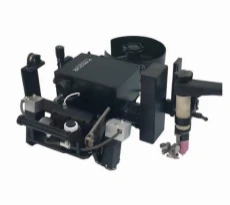
Let me wrap this up. The electrode for a TIG machine isn’t just a random rod—it’s a specialized component that makes or breaks your weld quality. Pure tungsten for tiny hobby jobs, thoriated for general steel work, ceriated for thorium-free jobs, lanthanated for heavy-duty all-around work. Size and tip shape matter too, and never skimp on brand. If you’re a welder looking to upgrade your TIG setup, or you just have questions about which electrode works for your specific projects, hit me up. We can talk through your needs, match you with the right machine and electrodes, and make sure you don’t waste time or money on the wrong parts. Don’t hesitate to reach out anytime.
TIG Welding Machine References:
- "TIG Welding Electrodes: A Complete Guide", AWS Welding Journal, Vol. 98, No. 4, 2022
- "Material Science of Tungsten Alloys for Welding Electrodes", Journal of Manufacturing Processes, Vol. 45, 2020
- "Safety and Performance Considerations for TIG Electrode Selection", Industrial Welding Magazine, Vol. 17, No. 2, 2021
EMI Pipeline Tech. Co., Ltd.
We’re well-known as one of the leading TIG welding machine manufacturers and suppliers in China. We warmly welcome you to buy advanced TIG welding machine made in China here from our factory. If you have any enquiry about cooperation, please feel free to email us.
Address: Building31,No.511,Huangpujiang North Road, Zhoushi Town, Kunshan City, Jiangsu Province,China
E-mail: zhaoqiang@emipipeline.com
WebSite: https://www.emiwelding.com/
