If you’ve ever stopped to think about how IV lines stay flowing smoothly without getting gummed up or letting bacteria sneak in, there’s a good chance needle free connectors (NFCs) are the unsung heroes of that system. I’ve been selling these guys for a handful of years, and I still get questions from clinicians and facilities managers alike: how do these little plastic-mechanical things actually make sure fluid moves right, without a needle poking in every time? Let’s break that down, no stuffy jargon, and I’ll throw in the behind-the-scenes stuff that comes from working with hospitals day in and day out. needle free connectors
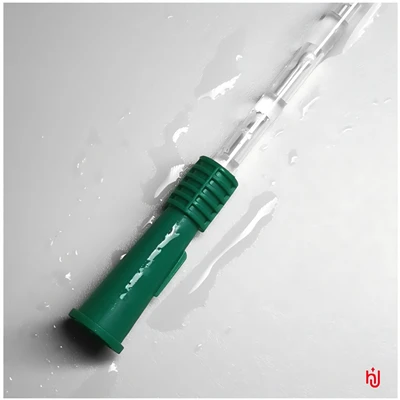
First, let’s start with what a needle free connector actually is—simply put, it’s a port on the end of an IV line, catheter, or central line that you hook syringes, IV bags, or infusion sets into, instead of sticking a needle through a rubber septum (the old-school way) every time you need to access the line. But the whole point is fluid flow can’t be an afterthought here; if flow gets blocked, you’re looking at delayed meds, fluid overload, or even line failures. So how do we make sure the flow is just right? It boils down to three core design choices we prioritize here at the company I rep for, and I’ve watched every single one play out in actual clinical settings.
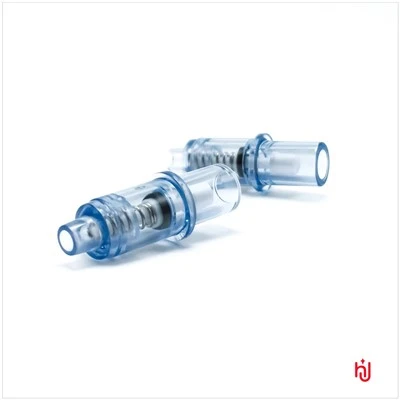
First up: the internal valve mechanism. This is the heart of every NFC, and it’s engineered to open only when you connect something, then seal tight when you disconnect. Think of it like a little one-way door, but way more precise. There are two main types of valves we supply: silicone diaphragm valves and split-septum valves. Let’s walk through silicone first—this is the most common type we sell for regular peripheral IVs, and I can tell you, clinicians love it because it’s gentle on syringes. The diaphragm is a thin, super flexible piece of medical-grade silicone, molded with a tiny slit in the center. When you push a luer lock (the standard tapered connector on a syringe or IV set) into the port, it presses the slit open against the silicone’s natural tension, creating a clear, unobstructed pathway for fluid. No weird gaps, no bends that restrict flow. When you pull the luer out, the silicone snaps right back closed, sealing completely. No leaks, no air getting in.
Then there’s the split-septum valve, which we use more for central lines and critical care cases, where flow rate is non-negotiable. This one’s made of a firmer medical polymer, split into four petals that are spring-loaded. When you attach a luer, the petals spread apart, creating a full circular opening that’s sized to match the luer’s inner diameter. Wait, that’s a big point—if the internal opening isn’t exactly the same size as the luer, you get turbulence, which slows flow. Our split-septum valves are machined so the open diameter matches the standard luer’s inner bore (usually 0.06 inches, for the nerds out there), so there’s no pinch point. I’ve heard horror stories from old connectors where the inner opening was too narrow, so a regular normal saline flush would take twice as long as it should. That’s not just annoying for nurses—it can cause issues like medication incompatibility if you’re flushing too slow between drugs.
Second, the internal lumen design. This is where flow rate gets dialed in, and it’s not just a random size. Every NFC we supply has a internal channel that’s smooth, no sharp corners, no ridges. If there’s a bump or a kink in the lumen, fluid has to push past that, which creates resistance. We use an extrusion process for the internal part that eliminates any mold lines or imperfections—those tiny bumps might sound trivial, but they add up. For example, a 20 gauge IV line with a poorly designed NFC might have a flow rate of 10 mL per minute, but ours is 18 mL per minute, which is the minimum the FDA recommends for peripheral lines. That difference matters when you’re giving emergency meds, or a patient needs a quick fluid bolus.
Also, we don’t skimp on the length of the internal lumen. A lot of cheaper connectors out there have a super short internal channel to cut costs, but that can cause what’s called “dead space” — tiny pockets where fluid can get trapped. That’s not just a waste of meds (no one wants to flush a whole vial just to get the drug out of the connector) but it can also cause backflow. When you disconnect a syringe, the pressure in the line might pull a little fluid back into the dead space, which can lead to clotting in the line, or even bacteria getting trapped if it’s not flushed properly. Our connectors have a dead space of less than 0.1 mL, which is way below the industry standard of 0.5 mL. That means every drop of your flush goes straight through the line, not into the connector.
Third, pressure management. This is the part most people don’t think about, but it’s huge for proper flow. When you’re using an infusion pump, the pump pushes fluid at a set pressure, right? If the connector can’t handle that pressure, it can restrict flow, or even break. Our NFCs are tested to handle up to 300 psi, which is way more than the 150 psi most infusion pumps use. But it’s not just about maximum pressure—we also design the valve to open at exactly the right pressure to match what a nurse would use. If the valve opens too easily, you get leaks when you’re just connecting a syringe, and if it’s too hard, a nurse might not push the syringe all the way in, leading to partial opening and restricted flow. We calibrate every batch of valves so they open at around 5 pounds of force, which is the exact amount a standard luer lock connector uses. That means a nurse doesn’t have to muscle it in, and they know if they pushed it all the way, the valve is fully open.
Wait, also there’s backpressure. When you disconnect a set or a syringe, the line has pressure from the fluid inside. If the connector’s seal isn’t strong enough, that pressure can push fluid out, or air in. But if it’s too strong, the next connection will have to work harder. Our silicone diaphragms are treated with a special coating that makes the seal tight when closed, but still easy to open when you connect a luer. That’s a balance we worked on for years—early on, we had some connectors that sealed too tight, and nurses complained they had to use a tool to disconnect syringes, which was a safety hazard. Now we’ve got that dialed in, so the seal is leak-proof, but it releases easily when you pull the luer out.
Now, let’s talk about the “why” behind all this, because it’s not just design for design’s sake. If flow is off, it’s not just an inconvenience for the staff. I’ve worked with a pediatric clinic that told me a bad connector was causing IV meds to infuse too slow, so the kids had to wait twice as long for their antibiotics, which made the nurses’ jobs harder and the kids more uncomfortable. Another time, a long-term care facility had issues with line clots because of dead space in old connectors, so they had to replace lines every two weeks instead of every four. That adds up to more cost, more patient trauma, more work for nurses. So when we’re making these connectors, every choice ties back to keeping flow consistent, safe, and efficient.
There’s also a thing called “flow dynamics” that we test every batch. We don’t just check if fluid moves, we measure how it moves. Turbulent flow is bad because it can cause clots, and it also means the fluid isn’t mixing properly if you’re pushing two drugs through the same line. Our internal channels are smooth and sized so flow is laminar, which is the smooth, straight flow that keeps things moving without disruption. I remember when we first started doing in-house flow testing, we saw that some competitors’ connectors had 15% more turbulent flow than ours, which meant more risk of clotting over time. That’s why we invest in that testing—we don’t just rely on third-party claims, we test every single batch ourselves to make sure the flow is right.
Another common question we get: do needle free connectors ever cause flow issues? Yeah, sometimes, but it’s almost always a bad design, not a flaw in the product itself. A lot of cheaper connectors cut corners on the valve or the lumen, so they get blocked with medication residue or blood. That’s why we recommend regular flushing (10 mL of normal saline, by the way, not less) every time you use the connector, which works with our design because there’s no dead space to trap residue. If you’re using a cheap connector, even the right flush might not clear the residue, so it builds up and blocks flow.
Let’s get real about what clinicians deal with every day. A nurse might have 5 patients to check in one hour, each with a central line to access. They don’t have time to mess with connectors that leak, or that slow down their flushes. That’s why our NFCs are designed for quick, easy access, with consistent flow, no matter who’s using them. We’ve even got some smart connectors for long-term home care—those have a special feature that prevents kinking when patients move around, so flow stays steady even if the patient is bending an arm or rolling over. That’s a big deal for home health, where patients aren’t sitting in a chair next to a pump, they’re moving around their house.
I’ve also talked to infection control teams, who care about flow for a different reason. If a connector is hard to flush, nurses might skip a full flush, which means bacteria can get trapped in the line. Our dead space is so small, a full flush removes almost all residual fluid, which cuts down on infection risk. That’s a big selling point for hospitals, since healthcare-associated infections are a huge cost and safety concern.
Now, if you’re a facility manager, a nurse, or a procurement person who’s tired of dealing with connectors that cause flow issues, leaks, or extra work for your staff, this is where you come in. We’ve been supplying NFCs to hospitals, clinics, and long-term care facilities across the country for years, and we know exactly how to match the right connector to your needs—whether you’re doing peripheral IVs, central lines, pediatric care, or home health. We can walk you through flow rate data, test reports, and even send sample connectors so your staff can see how they work firsthand.
If you’re ready to stop dealing with subpar connectors that mess with fluid flow, reach out to our team to talk through your specific needs. We don’t do one-size-fits-all here, so we’ll help you pick the right design for your setting, whether you need fast flow for emergency care, low dead space for infection control, or easy access for busy floors. Don’t settle for connectors that cut corners—your staff and your patients deserve something that works consistently.
manufacturing tooling / raw materials References
- Centers for Disease Control and Prevention (CDC). Guidelines for the Prevention of Intravascular Catheter-Related Infections.
- Infusion Nurses Society (INS). Infusion Therapy Standards of Practice.
- Food and Drug Administration (FDA). Medical Devices: Needle Free Connectors – Safety and Performance Considerations.
- Journal of Infusion Nursing. Flow Dynamics and Needle Free Connector Design: Impact on Clinical Outcomes.
Guangdong Huaju Medical Technology Co., Ltd.
Guangdong Huaju Medical Technology Co., Ltd. is one of the most professional needle free connectors manufacturers and suppliers in China, featured by quality products and good service. Please rest assured to buy bulk premium needle free connectors made in China here from our factory.
Address: FLOOR 3-4-5, BLOCK B, ZHONGJING RD #12, ZHONGSHAN, GUANGDONG, CHINA 528437
E-mail: celia@endotra.com
WebSite: https://www.endotra.com/
