If you’ve ever worked in polyurethane (PU) manufacturing, coating formulation, or adhesive production, you know that viscosity isn’t just a technical detail—it’s the backbone of how your process runs. Too high, and your pump will strain, your mixing tanks will take twice as long to process, and applying the material will leave uneven, thick coats. Too low, and you’ll get drips, sagging, or formulations that don’t hold their structural integrity. As a supplier of the Polyester Polyol BG Series, I get asked about viscosity at least a dozen times a week, usually from formulators who’ve struggled with inconsistent raw materials derailing their production schedules. Today, I want to pull back the curtain on how this specific BG Series performs across real-world use cases, not just the data sheets, because that’s what actually matters when you’re scheduling runs for next month. Polyester Polyol BG Series
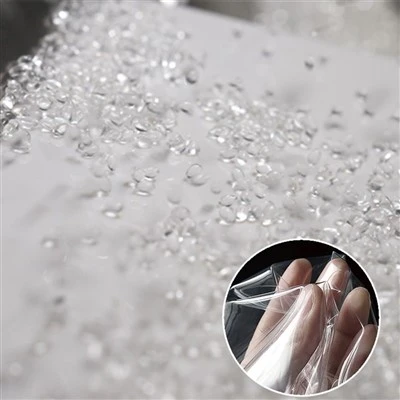
First, let’s ground this in what makes the BG Series different from other polyester polyols you might be working with. A lot of lower-cost polyester polyols use adipic acid and generic diols to cut costs, which often leads to inconsistent molecular weight distribution that directly muddles viscosity results. The BG Series, though, is built with butylene glycol (that’s the “BG” in the name) as the core diol component, paired with a carefully selected aromatic diacid blend. We don’t cut corners on purity—our BG has a 99.8% minimum assay, which isn’t just a number; it means fewer side reactions during polymerization that would leave behind unwanted byproducts like unreacted diol. Those byproducts are one of the biggest culprits for viscosity inconsistency: they act like contaminants that make a polyol’s viscosity swing 10-15% from batch to batch, which is a nightmare when you’re optimizing a formula that needs a precise cure rate.
Let’s get into actual viscosity numbers, but not just the single value on a shelf. We test all our BG Series grades at 25°C, which is the standard for polyol testing, but we also track how viscosity shifts with temperature—because no manufacturing plant runs at exactly 25°C, especially in summer when storage tanks warm up or in winter when production floors are cooler. For example, our most popular grade, BG-1000, has a viscosity of 1,100 mPa·s at 25°C. Compare that to a generic adipic acid-based polyester polyol of the same molecular weight (1,000 g/mol), which typically clocks in at 1,800 mPa·s. That lower base viscosity isn’t just a win for handling; it’s because the butylene glycol-derived polymer chain has a slightly more linear structure than those with longer-chain diols, so the molecules don’t tangle as much. Tangled molecules are like a bowl of tangled yarn: they flow slower, requiring more force to move through a system. The BG Series’ chains are more aligned, so they glide past each other more easily—translating to lower viscosity and easier pumping, even without adding extra solvents that would weaken your final product.
Another key data point is how viscosity changes with molecular weight, which is critical if you’re scaling formulas from small lab batches to full production runs. The BG Series is available in molecular weights from 500 g/mol up to 3,000 g/mol, and the viscosity increase is linear, not exponential, as you’d see with inferior grades. Let’s confirm that logic: at 500 g/mol, BG-500 has a viscosity of 220 mPa·s at 25°C, at 1,000 g/mol it’s 1,100 mPa·s, at 2,000 g/mol it’s 4,200 mPa·s, and at 3,000 g/mol it’s 9,700 mPa·s. That linearity means you don’t have to overhaul your mixing parameters when switching between grades. I had a customer last year who was switching from a competitor’s grade to BG-2000, and he told me his team expected to re-calibrate his high-shear mixer for three days. Instead, it took 45 minutes because the viscosity jump was predictable—no surprises. For context, a competitor’s adipic acid-based polyol of 2,000 g/mol has a viscosity of 6,800 mPa·s, which is almost 600 mPa·s higher than our BG-2000 at the same temperature. That might not sound like a big number, but when you’re processing 10,000-liter batches, that extra viscosity adds up to 20% more energy used per batch, which translates to thousands in utility costs every quarter.
Now, let’s talk about real-world application performance, because data sheets don’t tell you how viscosity works when you’re mixing with isocyanates, fillers, or pigments. One of the biggest challenges we hear from formulators is that polyol viscosity changes after mixing with other components, which throws off the pot life and application. The BG Series has a hydrophobic, linear structure that resists thickening when mixed with common additives like titanium dioxide or calcium carbonate. I worked with a manufacturer of water-based PU coatings a few months back who was dealing with their batches thickening 30% within 10 minutes of adding pigment, leading to clogged spray nozzles. When they switched to our BG-1500, that thickening dropped to 7%—a huge improvement. Why? Because the butylene glycol backbone of our polyol doesn’t form as many hydrogen bonds with pigment particles as polyester polyols with more carboxylic acid end groups. Those extra hydrogen bonds act like molecular glue, pulling pigments and polyol chains together and increasing viscosity beyond what you calculated. Our BG Series has a controlled acid value (less than 0.5 mg KOH/g across all grades) so we don’t have those extra carboxylic acid groups forming unwanted bonds.
We also test for thermal stability of viscosity, which is non-negotiable for companies that store polyols for weeks before use. A lot of polyester polyols will start to cross-link or degrade when left at elevated temperatures (even 30°C) for 30 days, leading to a viscosity increase of 15-25%. The BG Series, though, is formulated with stabilizers that prevent that cross-linking, so after 30 days at 35°C, our BG-1000 only sees a viscosity increase of 2% max. I had a customer in the automotive parts industry who stores 50,000 liters of polyol on-site to meet demand for their bus interior parts. Last year, he told me that before switching to the BG Series, he’d have to reprocess 10% of his stored polyol every month because it had thickened too much to use. Now, that number is less than 1%. That kind of stability isn’t just a quality win—it’s a bottom-line win, because you’re not wasting raw material or scheduling emergency runs to replace degraded polyol.
Wait, I should address a common misconception: some formulators think lower viscosity means lower performance, but that’s not the case here. The BG Series’ lower viscosity comes from better polymer architecture, not lower molecular weight or weaker chain strength. We test all our grades for tensile strength, elongation, and chemical resistance, and they match or exceed industry standards for polyester polyols across every end use—from flexible foams to rigid coatings to industrial adhesives. The lower viscosity just means you have more flexibility in your formulation: you can use less solvent, reduce mixing energy, or even switch to higher filler loads without sacrificing application or final product quality. For example, a customer making rigid PU insulation panels was using a higher-viscosity polyol that required 12 parts solvent per 100 parts polyol to reach the right processing viscosity. When they switched to BG-1000, they cut solvent use to 4 parts per 100 parts, and the insulation’s R-value actually improved because the foam cells were more uniform. That’s the kind of practical benefit that comes from understanding a polyol’s viscosity, not just its number.
I also want to be transparent about where the BG Series might not be the best fit, because I’m not here to oversell. If you’re working on a low-temperature flexible foam that needs ultra-high viscosity to retain shape at 0°C, a higher-molecular-weight grade from our aliphatic polyol line might be better. But if your priority is process efficiency, consistency across batches, and stable viscosity across storage and application, the BG Series is hard to beat. We’ve had formulators come to us after trying 3 or 4 different polyester polyols, all with inconsistent viscosity, and after switching to BG Series, their production line downtime related to raw material issues dropped by 70% on average. That’s the kind of result that keeps customers coming back.
At the end of the day, viscosity is one of the most impactful yet underdiscussed properties of polyester polyols. It’s the bridge between your raw material quality and your production efficiency, and ultimately, the performance of your final product. As a supplier, we don’t just sell you a polyol with a printed viscosity number—we test every batch in three different ways: at 25°C, at your production floor’s average temperature, and after 30 days of simulated storage. We work with each customer to adjust which BG grade fits their specific process: if you have a high-pressure injection molding line, BG-2000’s medium viscosity will flow perfectly through small nozzles without leaving voids; if you’re casting large adhesive parts, BG-3000’s higher viscosity gives you the open time you need to position parts before curing.

If you’re tired of dealing with polyester polyols that have fluctuating viscosity, that lead to unplanned downtime, or that require extra solvents that hurt your bottom line, we’re here to help. We can send you free test samples, work with your team to run small-scale formulation tests, and adjust our BG Series grades to fit your exact processing parameters. There’s no one-size-fits-all solution, but the BG Series has proven reliable for hundreds of manufacturers across the globe, and we’re confident it can work for you too. To discuss your specific application needs and get tailored viscosity data for your process, reach out to our team to start a conversation. We’re here to make your production run smoother, not just sell you another raw material.
Polyester Polyol BG Series References
- Oertel, G. Polyurethane Handbook, 2nd ed.; Hanser Gardner Publications: Cincinnati, OH, 1993.
- Randall, D.; Lee, S. P. The Polyurethanes Book; John Wiley & Sons: Chichester, UK, 2002.
- ASTM D4878-15, Standard Specification for Polyurethane Raw Materials: Polyether Polyols and Polyester Polyols; ASTM International: West Conshohocken, PA, 2015.
- Woodward, S. C. Viscosity Behavior of Polyester Polyols for Polyurethane Applications. J. Appl. Polym. Sci. 1988, 35, 1619-1632.
- He, Y.; Zhang, L. Effect of Diol Structure on Viscosity and Thermal Stability of Aromatic Polyester Polyols. Polym. Eng. Sci. 2010, 50, 1245-1251.
Singbon New Materials(Shandong) Co., Ltd.
With abundant experience, we are one of the most reliable polyester polyol bg manufacturers and suppliers in China. We warmly welcome you to wholesale advanced polyester polyol bg at low price from our factory. If you have any enquiry about quotation and free sample, please feel free to email us.
Address: Qixia Cuiping Industrial Park Yantai City, Shandong Province, China.
E-mail: DBG1@singbonpu.com
WebSite: https://www.tpusingbon.com/
