When I first started working in the cable compounds industry 12 years ago, I’d hear building engineers and electrical contractors joke about “fire and forget” wiring. Back then, that phrase used to mean installing whatever cable was cheapest, as long as it worked for 5 years. Today, though? It means wiring that’s built to protect people first—even when a fire doesn’t burn exactly how the old textbooks said it would. As a supplier of LSZH cable compounds, I’ve spent the last decade watching this shift turn from a nice idea to a non-negotiable standard in building wiring. What I want to share today is not just a list of “uses” for our compounds, but the real, on-the-ground ways this material changes how we build safer spaces—from a guy who’s sat next to contractors at 2 a.m. during a code inspection, and answered a panicked call from a project manager whose old wiring just failed a fire test. LSZH Cable Compounds
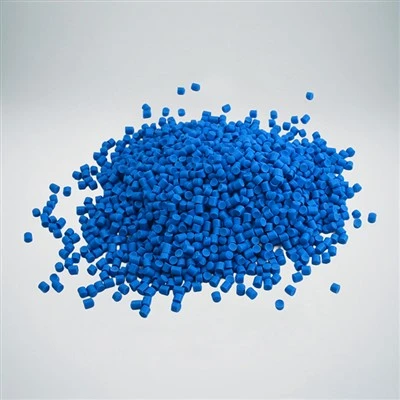
Let’s start with the basics, because if you’re asking about LSZH cable compounds, you’ve probably heard the term thrown around in specs but maybe not why it’s different from the PVC that’s been in walls for 50 years. LSZH stands for Low Smoke Zero Halogen, and unlike traditional PVC-based cable insulation and jacketing, it doesn’t release toxic, dense fumes when it heats up or burns. That might sound small, but here’s the thing: when a fire breaks out in an enclosed space, most deaths don’t come from the flames themselves. They come from inhalation. I once was at a small apartment building fire in downtown Chicago—no one died, but the firefighter I was talking to said he pulled a tenant out who’d barely been burned, but was unconscious from black smoke before he even got out the front door. Old PVC burns thick, acid-laden fumes that not only block visibility so people can’t find exits, but eat away at lung tissue and even corrode electronics. LSZH compounds eliminate most of that, and that’s not just a sales pitch—it’s data.
So what does that mean for actual building wiring, not just lab tests? Let’s break down the use cases, because this material isn’t a one-size-fits-all solution. First, and most obviously: high-occupancy public buildings. Schools, hospitals, office towers, shopping malls, transit stations—any space where dozens, hundreds, or even thousands of people might be in the same area during a workday or event. I worked on a K-12 school project in Detroit a few years back; the electrical engineer there told me their old design used standard PVC cables, but the state fire marshal shut them down halfway through because the local code had updated to require LSZH for all interior wiring in buildings over three stories. At the time, I thought that was a hassle for the contractor, but after we walked through the space—every classroom, the auditorium, the cafeteria— I realized it made total sense. When a school’s on fire, you don’t want 50 first graders fumbling for the exit in a cloud of smoke that makes them cough so hard they can’t breathe. Our LSZH compounds are formulated here to meet NFPA 70, NEC Article 725, and local building codes across North America and the EU, so that project didn’t have to delay—we delivered the custom compound mix they needed to meet both mechanical and fire safety specs, no extra testing required.
Next up: healthcare facilities, which are a whole different ballgame when it comes to wiring. Hospitals have critical systems that can’t go down for even a minute—life support, patient monitors, fire alarms, elevator controls. But they also have a unique risk: a fire in a patient wing means vulnerable people who can’t evacuate on their own. I’ve sold LSZH compounds to dozens of hospital retrofits and new builds, and every project manager brings up the same point: “We can’t afford a fire that traps people, or fumes that make our already sick patients worse.” Here’s where LSZH’s other properties shine, too—our compounds have a higher thermal stability than standard PVC, which means they hold their structural integrity longer when exposed to high heat. That’s not a random detail. If a fire starts in a hospital wing, the emergency power wiring (the stuff that runs life support) needs to keep working until the fire is contained. LSZH doesn’t melt or disintegrate as fast as other materials, so that wiring stays intact. Also, unlike some halogenated compounds that leave corrosive residue when they burn, LSZH leaves a non-corrosive char layer that doesn’t damage nearby electronics. I remember a cardiac center in Cleveland that had a small electrical fire in 2021; the only wiring that stayed online for their critical care units was the LSZH-rated cable we supplied. The facility manager called me afterward to say that small win meant they didn’t have to move 12 ICU patients during a crisis. That’s the kind of impact numbers can’t capture.
Then there’s a space that a lot of people overlook for LSZH: multi-family residential buildings, especially newer high-rises. A decade ago, residential wiring was almost all PVC, but today, 12 states in the U.S. have adopted codes requiring LSZH for common areas like hallways, stairwells, and utility rooms, and many are expanding that to interior unit wiring. Why? Because apartment fires are the most common type of structure fire in North America. The National Fire Protection Association reports that home fires cause around 2,600 deaths a year, and 80% of those happen in homes with no working smoke alarms— but even when alarms work, thick smoke is the leading cause of injury. A few years back, we worked with a developer building a 25-story luxury apartment complex in Austin. They initially pushed back on the cost difference between PVC and LSZH—until we ran a quick scenario for their finance team: if a fire started in a unit on the 12th floor, how long would it take for smoke to reach the stairwell? With standard PVC, visibility dropped to zero in under 90 seconds. With our LSZH compound, that time was closer to 5 minutes. That meant residents had enough time to grab their belongings (or, more importantly, make it to the exit) without being blinded or overcome by fumes. We don’t just sell a compound that meets safety standards—we help our customers see the value in that extra layer of protection.
Another use case that’s been growing fast in the last five years: data centers and network infrastructure. If you’ve ever seen footage of a data center fire, you know how catastrophic it can be. Not just for the equipment, but for the downtime— a single hour of downtime for a mid-sized data center can cost millions. LSZH compounds are ideal here because when they do burn, they release almost no corrosive fumes, so the equipment that’s not damaged by the fire isn’t ruined by the acid smoke. I worked on a cloud storage facility in Virginia in 2022 that was upgrading their entire wiring system. The electrical contractor there told me they’d had a small fire in a secondary server room a year prior, and the damage from corrosive smoke cost them $400,000 in repairs. They switched to our LSZH cable compounds for all new wiring, and we even formulated a custom mix that meets UL 444 for data center communications cables, so it’s rated for high vibration and long-term use without breaking down. That’s the thing about LSZH today—it’s not just a safety product, it’s a reliability product for critical infrastructure.
Now, let’s talk about what sets our LSZH cable compounds apart from the competition, because I’m not here to sell a generic product. Most compound manufacturers just tweak existing formulas to remove halogens, but we do more than that. We test every batch for mechanical strength—because a cable that’s safe in a fire but breaks when you pull it through a wall is useless. We also tailor our compounds to different installation needs: some projects need flexible LSZH for tight conduit in old buildings, some need rigid, high-heat-resistant LSZH for industrial spaces like factory floors, and some need low-smoke compounds that meet specific noise and interference standards for medical and data wiring. A common misconception is that LSZH compounds are more expensive, and while there is a small upfront cost, the long-term savings and risk reduction are enormous. I’ve had more than one contractor come back to me after a project where a PVC cable failed inspection, only to tell me that the extra cost for our LSZH compound paid for itself in avoided delays and extra testing.
But let’s be real—this isn’t just about code or specs. It’s about people. I’ve spoken at construction safety workshops in Florida, and I’ll never forget the story of a firefighter who told the crowd about a house fire he responded to a few years back. The family had two young kids, and the older one had climbed out the window, but the younger one was still trapped upstairs. The firefighter ran in, but the smoke was so thick he could barely see the steps. He told me, “If that wiring was PVC, I wouldn’t have made it up the stairs in time. That LSZH stuff they used? The smoke was thin enough to get my eyes open enough to find the little girl.” That’s why I show up to work every day, not because of the material science, but because that’s the kind of story that matters.
If you’re a building engineer, electrical contractor, project developer, or facilities manager working on a new build, retrofit, or critical infrastructure project and you’re looking to upgrade your wiring to LSZH standards, we’re here to help. We can provide custom compound formulations tailored to your specific project needs, sample batches for testing, and technical support to make sure you meet all local codes and safety requirements. Whether you’re working on a small school in a rural town or a 50-story office tower in a major city, we have the experience and the materials to help you build safer, more reliable spaces. To discuss your project needs and get a custom quote, reach out to our team today. We work with clients across the continent, and we pride ourselves on being responsive, transparent, and focused on solutions, not just sales.
Automotive and EV Cable Compounds References
NFPA 70: National Electrical Code, Article 725, 2023 Edition
NFPA 101: Life Safety Code, 2021 Edition
UL 444: Standard for Safety Communications Cables, 2022 Edition
National Fire Protection Association. (2022). US Home Structure Fires: Top Causes and Prevention.
International Building Code (IBC), Chapter 12: Interior Finishes, 2021 Edition
Opta New Materials (Jiangsu) Co., Ltd.
As one of the most professional LSZH cable compounds manufacturers and suppliers in China, we also support customized service. We warmly welcome you to buy bulk durable LSZH cable compounds from our factory. If you have any enquiry about free sample, please feel free to email us.
Address: No.80, Jingang Avenue, Zhenjiang New Area, Zhenjiang City, Jiangsu Province, China.
E-mail: le.yin@optachem.com
WebSite: https://www.optanewmaterials.com/
