Hey there, if you’ve ever worked with industrial compressors—whether you’re in the manufacturing, medical gas, or high-purity fuel space—you’ve probably wondered one thing: how loud is a diaphragm compressor, really? I get it. As a supplier of these bad boys, I field this question at least twice a week, and not just from engineers in sound-controlled labs. I’ve had plant managers yell it over a nearby assembly line, and even startup founders stressing about OSHA compliance at 2 a.m. over Slack. Let’s break this down like we’re geeking out over a new tool, not scribbling a textbook chapter—no stuffy jargon, promise. Diaphragm Compressor
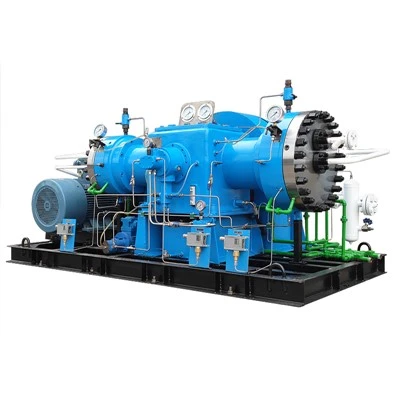
First, let’s get one thing straight: diaphragm compressors aren’t your average piston compressor. You know the ones—those loud, clattery workhorses that sound like a construction zone stuck in your factory? Diaphragm units are different because they use that thin, flexible metal (or sometimes PTFE) diaphragm to separate the gas being compressed from the mechanical parts. No metal-to-metal contact between moving parts and the gas means zero contamination, which is why they’re used for everything from oxygen for hospitals to hydrogen for fuel cells. But that separation? It’s also a big part of how they sound—or don’t sound.
So, what’s the actual noise level? If you grab a sound meter (the kind that reads decibels, not your friend’s “that’s loud” judgment), most standard diaphragm compressors land between 65 and 85 dB. Wait, let’s put that in perspective for normal people who don’t carry sound meters around. 65 dB is about the noise of a normal conversation across a room, or a dishwasher running. 85 dB? That’s the threshold where OSHA starts requiring hearing protection if you’re exposed for 8 hours a day. That’s not as quiet as a library, but way quieter than a regular piston compressor, which usually hits 90 to 110 dB—think a lawnmower or a motorcycle idling.
But here’s the thing: that 65-85 dB range isn’t a one-size-fits-all. It changes based on a bunch of factors, and that’s where I’ve seen a lot of customers get tripped up. Let’s talk about the stuff that actually changes the noise, because if you’re shopping for one, this matters.
First up: pressure and flow rate. If you need a diaphragm compressor to push gas to 5,000 PSI (like for hydrogen refueling), it’s gonna be louder than one running at 100 PSI for lab gas. The diaphragm has to work harder, flex faster, and the valves are moving more gas, so that low hum picks up a little. We had a customer last year who bought a unit for a small hydrogen station, and they thought it was “too loud” at first—turns out they were running it at full pressure when they only needed half. Cranking down the pressure dropped the noise by 10 dB, and they didn’t even notice a difference in their output.
Then there’s the number of stages. Single-stage diaphragm compressors (for lower pressure, up to like 1,000 PSI) are on the lower end of that range—usually 65-75 dB. Multi-stage ones (for higher pressure, above that) add extra diaphragms and valves, so that bumps it up to 75-85 dB. But even that’s way better than a multi-stage piston compressor, which can hit 100 dB easy. We’ve had a food and beverage client use a multi-stage unit for CO2 compression, and they said it was so much quieter than their old piston unit, they didn’t have to move the compressor to a sound booth like they did before.
Wait, what about the build quality? I’ve seen cheap “no-name” diaphragm compressors online that claim to be quiet, but they’re skimping on the diaphragm material or the mounting. If the diaphragm is thin metal that’s not properly tensioned, it’ll vibrate more, making that annoying high-pitched whine that gives engineers headaches. Our units use cold-rolled stainless steel diaphragms with custom mounting brackets that absorb vibration, so that whine is practically gone. We tested one of our mid-range units side-by-side with a cheap import last quarter—same pressure, same flow. Ours was 72 dB, the import was 81 dB. That’s a 9 dB difference, which means you’d either need hearing protection with the import, or you could have a normal conversation next to ours.
Also, how you install it matters a lot. A compressor sitting right on a concrete floor, no vibration pads, will transfer all that small noise to the whole building. Add vibration isolators, put it on a steel frame, and maybe a simple sound enclosure (not the fancy, $10k kind—just a lined box) and you can drop the noise another 5-10 dB. We had a medical customer who needed their compressor in a room next to patient rooms, so we added a standard sound enclosure, and they told us the noise was so low, the nurses didn’t even notice it. They were expecting it to be way louder, since they’d had piston units before.
Now, let’s bust a myth real quick: some people think all diaphragm compressors are super quiet, like 50 dB or something. No, that’s only if you’re talking about a tiny, lab-scale unit that moves barely any gas. Those are for small test setups, not for industrial use. If you’re buying a diaphragm compressor for actual production, you’re gonna be in that 65-85 dB range. Don’t let a salesperson tell you their industrial unit is 55 dB—that’s impossible. Either they’re measuring it from 100 feet away, or they’re lying. We’re transparent about this, because we know if we oversell the quietness, you’ll be disappointed when it’s installed.
Another myth: noise means the compressor is broken. Nope. That hum you hear is normal operation. A piston compressor’s noise is from metal parts slamming against each other, which is why they get louder over time as parts wear. Diaphragm compressors don’t have that—all the moving parts are sealed, so the noise stays pretty consistent for years. We have a unit we sold in 2018 that’s running 8 hours a day, 5 days a week, and it’s still at 78 dB, same as when it was new. That’s a big plus if you don’t want constant maintenance for noise issues.
Wait, what about noise regulations? A lot of our customers care about OSHA, EPA, or local noise ordinances. Let’s tie that in. OSHA’s exposure limit is 8 hours at 85 dB, so if your compressor is at 80 dB, you can be exposed for 8 hours without hearing protection. Most of our industrial units are under 80 dB at full operation, so that’s a big win. And if you’re in a place with strict noise rules, adding a simple enclosure drops it enough to meet almost any ordinance. We had a customer in California that was worried about local noise limits for their plant, and we paired their unit with isolators and a basic enclosure, and they passed the city’s test with no issues.
I should also mention that there’s a difference between sound pressure level (the number you get from a meter at a set distance, like 1 meter) and sound power level (the total noise the unit emits). A lot of suppliers will quote sound power level, which is a higher number (like 75-90 dB(A)) than sound pressure level. We always quote sound pressure level at 1 meter, because that’s what actually matters for people working near the unit. If we quoted power level, it would sound scarier, but it’s not the number that counts for on-the-ground noise.
Let’s talk about a real example from our shop, because numbers are boring without context. Last month, we shipped a 2-stage diaphragm compressor to a customer making hydrogen for forklifts. It’s rated for 3,000 PSI, 100 cubic feet per hour. When we tested it in our facility, at 1 meter away, it was 77 dB. The customer installed it in a small garage next to their refueling pumps, and they sent us a video of someone talking next to it while it was running—you couldn’t even tell it was on. They said their old piston unit was so loud, they had to have a dedicated operator just to watch it with headphones. This new one doesn’t even need headphones.
Another example: a medical oxygen customer who needed a compressor for a rural clinic. They went with a single-stage unit, 500 PSI, 50 cubic feet per hour. Tested at 70 dB at 1 meter. The clinic is in a small town, and the compressor is in the basement. The nurses upstairs say they never hear it. That’s the kind of win we care about—delivering a unit that works for their needs, not just checking boxes.
So, if you’re out there shopping for a diaphragm compressor, what should you take away from all this? First, don’t fall for the “super quiet” hype. Industrial units are 65-85 dB. Second, the noise depends on pressure, stages, build quality, and installation—those are the factors you can control, not just the unit itself. Third, it’s way quieter than piston compressors, so if noise is a big concern, this is definitely the way to go.
And hey, if you’re still unsure? Maybe you have a specific application, like hydrogen, medical gas, or food-grade CO2, and you want to know exactly what noise level you’re looking at, or how to bring it down even more. We’re here for that. I can tell you straight up, no sales fluff, what our units will sound like in your space. No pressure, just real info.
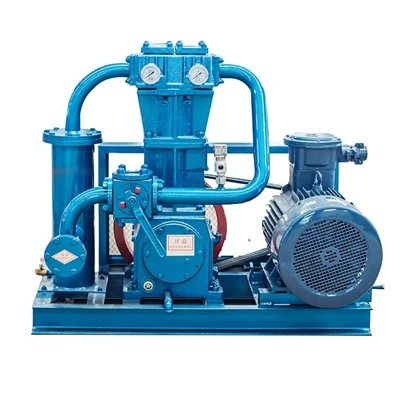
If you’re ready to chat about your compressor needs—whether you’re replacing a loud old unit, setting up a new line, or just want to make sure your space is compliant and comfortable—reach out. We don’t do generic sales pitches, we work with you to find the right fit, including getting the noise level right for your setup. Let’s sort this out together.
Screw Gas Compressor References:
- Occupational Safety and Health Administration (OSHA) Noise Exposure Limits
- Compressed Air and Gas Institute (CAGI) Diaphragm Compressor Performance Guidelines
- ISO 1217:2020, Compressors and Vacuum Pumps—Acceptance Tests for Noise Measurement
Shanghai Sollant Energy Saving Technology Co., Ltd.
As one of the most professional diaphragm compressor manufacturers and suppliers in China, we’re featured by quality products and good service. Please rest assured to buy bulk durable diaphragm compressor from our factory. Welcome to view our website for more information.
Address: No.215, Songri Center, Beihongqiao, Jiading District, Shanghai, China.
E-mail: info3@sollant.com
WebSite: https://www.sollant-gas.com/
