Hey everyone, Jake here, owner of a small shop that’s been cranking out sheet metal parts for office equipment like printers, scanners, and copiers for 12 years. I get it—if you’re an OA equipment manager or a procurement lead, the last thing you want is a compliance hit, especially with RoHS. That Restriction of Hazardous Substances directive isn’t just a checkbox; mess it up, and you’re looking at product recalls, fines, or losing client trust. As someone who’s spent thousands of hours working with sheet metal for OA gear, I’ve seen how easy it is to slip up on RoHS compliance, even when you think you’ve covered all the bases. Today, I’m breaking down exactly how we make sure every sheet metal part leaving our shop checks every RoHS box—no fancy fluff, just real stuff we do every single day. OA Equipment Sheet Metal Parts

First, let’s get one thing straight: RoHS for OA equipment isn’t the same as RoHS for consumer electronics. Wait, I know, a lot of folks mix these up. The latest update, RoHS 2 (2011/65/EU), plus the 2023 amendments that added some new restrictions, applies specifically to IT and telecom products—yep, that includes your office printers’ metal frames, scanner brackets, copier toner bins, all of it. The big six restricted substances we’re watching? Lead (max 0.1% weight), mercury (0.1%), cadmium (0.01%), hexavalent chromium (0.1%), polybrominated biphenyls (PBBs, 0.1%), and polybrominated diphenyl ethers (PBDEs, 0.1%). The 2023 additions are things like bis(2-ethylhexyl) phthalate (DEHP) and other phthalates, so we had to adjust for that too.
Here’s where most suppliers mess up: they grab a sheet metal blank from a metal mill and assume it’s already RoHS-compliant. Newsflash—most generic steel, aluminum, or brass blanks aren’t. Mills often add lead for machinability, or use hexavalent chromium for corrosion protection, which immediately blows RoHS limits. Step one for us? Vetting every single material supplier before we even order a single sheet. We don’t just look at their sales sheet that says “RoHS-compliant”—we ask for third-party test reports, like those from SGS or Intertek, for every batch. And don’t take “batch 123 is compliant” at face value. Last year, a metal supplier sent us a batch of aluminum that had a tiny cadmium trace we missed in their initial docs. We caught it when we did our own spot checks, and it cost us a week of delay, but way better than that part ending up in a client’s copier and getting flagged at customs.
Next up: manufacturing processes. Sheet metal for OA equipment goes through cutting, bending, welding, coating, and finishing—each step is a possible RoHS landmine. Let’s start with cutting. We use laser cutters and press brakes, no problem there, but if we’re using a cutting fluid? We make sure it’s free of restricted substances. Some old cutting fluids had lead or molybdenum that can leave residue on parts. We switched to a water-based, RoHS-compliant fluid three years ago, and it didn’t cost much more—worth every penny. Then welding: we used to use leaded electrodes for tough welds on thick steel. Nope, that’s a hard no now. We switched to lead-free electrodes, and our welds are just as strong. The key here is training our guys. They’re not just operators—they’re the ones catching slips. We have a quick 10-minute huddle every morning before a new job to remind them: no leaded anything, no hex chrome coatings.
Coating is the big one for sheet metal parts. A lot of OA equipment parts get powder coating or electroplating. Powder coating has resin and pigments—some old pigments used lead or cadmium to get that bright white or blue finish. We work with three powder coating suppliers now that only use RoHS-compliant pigments, but we test every coat before it goes on parts. Last month, a supplier sent a batch of white powder that had a trace of cadmium right at the 0.01% limit—close, but we sent it back instead of risking it. For electroplating, a lot of folks use hexavalent chromium for plating on steel to prevent rust. We switched to trivalent chromium plating. Trivalent is just as good at corrosion protection, and it’s RoHS-compliant. It took us a little time to adjust our plating line settings, but the team got the hang of it in a couple weeks.
Then there’s the small stuff: fasteners. Wait, I know—fasteners are tiny, but they’re sheet metal parts too. We used to buy generic screws and bolts from a hardware store, and half of them were plated with hex chrome. Now we work with fastener suppliers that only provide RoHS-compliant fasteners, and we test those too. It sounds tedious, but if a fastener slips, the whole part is non-compliant. We even keep a small sample of every part we make for two years, just in case a client comes back with a compliance question. That’s saved us a few times when a client had an audit and needed proof of a part from two years prior.
Testing is non-negotiable. We don’t just rely on our suppliers’ reports. For every production run, we take 5 random parts and send them to a third-party lab for RoHS testing. It costs a couple hundred bucks per run, but it’s nothing compared to the fine or lost business if a batch is non-compliant. Last quarter, a test came back with a tiny lead trace in a batch of aluminum brackets. We traced it back to a small steel bolt we used as a spacer that wasn’t RoHS-compliant. We pulled the entire batch, fixed the spacers, and re-tested before shipping. If we’d sent those parts out, our client would have had to rebuild their entire line, and we’d have lost them as a customer—they’re a big office equipment brand, so that would’ve been a disaster.
Documentation is just as important as the parts themselves. RoHS auditors don’t care if you think you’re compliant—they care if you can prove it. We keep a binder (and a digital backup) for every client job, with material test reports, process logs, test results, fastener specs, and even notes from our morning huddles if there was a special step for that job. We also provide a Declaration of Conformity (DoC) for every shipment, signed by our quality manager. A lot of small suppliers skip this, but it’s the first thing auditors ask for. Last year, a mid-sized OA OEM switched to us because their old supplier couldn’t provide consistent DoCs—we’ve been working with them ever since, and they send us 50% of their sheet metal part orders now.
Wait, let’s talk about common myths. I hear all the time: “If my parts are made in the US, they don’t need RoHS.” No, RoHS applies no matter where the product is manufactured, as long as it’s being sold in the EU or UK. A lot of our clients export OA gear to the EU, so RoHS is mandatory. Another myth: “Testing once a year is enough.” No, every batch is different—one batch of aluminum might have a different lead level than the next, depending on the mill’s stock. We test every production run, not once a year. And “trivalent chromium is the same as hexavalent for all parts” — yeah, but some thick steel parts need a special trivalent coating, so we work with our coating supplier to adjust the formula for each part, instead of using a one-size-fits-all.
What about if you’re a client, and you’re worried your current supplier is cutting corners? Ask for their test reports, ask to see their process logs, ask if they do spot testing. If they can’t give you that, run—don’t walk away. We’ve had a few clients come to us after a non-compliance issue with their old supplier, and we walk them through every step so they see exactly how we do it.
Now, let’s wrap this up. Ensuring RoHS compliance for OA equipment sheet metal parts isn’t rocket science—it’s about attention to every single detail, from the raw material you order to the test you run before shipping. It’s about training your team, vetting every supplier, and not cutting corners on testing or documentation. For us, compliance isn’t just a rule—it’s how we keep our clients’ trust, and how we stay in business for another 12 years.
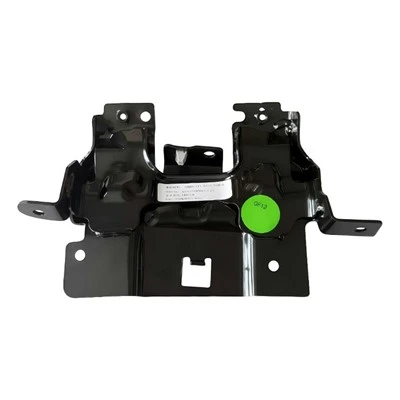
If you’re an OA equipment manager, procurement lead, or someone who needs reliable, RoHS-compliant sheet metal parts, I’d love to chat. We can go over your specific part needs, walk through our process, and make sure everything checks every RoHS box. No sales pitches, just straight talk about what we do best.
Metal Mesh Cover References
- European Commission. (2011). Directive 2011/65/EU of the European Parliament and of the Council on the restriction of the use of hazardous substances in electrical and electronic equipment (RoHS 2). Official Journal of the European Union.
- European Commission. (2023). Commission Delegated Regulation (EU) 2023/2286 amending Annex II to Directive 2011/65/EU of the European Parliament and of the Council as regards phthalates. Official Journal of the European Union.
- International Organization for Standardization. (2020). ISO 14001:2015 Environmental management systems — Requirements with guidance for use. Geneva, Switzerland.
- SGS. (2022). RoHS Compliance Testing Procedures for Metallic Components. SGS Group Technical Report.
Suzhou Yehe Precision Stamping Co., Ltd.
With abundant experience, we are one of the most reliable oa equipment sheet metal parts manufacturers and suppliers in China. We warmly welcome you to buy customized oa equipment sheet metal parts at competitive price from our factory. If you have any enquiry about quotation, please feel free to email us.
Address: No.5, Beifang Road, Changshu City, Suzhou, Jiangsu Province, China.
E-mail: szyh06@yehejingmi.com
WebSite: https://www.yehe-precision.com/
