Hey there, fellow food industry folks and engineering nerds! Let’s cut to the chase: I’ve spent the last 7 years as a latch-type connection piece supplier, and I get asked this question at least twice a week—Can we actually use these things in food processing? If you’re knee-deep in making anything from fresh pasta to frozen snacks, or cleaning a production line at 2 a.m. on a Tuesday, this is for you. No stuffy industry jargon, no corporate fluff—just real talk from someone who’s shipped thousands of these connections to food plants and heard every horror story (and win) about them. Latch-type Connection Piece
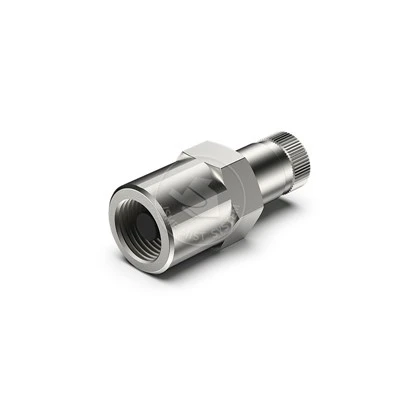
First, let’s knock the most obvious worry out of the way: food safety. I know, I know—metal parts in food? You want something that won’t chip, leach chemicals, or harbor bacteria. Here’s the thing: not all latch connections are created equal. The ones we sell aren’t your random hardware store zinc latch that rusts after one dishwasher cycle. We use 316L stainless steel—you know, the stuff that’s food-grade, medical-grade even, because it’s super corrosion-resistant and doesn’t release any yucky stuff when it’s exposed to acidic sauces, salty brines, or that caustic CIP (clean-in-place) chemicals everyone hates. I’ve had a food plant quality control manager tell me she once tested our latches by soaking them in their tomato sauce acid for 2 weeks straight—no discoloration, no metal leach. That’s the baseline, right? If your connection piece isn’t food-grade, dump it. But that’s not a latch-specific issue, that’s a bad part issue.
Now, let’s get to what food processing actually needs, because this isn’t just safety—it’s function. Think about what happens in a typical food plant: you have conveyors that move diced carrots, mixing tanks that stir batter, hoppers that feed cookie dough, and all of it needs to come apart fast for cleaning. A lot of old-style connections are bolted on with hex keys that go missing every other shift, or threaded fittings that cross-thread after 10 uses and leak syrup all over the floor. That’s a safety hazard and a production delay. Our latches? Tool-less, one-handed operation. A line worker can yank a conveyor segment apart in 2 seconds, no gloves off, no fumbling with a tiny tool. I had a client that makes frozen vegetables say this cut their line changeover time by 12 minutes per run. 12 minutes! Multiply that by 10 runs a day, that’s an extra hour of production time. That’s not trivial, that’s real money.
But wait—what about durability? Food processing is rough. There are heavy parts getting slammed together, high-pressure washdowns, freezing temps for frozen foods. Our latches are tested to withstand 1,000+ washdown cycles with 1,500 PSI water pressure. We had a plant that does bulk cheese processing run a 6-month trial in their cold storage (think 20°F) and the latches didn’t crack or slip once. Some people ask, “But won’t they loosen when you’re moving heavy loads?” Nope—we add a positive detent mechanism, so once they click into place, they stay there, even if you’re vibrating a conveyor with 50 lbs of raw chicken parts on it. No accidental disconnections, which means no product spillage, no cross-contamination. That’s a big one. Cross-contamination is the number one thing food plants lose lawsuits over, right? So a connection that stays connected when it should is a food safety win too.
Now, let’s address the elephant in the room: regulations. The FDA, BRCGS, ISO 22000—food plants have to jump through so many hoops for every part they use. I can’t tell you how many times I’ve talked to a plant engineer who said, “Our auditor would never approve this.” But here’s the tea: our latches are 100% compliant with FDA 21 CFR Part 177, which is the big one for food contact materials. We provide full material traceability documents, third-party test reports, the whole nine yards. Last year, a snack food plant that’s audited every quarter switched from their old bolted fittings to our latches, and their auditor didn’t even bat an eye. The only time auditors push back is if you’re using non-food-grade materials, or if the connection has crevices that trap food debris. Wait—crevices? Our latches have a smooth, fully machined surface, no sharp corners, no hidden gaps where bacteria can grow. We designed them with food safety in mind, not just as an afterthought.
Let’s also talk about use cases, because this isn’t one-size-fits-all. Where do food processing plants use these? Let’s list the ones I’ve shipped to: conveyor system segments (super common for handling produce, baked goods, meat), mixing tank lids and accessory connections, hopper access panels, pipeline connections for non-high-pressure applications (wait, pressure is a thing—our latches are rated for up to 150 PSI, which works for most food pipelines, not the super high-pressure stuff like pasteurization lines, but that’s fine—use the right part for the job). I had a guy who makes artisanal jam use our latches to connect his fruit hopper to the cooker; he said it’s way easier to take apart to clean than the old clamp setup he had. No more scrubbing around a weird clamp that had gaps.
Now, let’s be real—are there any downsides? No part is perfect. If you need a connection for super high-pressure (like 300+ PSI) pasteurization lines, our latches aren’t the best fit, go for a threaded or flanged connection there. If you’re making parts with very tight, specialized tolerances that require a custom machined connection, maybe a latch isn’t for you unless we do a custom design. But for 80% of the quick-disconnect, food-contact parts in a typical processing plant? Latch-type connections are not only allowed—they’re a upgrade.
Wait, let’s talk about something that’s big in the industry right now: labor shortages. Every food plant is short-staffed, right? Line workers are stretched thin, they don’t have time to mess with complicated parts. A latch that works with one hand? That’s less strain on workers, less time spent on cleaning, less chance of human error (like forgetting to tighten a bolt). I’ve heard stories of plants having to hire extra people just to handle all the tools needed for old connections—with latches, that’s gone. That’s a huge labor win, especially with turnover being so high in food processing.
Let me also share a story that stuck with me. Last year, a small craft brewery reached out—they were using a bolted connection for their grain hopper, and they kept having issues where the bolts would rust (they used a cheap, non-food-grade bolt) and they’d have to shut down the line for an hour to replace them. They tried our latches, switched over, and told me a few months later that they haven’t had a shutdown related to connections since. That’s the kind of impact we’re talking about—for small operations and big ones alike, latches aren’t just a part, they’re a way to make operations smoother, safer, and cheaper.
Now, I know what some of you are thinking: “This sounds too good, is this just sales talk?” No, dude, I’m a supplier, but I’m also a real person—my cousin runs a small food processing plant, so I get it, I don’t want to sell you something that’ll give you more problems. We’ve been in this game for over a decade, and the feedback we get from food clients is 90% positive. The negative feedback? Almost always from someone who used a cheap, no-name latch from a random supplier, not our parts. Cheap parts skip the food-grade materials, skip the testing, skip the compliance. That’s not a latch issue, that’s a cheap part issue.
So, to answer the original question: Yes, a latch-type connection piece absolutely can be used in the food-processing industry—if you pick the right ones. You need to make sure they’re food-grade, corrosion-resistant, easy to clean, compliant with regulations, and rated for your specific application. That’s exactly what we make.
If you’re a food processing plant manager, engineer, or maintenance lead tired of broken connections, long changeovers, and cleaning headaches, hit us up to chat through your specific needs. We can send over samples, share our test reports, and figure out if our latches are a good fit for your line. No pressure, no hard sell—just real talk about making your job easier and your operation safer.
Water Mist Sprinkler REFERENCES
- U.S. Food and Drug Administration. (2023). Food Contact Substances: 21 CFR Part 177. FDA.gov.
- BRCGS. (2022). Global Standard for Food Safety Issue 8. BRCGS.
- International Organization for Standardization. (2021). ISO 22000: Food Safety Management Systems. ISO.org.
- National Sanitation Foundation. (2022). NSF/ANSI 51: Food Equipment Materials. NSF.org.
Jinsheng Mist Forest-High Pressure Mist System
Jinsheng Mist Forest-High Pressure Mist System is one of the most experienced latch-type connection piece manufacturers and suppliers in China, featured by quality products and low price. Please rest assured to wholesale bulk latch-type connection piece in stock here and get pricelist from our factory. Customized orders are welcome.
Address: 109 Yonghong Road, Wenjiang District, Chengdu City, Sichuan Province, China
E-mail: 18190767523@163.com
WebSite: https://www.jswsmist.com/
