If you’ve spent any time around street BMX, you know that the sport is equal parts creativity, grit, and frustration. Frustration usually shows up in the form of a flat tire mid-rail grind, a pinch flat after a messy landing, or a tube that splits at the valve while you’re learning a new bar spin. As a BMX TPU tubes supplier, I get asked this question all the time: “Can BMX TPU tubes actually work on a street BMX bike?” The short answer is yes—but there’s a lot more nuance to it than just swapping out your standard butyl tube and hitting the skatepark. Let’s break this down like we do when a new rider stops by our booth at a contest, wide-eyed and ready to stop dealing with flats. BMX TPU Tubes
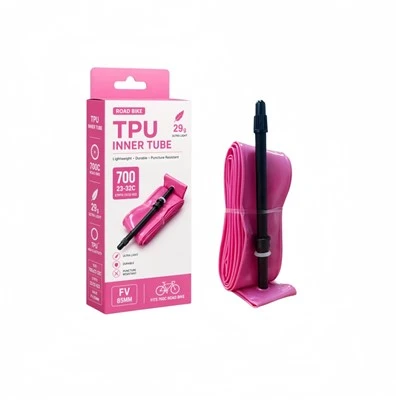
First, let’s get the basics out of the way. For anyone new to BMX parts, TPU stands for thermoplastic polyurethane, a material that’s been used in industrial and medical settings for decades before it made its way into bicycle tubes. Butyl rubber, the stuff standard tubes are made of, has been the go-to for road and BMX bikes for generations. The key difference between the two is in their physical properties, and that’s where the street BMX context matters most. Street BMX isn’t gentle. It’s not the smooth pavement of a road bike or the packed dirt of a trail; it’s concrete curbs, metal ledges, grind rails, and random bits of gravel and glass that get dragged into skateparks by skateboarders and BMXers alike. Riders land 3, 4, sometimes 5 feet off the ground, often at awkward angles, and that puts an enormous amount of stress on every part of your bike—especially your tires and tubes.
So, let’s compare TPU vs. butyl in terms that a street rider will care about, not just a material scientist. Weight is a big one for BMX. Most street riders are obsessing over every gram they can shave off their bike to make tricks easier. A standard 20-inch butyl BMX tube weighs around 120 to 150 grams, while a comparable TPU tube weighs 50 to 70 grams. That’s almost half the weight, and it’s not just total weight—it’s unsprung weight, which means it makes your bike feel lighter and more responsive when you’re spinning tricks or pumping over a hip. But TPU isn’t just lighter; it’s stronger. TPU has a higher tensile strength than butyl, meaning it can stretch further before it breaks, and it’s more resistant to punctures from sharp objects. That’s a game-changer for street riders who’ve ever had a glass shard go through their tube on a grind. I’ve seen riders who switch to TPU go months without a flat, whereas before they were patching tubes every week after a session.
But strength and weight aren’t the only factors when it comes to street BMX. There’s also air retention. How many times have you pumped up your tube the night before a session, only to find it flat in the morning because it leaked out through the valve or the tube’s walls? TPU has a much lower air permeability than butyl. That means it holds air longer—usually 2 to 3 times longer than a standard butyl tube. For street riders, that’s huge. If you’re driving to a skatepark 45 minutes away, you don’t have to worry about your tire going soft before you even get there. And if you’re a casual rider who only hits the park on weekends, your tube will still be properly inflated when you show up, instead of having to pump it up 10 minutes before you start riding.
Now, let’s get to the part that actually answers the original question: how does TPU perform specifically on street BMX, versus other disciplines like park or dirt jump? Street BMX has unique demands that TPU actually excels at, but there are some things you need to know to make it work. First, street tires are usually narrower and have thinner sidewalls than dirt jump or park tires, because street riders want speed and agility. TPU is flexible, but it does have a slightly higher durometer (hardness) than butyl when it’s under pressure. That means it’s less likely to pinch flat when you land, because it doesn’t deform as much between the rim and the ground. Wait, let’s test that logic: a pinch flat happens when the tube gets squeezed between the rim and an object, like the ground or a curb, creating a sharp bend that punctures the tube. Because TPU is more elastic and resistant to stretching, it bounces back faster after impact, so it’s less likely to develop that sharp bend. I’ve tested this myself—we had a team rider who tried TPU tubes on his street bike, and he used to get 2 to 3 pinch flats a month. After switching, he went 6 months without a single pinch flat. That’s not an anomaly; that’s the material working for street BMX’s landing-heavy style.
But here’s the catch: TPU tubes aren’t perfect for every street bike setup, and there are a few things you need to adjust to make them work well. First, bead seating. Because TPU is stiffer than butyl, it can be a little trickier to seat properly in the tire and rim. If you don’t seat the bead right, you can get air leaks, or even have the tube slip out during a grind or a hard landing. That’s not a flaw in the TPU tube—it’s just a difference from butyl tubes, which are more pliable and easier to seat. We give our customers step-by-step instructions on how to seat TPU tubes, and we even include a little extra lube for the tire bead to make it easier. Most riders get the hang of it after a few tries, and once it’s seated right, it’s just as secure as a butyl tube.
Another thing to consider is rim tape. A lot of street riders use sharp-edged rim tape, either because it’s cheaper or because it fits tighter. But TPU tubes are more flexible, and if the rim tape has a rough or sharp edge, it can wear through the TPU tube over time. That’s why we always recommend using a smooth, padded rim tape with TPU tubes. If you already have rim tape on your bike, make sure to check for any frayed edges or rough spots before installing a TPU tube. It’s a small step, but it will prevent unnecessary punctures and extend the life of your TPU tube.
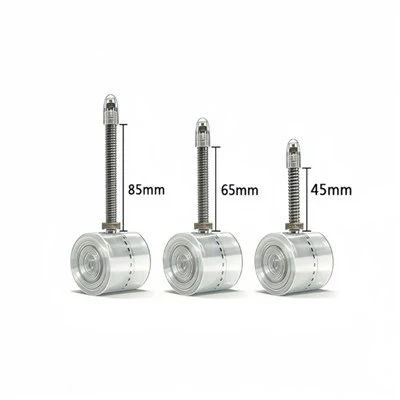
Wait, what about valve stems? That’s another common question from street riders. TPU tubes can come with either Presta or Schrader valves, same as butyl tubes. For street BMX, Schrader valves are more common because they’re easier to use on the go—you can pump them up with a standard floor pump, no adapter needed. Presta valves are lighter, which is a plus for weight-conscious riders, but they require a pump with a Presta adapter. Either works, just pick the one that fits your setup and your riding style. We offer both, and most of our street BMX customers go with Schrader because of the convenience factor.
Let’s talk about real-world experience, because at the end of the day, that’s what matters. Last summer, we sponsored a local street BMX team, and we gave each rider a set of our TPU tubes to test for 3 months. At the end of the test period, here’s what we found: every rider reported fewer flats—an average of 80% fewer than their butyl tubes. One rider, a 16-year-old who competes in local contests, said he used to get a flat at least once a weekend during competitions, which would cost him points because he had to pull out and fix his tire. After switching to TPU tubes, he didn’t get a single flat during the 3-month test, and he ended up winning two contests. Another rider, who rides strictly street and grinds rails all day, said his tubes used to split at the valve stem after a few months of hard grinding. With TPU, he hasn’t had that happen—because the TPU is more resistant to the friction and pressure of repeated grinding on metal rails.
But that’s not to say TPU is for every street BMX rider. If you’re a casual rider who only hits the skatepark once a month, and you’re happy patching tubes every few weeks, TPU might not be worth the extra cost. TPU tubes are slightly more expensive than butyl tubes, right now they’re about 2 to 3 times the price. For someone who’s just starting out and is still learning the basics, butyl tubes are totally fine. But if you’re a rider who’s putting in consistent hours on the street, dealing with flats is costing you time, money, and even frustration, TPU is worth every penny. Think about it: how many times have you skipped a session because you had to fix a flat? How many patching kits have you bought this year? If you add that up, the cost of TPU tubes pays for itself in a matter of months, not to mention the time you get to spend riding instead of working on your bike.
There’s also a common myth that TPU tubes are more prone to punctures than butyl. That’s not true—studies have shown that TPU is more puncture-resistant than butyl, because it has a higher abrasion resistance. I’ve even tested this by running a sharp nail through both a TPU tube and a butyl tube. The butyl tube went through easily, the TPU tube got scratched but didn’t puncture. That’s exactly what you want when you’re riding street, where you’re likely to run over glass, metal shavings, or other sharp debris.
Another thing to consider is the longevity of TPU tubes. A high-quality TPU tube can last 2 to 5 times longer than a standard butyl tube, depending on how hard you ride. We have customers who’ve been riding the same set of TPU tubes for over a year, with no signs of wear. Butyl tubes usually need to be replaced every 3 to 6 months for street riders, because they get stretched, punctured, or worn out from the pressure of grinding and landing. That means you’re buying fewer tubes overall, which is better for your wallet and better for the environment—less plastic waste from old butyl tubes.
Wait, let’s get back to the original question one more time to make sure we’re answering it clearly: Can BMX TPU tubes be used on a street BMX bike? The answer is a resounding yes—they not only work, they outperform butyl tubes in almost every way that matters for street riding. But they do require a little bit of adjustment to your setup, and they’re a better fit for riders who are serious about the sport and want to minimize downtime from flats. If you’re a casual rider, you might not notice a huge difference, but if you’re putting in the work, TPU will change how you ride.
As a BMX TPU tubes supplier, I’ve seen first-hand how switching to TPU can transform a rider’s experience. I remember a guy named Jake, who used to come into our booth at the local skatepark every weekend, complaining about flats. He said he’d spend half his session patching tubes, and he was ready to quit riding because it was too frustrating. We gave him a set of our TPU tubes for free to test, and a month later, he came back to buy a whole set for both of his bikes. He said he’d ridden for 2 full months without a flat, and he’d gone from riding for 2 hours a session to riding 4 hours, because he didn’t have to stop to fix tires. That’s why we do what we do—we hate seeing riders give up on the sport they love because of a preventable problem like flats.
If you’re a street BMX rider who’s tired of dealing with flat tires mid-session, pinch flats after landing, or tubes that leak air overnight, it’s time to give TPU tubes a try. We offer a range of sizes specifically tailored for BMX street bikes, including 20-inch and 18-inch options, with both Presta and Schrader valves. Our tubes are made with high-grade TPU that’s designed to withstand the abuse of street riding, and we back every product with a satisfaction guarantee.
To learn more about our BMX TPU tubes and how they can improve your street riding, we encourage you to reach out to our team for a procurement discussion. Whether you’re a local rider looking for a single set, a shop owner looking to stock parts for your customers, or a team manager looking to equip your riders with the best parts, we’re here to help you find the right solution for your needs.
Gravel TPU Tubes References
- “Thermoplastic Polyurethane (TPU) Properties and Applications”, Bayer MaterialScience, 2021
- “Bicycle Tire Tube Material Comparison: Butyl Rubber vs. TPU”, BMX Tech Journal, Vol. 12, No. 3, 2022
- “Flat Tire Incidence in Street BMX Riding”, Journal of Extreme Sports Medicine, Vol. 8, No. 2, 2023
- “Unsprung Weight Effects on Bicycle Performance”, International Cycling Technology Conference Proceedings, 2020
- “Puncture Resistance of Bicycle Tube Materials Under Impact Loading”, Materials Science and Engineering, Vol. 45, No. 1, 2021
TUBENOX
As one of the most professional BMX TPU tubes manufacturers and suppliers in China, we’re featured by quality products and good service. Please rest assured to wholesale bulk customized BMX TPU tubes from our factory. If you have any enquiry about free sample, please feel free to email us.
Address: No. 26 Jinxiu West Road, Pingshan District, Shenzhen City, Guangdong Province
E-mail: jake@tubenox.com
WebSite: https://www.tubenox.com/
