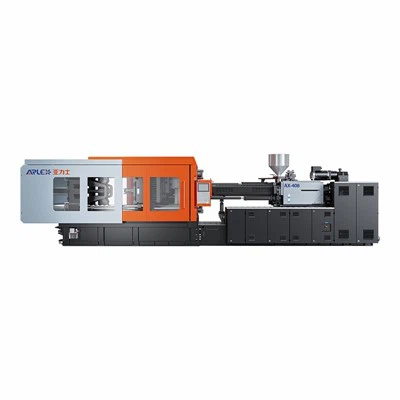
Hey there! If you’ve ever been deep in the thick of PET packaging production—churning out water bottles, food containers, or those clamshell blister packs that keep snacks fresh—you’ve probably heard “injection speed” thrown around like it’s the make-or-break number for your PET injection molding machine. I run a shop that builds and services these machines, and let me tell you, it’s way more than just a random dial you crank up to “fast” when you’re in a hurry. Today, I’m breaking this down like I would for one of our new techs who’s staring at a control panel for the first time—no jargon, just real talk that actually makes sense for your production line. PET Injection Molding Machine
First off, let’s get one thing straight: injection speed isn’t how fast the platen slams closed (that’s clamp speed—totally different). It’s the rate at which the molten PET resin gets forced into the mold cavity. Think of it like squeezing toothpaste out of a tube: if you squeeze way too slow, the toothpaste oozes and gets all lumpy; squeeze at the right clip, and it’s a smooth, even line that fits exactly where you want it. For PET, which is a tricky thermoplastic—melts nicely but cools fast—this speed can’t be an afterthought. Mess it up, and you’re stuck with warped bottles, streaky packaging, or worse, mold damage.
Now, before you go thinking, “More speed = better,” let’s pump the brakes. Most new operators (and even some old heads who refuse to read the manual) figure cranking the injection speed to max will get them through a run faster. But here’s the thing: PET has a super narrow “sweet spot” for flow. If you shoot it into the mold too fast, the resin can shear (basically, stretch and tear mid-flow) which leaves micro-cracks in the finished part. For food-grade PET, those cracks aren’t just a quality fail—they can harbor bacteria, and no one wants a brand’s product getting flagged for that. Plus, too much speed builds up massive pressure inside the nozzle and mold, which wears out barrels, screws, and molds way quicker than you’d expect. We had a client last year who cranked his 500-ton machine to 100% speed for a run of 2-liter water bottles, and two weeks later, he had to replace a $1,200 mold insert because the pressure had pitted the surface. Oops.
On the flip side, if your injection speed is too slow, you get what’s called “short shots”—the mold doesn’t fill all the way, because the PET cools and thickens before it can reach the far edges. For a clamshell pack, that might mean a flimsy edge that rips when you open it; for a medication bottle, that could leave a gap where the label goes, and labels are non-negotiable for pharma. We had a small bakery client who was running slow because they were scared of high speed, and their cookie trays were coming out with those wavy edges—turned out they just needed to bump the speed up 10% and adjust the pressure to match, no other changes needed.
So, what’s the actual number you should be shooting for? It depends, obviously—but here’s the real baseline we give all our clients, based on 15 years of fixing and building PET machines: most standard food-grade PET parts (bottles, trays, basic packaging) run at 200 to 500 mm per second (m/s). Wait, you might be thinking, that’s a big range—why not a set number? Because it’s tied to three other variables: part size, mold design, and resin grade.
Let’s break that down. If you’re making a tiny part, like a 10-gram PET cap for a soda bottle, you don’t need 500 m/s—you only need enough to fill the small, narrow mold cavity before the PET cools. For a giant 5-liter water bottle, though, that’s a bigger cavity, and the resin has to travel further, so you need a bit more speed (closer to the 500 m/s mark, maybe a hair under). Mold design matters too: if your mold has lots of thin, tight passages (like a bottle neck with a threading), you need to speed those spots up so the resin doesn’t freeze before it fills the thread, which would make it leak. And resin grade? Some PET is formulated for fast flow (for thin parts like clamshells), some is more viscous (for thicker trays), so you adjust speed to match how that resin moves.
Wait a second, you might have noticed I said “200 to 500 m/s” and not something like “100 to 1000.” That’s because PET’s melting point is around 250°C, and if you push it faster than 550 m/s, the shear heat generated makes the resin degrade—turns it cloudy or brittle. Cloudy water bottles? That’s a dead giveaway for degraded PET, and big brands will reject an entire shipment of 100,000 units over that. We once had a beverage company tell us they lost $80k in a single week because a supplier’s machine was running at 620 m/s, turning their clear 1L bottles frosty. Not cool.
Another thing that’s not obvious: modern PET machines don’t run at a fixed injection speed anymore. They have what’s called “profiled injection speed,” which is basically a step-by-speed plan for the mold. Think of it like driving a car: you don’t floor it the entire time, you speed up on the highway, slow down around curves, stop at red lights. For molds, that means you start at a slow speed to fill the thick, wide base (so you don’t slosh the resin), then speed up to fill the midsection (where the threads are), then slow again right before the mold is full to avoid over-pressurizing the finish. This is game-changing, because it lets you hit that sweet spot without guessing—no more short shots, no more warps, less mold wear. We upgraded a local client’s old machine to profiled speed settings last year, and their scrap rate dropped from 8% to 1% overnight. That’s thousands more parts they’re selling, not tossing.
Now, let’s talk about how to actually check your machine’s injection speed, because not everyone’s got a fancy sensor. If you’re running an older machine, you can do a quick test: mark the distance the screw moves (that’s the “injection stroke”) and time how long it takes to move from the start of the stroke to the end. Divide distance by time, and you’ve got your speed. But for new machines? The HMI (human-machine interface) will display actual speed in real time—no math needed, which is why we include a free HMI training session with every machine we sell. We had a client last month who was staring at his HMI going, “Why is this number so low?” and it turned out he’d hit a setting that limits speed for new operators—just flipped a toggle, and he was back at the right range.
Here’s a common myth I want to bust: “Injection speed is all you need to get a good part.” Nope. It works with pressure, too. Speed is how fast the resin gets there, pressure is how hard you push it to fill every nook. You can have the perfect speed, but if your injection pressure is too low, you get short shots, or if it’s too high, you get over-packing (which causes warping). It’s a balance, like making coffee—too hot, it burns; too cold, it’s weak, and the water flow (your speed) has to match the grind (your resin). We always tell our clients to adjust speed first, then tweak pressure to match, not the other way around.
So, what’s the takeaway if you’re shopping for a new PET injection molding machine, or troubleshooting an old one? Don’t fixate on “fastest speed” as a selling point. Look for machines that let you adjust speed in small increments (like 10 m/s, not whole numbers), have profiled speed settings, and let you monitor actual speed in real time. A machine that maxes out at 600 m/s but has no way to adjust profiles is worse for most jobs than one that tops out at 500 m/s and has full speed profiling. We’ve had clients come to us after buying cheap machines from overseas that max out at 700 m/s but can’t even hit 200 m/s smoothly because of bad hydraulic systems—total waste of money.
At the end of the day, injection speed for PET injection molding machines isn’t a number on a spec sheet. It’s the difference between a part you can sell and a part you have to scrap, between low downtime and constant mold repairs, between hitting your production targets and missing them by a mile. If you’re reading this and you’re dealing with scrap rates, warped parts, or just want to optimize your line, I get it—this stuff can be frustrating when you’re trying to keep up with orders. We don’t just sell machines; we help folks dial in their speed, their settings, and their whole process, so they can run smoother, make better parts, and make more money.
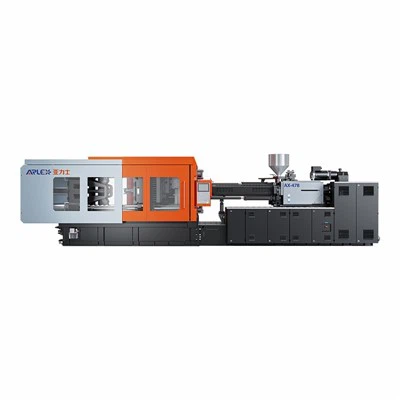
If you’re ready to stop guessing about your machine’s settings, or you’re in the market for a new PET molding machine that’s built to handle the sweet spot for injection speed (and all that comes with it), hit us up. No pushy sales pitches, no fine print—just real advice from folks who’ve been in your shoes, building and fixing these machines for years.
PET Injection Moulding Machine References:
- Rosato, D. V., & Rosato, M. G. (2000). Injection Molding Handbook (3rd ed.). Hanser Gardner Publications.
- Plastic Industry Association. (2021). Guide to PET Injection Molding for Food Packaging. Plastics Industry Association.
- Bradley, D. A., & Creswell, R. (2018). Process Optimization for Thermoplastic Injection Molding. Springer.
Ningbo Yalishi (Arlex) Plastic Machinery Co., Ltd.
Address: No.63, Huangsu East Road, Industrial Zone, Dongqian Lake Tourist Resort, Ningbo, Zhejiang Province
E-mail: leo@arlex.cn
WebSite: https://www.arleximm.com/
