When I first got into the COB LED display business nearly eight years ago, I’d hear a lot from clients and even industry peers: “COB is just a shiny new marketing term—color accuracy is color accuracy, right?” Back then, I’d nod and let them test our panels themselves, but over time I’ve come to learn that this question isn’t just about marketing. It’s about what happens when you move from traditional SMD LED packaging to COB, how that changes the way light is produced and perceived, and why color accuracy isn’t a one-size-fits-all metric. As someone who’s built my business on delivering displays that don’t just look good on a spec sheet, but work in real-world environments—from corporate lobbies that need to match a brand’s exact blue to broadcast studios where every skin tone has to feel natural—I thought I’d break this down the way I do for every new client that walks through our door. COB LED Display
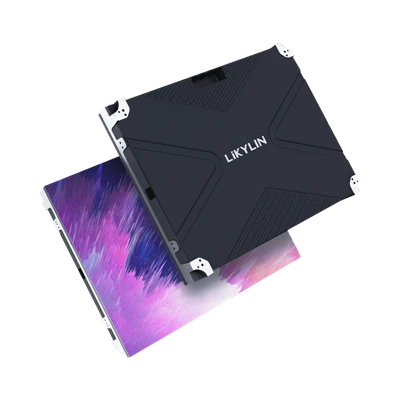
First, let’s get clear on what COB even is, because it’s easy to mix it up with other LED tech. SMD, or Surface Mount Device, LEDs are the tiny individual chips you see when you look closely at most flat-panel displays—each red, green, and blue chip is mounted separately on a circuit board, then covered with a phosphor layer and sealed with a clear resin dome. COB, or Chip-On-Board, takes a different approach: multiple red, green, and blue LED chips are mounted directly onto the circuit board in a single cluster, then sealed with a single, conformal phosphor layer that covers the whole group. The biggest difference here isn’t just packaging—it’s how light interacts with those chips and the way the display produces color.
When we talk about color accuracy in displays, we’re usually referring to how closely a display’s output matches a standard—think Rec. 709 for HD video, DCI-P3 for movies, or even custom brand pantone colors for retail displays. For years, SMD displays have gotten good at hitting these standards, but they have hidden weaknesses that don’t show up in a lab test. Let’s talk about that dome on each SMD chip first. That resin dome isn’t just protective; it refracts light. If two identical SMD chips are mounted a millimeter apart, the angle at which light leaves each dome can vary, which means the blue light coming off one chip might hit the phosphor at a slightly different angle than the next. That changes the mix of colors you get. Even a tiny shift—like 0.1 on the CIE 1976 color space scale, which is the most common way to measure color difference—can look like a noticeable tint shift to the human eye, especially when you’re viewing a large display from different angles. Our clients in broadcast tell me this is a huge deal: a weather map on a studio display that’s off by that much can look like a different shade of blue when viewed from a camera in the corner of the room, which means viewers don’t recognize it as the brand’s official color.
COB eliminates that individual dome, right? All the chips in a pixel cluster are under one single phosphor layer, so every red, green, and blue chip in the group is exposed to the same light environment. No refraction, no angle variation between adjacent chips. That’s a game-changer for color consistency across the entire display, not just the center. I remember a client last year who runs a chain of luxury watch stores. They’d been using SMD displays for their in-store ads, but customers kept pointing out that the gold on a Rolex ad looked different on the right side of the screen than the left. They switched to COB, and suddenly that gold looked identical across the whole panel. They didn’t just notice a color difference—they said customers started asking where they got the “perfect” display, because it matched the brand’s print ads exactly, no matter where you stood in the store.
But wait, I don’t want to paint COB as the perfect fix for every color problem. Let’s talk about the things that can hold it back, because too many salespeople will tell you COB is automatically better, and that’s not true. Early COB displays had a problem called “phosphor coating uniformity.” When you seal a cluster of chips with one phosphor layer, if the layer is too thin in some spots and too thick in others, that changes how much blue light gets converted to green and red. Early products would have a slight shift in color from the top of the pixel to the bottom, or between adjacent pixels. That’s why for the first few years, a lot of professional integrators still stuck with high-end SMD. But here’s what’s changed: the manufacturing process for COB has gotten way more precise. We use automated phosphor coating machines that are calibrated to within a micron, so the layer is exactly the same thickness across the entire display. I can show you a spec sheet that says a COB display has a ΔE (color difference) of less than 1, which is the threshold where the human eye can’t tell a difference. That’s better than most mid-tier SMD displays, which often hover around ΔE 1.5 to 2. But if you get a cheap, mass-produced COB panel that skips the calibration process, it will have way worse color accuracy than a good SMD. That’s why it’s not the tech—it’s the execution.
Another thing to consider is “color shift over time.” All LEDs degrade, but the way SMD and COB degrade is different. Each individual SMD chip has its own degradation rate, right? One red chip might dim 5% faster than the one next to it, which over a couple of years changes the color balance of that pixel. In a large display, that means you’ll start to see faint patches of discoloration as some pixels shift more than others. COB, because all the chips are grouped and sealed together, has a more uniform degradation. The entire pixel cluster ages at the same rate, so color balance stays consistent for longer. We’ve had clients who’ve had our COB displays in use for five years, and they tell me the color is still as accurate as the day we installed it. A peer of mine who works on retail displays told me his SMD panels start to show noticeable color shift after two and a half years. That’s a big deal for a brand that spends thousands on ad content—if the display is fading and the color is wrong, all that content loses its impact.
But let’s address the elephant in the room: a lot of people argue that color accuracy is only relevant for certain use cases. If you’re using a display in a warehouse to show inventory numbers, maybe color doesn’t matter that much. But if you’re a broadcast studio, a corporate headquarters with a brand wall, a retail store showing product visuals, or a museum displaying artwork? Color is everything. I had a museum client last year who was thinking of using a projection for their exhibit on 19th-century oil paintings. They tried a cheap SMD display first, and the reds in a Renoir painting looked dull and faded, while the blues were too bright. When they switched to COB, the reds had the same depth as the original canvas, and the blues matched exactly what curators had in their digital archive of the painting. They told me it was the first digital display that didn’t look like a “copy” of the art—it looked like the real thing. That’s the kind of impact color accuracy has, and it’s not something you can get with every display tech.
Now, I don’t want to make it sound like SMD is obsolete. For smaller displays, like phone screens or laptops, SMD is still the standard, and it has advantages. But for large-format displays—100 inches and up, which is where most commercial and professional use happens—COB’s color advantages start to add up. Especially when you consider viewing angle. If you stand off to the side of an SMD display, the color shifts a lot. I’ve seen a client at a trade show walk 15 degrees off the center of an SMD display and tell me the image looked “washed out,” while a COB display next to it looked exactly the same as it did from the center. For a stadium display, where thousands of people are sitting at different angles, or a lobby display that people walk past from all directions, that consistency matters.
Another common misconception: people think “better color accuracy” means “more saturated colors.” That’s not true. Accuracy means reproducing the exact color that’s intended, not making colors brighter or more intense. A display that’s too saturated will make a red dress look neon, which is not accurate. COB displays are calibrated to hit the exact target color space—Rec. 709, DCI-P3, whatever you need—without over-saturating. We work with our clients to do a pre-calibration before installation, and even offer on-site recalibration every two years to make sure the color stays right. That’s a service we don’t see a lot of other COB display providers offering, and it’s part of why our clients stay with us.
Let me also talk about common pitfalls when buying a COB display. A lot of buyers will just look at the spec sheet that says “ΔE < 1” and assume all COB displays are that good. But a lot of cheap manufacturers will measure ΔE at the center of the display, not the edges. If you test the left edge of a cheap COB panel, the ΔE might be 3 or 4, which is definitely noticeable. When we test our displays, we check every corner and every 10 feet across the panel, so we can guarantee that the color is accurate no matter where you stand. That’s the difference between a product that’s been engineered for color and one that’s just using COB as a buzzword.
I get emails every week from potential clients who ask, “Why should I pay more for COB when SMD is cheaper?” I always tell them to look at the total cost of ownership. SMD displays might have a lower upfront cost, but if they start to show color shift after two years, you’re looking at re-calibration, replacement panels, and lost revenue from ads that don’t look right. COB displays have a higher upfront cost, but the color stays accurate for 10+ years, and the uniformity across the entire display means you don’t have to worry about those faint color patches that turn customers away. For a business that’s relying on their display to communicate their brand, that’s an investment, not an expense.
A few months ago, we had a client who was choosing between three different display vendors. Two were SMD, one was COB. The SMD vendors quoted lower prices, but when we brought in test panels to show them, they immediately noticed the color difference. The SMD panels had a red tint on the right side, and the gold in their product ads looked washed out when viewed from the side of the room. The COB panel matched their brand’s exact pantone color, and the gold looked perfect from every angle. They went with the COB setup, and last month they told me their sales from in-store ads went up 12%—they think a big part of that was the display looking so accurate and professional. That’s the tangible impact of good color accuracy, and it’s why COB matters for a lot of businesses.
At the end of the day, the question isn’t “Do COB LED displays have better color accuracy?” It’s “For your use case, do the color benefits of COB matter?” If you’re using a display in a warehouse or a small office where color doesn’t make a difference, maybe not. But if you’re a brand, a museum, a broadcast studio, or a retail store where color is core to your message, COB isn’t just a better tech—it’s a way to make sure your display actually works as intended.
If you’re currently looking for a display that delivers consistent, accurate color across your entire space, don’t just rely on spec sheets. Reach out, and we can arrange a test, answer all your questions, and walk you through what would work best for your needs. We don’t do one-size-fits-all solutions, and we never try to sell you something you don’t need. Just tell us what you’re trying to achieve, and we’ll make sure you get a display that does it right.
Rental LED Display References
- International Electrotechnical Commission. (2019). IEC 62341-6-1: Organic light-emitting diode (OLED) devices – Part 6-1: Display panels – Generic specification.
- Society of Motion Picture and Television Engineers. (2020). SMPTE RP 177-1:2020 – Reference Conditions for the Display of Motion Picture and Television Images.
- LEDinside. (2022). Global COB LED Display Market Report: Technology Trends and Application Analysis.
- National Television Standards Committee. (2018). Rec. 709-6: Parameter Values for the HDTV Standard for the Production and International Programme Exchange.
- CIE. (2019). CIE 15:2019 – Colorimetry – Part 1: Definitions and color space.
LiKYLIN (Chongqing) Intelligent Technology Co., Ltd.
As one of the most professional cob led display manufacturers and suppliers in China, we’re featured by quality products and low price. Please rest assured to wholesale advanced cob led display in stock here and get free sample from our factory. We also accept customized orders.
Address: Building 1, No.57, Jinfu Blvd, Gu’nan Street, Qijiang District, Chongqing, China
E-mail: marketing@likylin-led.com
WebSite: https://www.cqlikylinled.com/
