Hey there, thanks for stopping by. If you’ve ever spent time around a lab—whether you’re a researcher setting up a new lab, a lab manager updating old workstations, or someone just curious about what goes into those big, flat surfaces where all the experiments happen—you’ve probably wondered: do lab table tops actually need to be fire resistant? I’ve been supplying lab table tops for almost a decade now, and I get this question all the time. It’s not a silly one, either. A lot of folks cut corners on specs to save a few bucks, or they don’t realize how many fire risks are hanging out in those workspaces. Let’s break this down like we talk shop, no stuffy jargon, just real stuff that matters for your lab. Lab Table Top
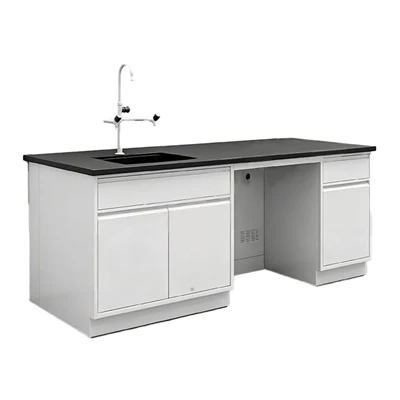
First off, let’s set the scene. Labs aren’t like your regular office or even a kitchen. Sure, kitchens have stoves, but labs have Bunsen burners, Meker burners, hot plates that run 500°C (that’s over 900°F, for anyone who doesn’t mess with Celsius), and then there’s all the flammable stuff we store: solvents like ethanol, acetone, hexane, even some plastics and chemical powders. A lot of people think “a fire won’t happen to my lab” until it does. I remember a client a couple years back—small synthetic chemistry lab, they had a grad student heating some ethanol in a flask, forgot to turn the hot plate off, stepped away for 20 minutes. The flask got too hot, the ethanol vapors ignited, and the flame caught the edge of their old lab table top first. That old top was laminate, the kind you’d find on a dining room table. It melted, bubbled, and actually fed the flame instead of stopping it. By the time they put the fire out, they had a ruined table, a week of downtime, and a scare that could’ve been way worse. That’s when it clicked for them: fire resistance isn’t a “nice to have”—it’s non-negotiable.
Wait, but what exactly does “fire resistant” mean for a lab table top? I don’t just mean something that doesn’t burn at all—nothing is completely fire proof, right? It’s about how it performs when a fire starts. A good lab table top won’t ignite easily, it’ll slow down the spread of flame, and it won’t give off toxic fumes when it does heat up. That last part is huge, too. A lot of cheap materials, like some low-density laminates or certain composites, when they burn, they release all kinds of nasty stuff—chlorine, formaldehyde, even cyanide if they’re plastic-based. In a lab, you’ve got fume hoods, but if the fire’s spreading fast, those fumes can fill the room before anyone can react. Fire resistant tops are formulated to not put out those toxic gases, which saves your team from breathing in something awful.
Let’s get into the science a little, no boring diagrams, I promise. Most good lab table tops we supply are made from materials like epoxy resin, phenolic resin, or solid grade laboratory grade stainless steel. Wait, stainless steel is fire resistant as hell, but some labs don’t want it because it gets too hot to touch after a while, or it can mark easily. Epoxy and phenolic are the sweet spot for most labs because they’re chemical resistant too—super important for spills—and they’ve got inherent fire resistance. Here’s why: epoxy resins, when they’re properly formulated for labs, have a high flame retardant rating. They don’t have those cheap fillers that catch fire easily. Phenolic is even more stable—it’s used in things like circuit boards, for crying out loud, so it can handle high heat without melting or warping. I’ve seen phenolic tops sit right next to a Bunsen burner for hours, no damage, no flame spread.
Compare that to the alternative: regular laminate tops, which are super common in budget labs. Laminate is basically paper or fabric soaked in resin, but cheap resin. When that hits a flame, it ignites in seconds, drips molten plastic, which spreads the fire further. One drip of molten laminate on a solvent bottle under the table? That’s a flashover waiting to happen. I worked with a biology lab last year that was using laminate tops for their tissue culture work. They had a small fire from a faulty incubator cord, and the laminate top melted so fast the fire spread to their stored alcohol bottles in 2 minutes. They lost over $50k in samples and equipment, just because they didn’t spring for the fire resistant top.
But wait, is fire resistance always necessary? I know some folks in, say, an environmental testing lab that only does water and soil samples—no solvents, no open flames. Do they need it? Hmm. I’d still say it’s a good call, but maybe not non-negotiable. Wait, but even those labs have risks: electrical fires from all those pH meters and analyzers, hot water baths that overheat. A fire resistant top will still slow things down, give your team time to grab a fire extinguisher or evacuate. I had an environmental lab client who skipped fire resistance 5 years ago, and last year their hot water bath overheated, caught the edge of the table. Their non-fire resistant top burned through in 10 minutes, but if they’d had our epoxy tops, the fire would’ve been contained way faster. They’ve upgraded all their tops now, of course.
Another angle: codes and regulations. A lot of people don’t know this, but OSHA (Occupational Safety and Health Administration) in the US has specific guidelines for lab furniture, especially in labs that work with flammable materials. If you’re in a teaching lab, or a research lab that handles solvents over a certain concentration, you’re required to have fire resistant surfaces. Violate that, and you could get fined, or worse—if there’s an incident, your insurance won’t cover damages because you didn’t meet industry standards. I can’t tell you how many times clients have come to me after an OSHA inspection saying, “We need fire resistant tops now, stat.” It’s not just a safety thing—it’s a legal and financial thing too.
Let’s talk about what happens when a fire starts on a lab table top, to make it real. Suppose you’ve got a Bunsen burner on a non-fire resistant top: the heat from the flame will transfer through the table, the surface material will warm up, reach its ignition point, and burst into flame. The flame will spread across the top in seconds, catch any papers or lab notes on the table, and then jump to the cabinets or equipment nearby. Now, if it’s a fire resistant top: the surface won’t reach its ignition point easily. The flame from the Bunsen burner will sit on top, but the material won’t catch fire. It’ll insulate the heat, so the under-table area (where your wiring and chemical storage is) stays cool. That buys your team time to turn off the gas, grab a fire extinguisher, or evacuate before things get bad. I’ve seen this first hand—we supplied a set of epoxy tops to a university chemistry lab a couple years ago, and they had a Bunsen burner tip break off, spilling flame on the table. The top didn’t ignite, just had a slight char mark that sanded right out. No downtime, no damage, no scares.
Wait, but what about people who say, “My lab is small, I can just keep a fire extinguisher handy”? That’s great, but a fire resistant top is a layer of protection you don’t have to think about. It’s always there, even when you’re not focused on the fire risk—like when you’re in the middle of a busy experiment, rushing to run samples, and you forget a burner is lit. Accidents happen, even in the most careful labs. I’ve worked with PhD students, lab managers who’ve been in the game for 20 years, and everyone has a story of a close call. Fire resistant tops are the little guardrails that keep those close calls from turning into disasters.
Let’s also clear up a common myth: some folks think “fire resistant” means the top will never get damaged by heat. No, that’s not true. A good fire resistant top can handle routine heat from hot plates (up to like 180°C for epoxy, higher for phenolic or stainless steel) without warping or discoloration. If you put a 500°C hot plate directly on it, it might leave a mark, but it won’t burst into flame or melt through. That’s way better than a laminate top, which would melt immediately at that temperature.
Now, from a supplier’s perspective—we don’t just push fire resistant tops because we sell ’em. We push ’em because we’ve seen what happens when labs don’t have ’em. We’ve had clients who lost years of research data because a fire ruined their samples, who had to shut down for months to redo lab safety audits, who had employees get hurt from toxic fumes. That’s not stuff we want for our clients, and it’s not stuff we want to see in the lab space.
So, when should you absolutely invest in fire resistant lab table tops? Let’s list it out:
- Any lab that uses open flames (Bunsen burners, Meker burners, torches)
- Labs that store or use flammable solvents (ethanol, acetone, methanol, hexane) in quantities over 10 gallons or so
- Teaching labs, where students might not be as careful with fire safety as seasoned researchers
- Labs that deal with high temperatures (hot plates, furnaces, heat baths)
- Any lab that’s subject to OSHA, EPA, or other safety regulations
Even if your lab doesn’t fall into these, it’s still a smart investment. Like I said earlier, electrical fires happen, overheated equipment happens, spills happen. A fire resistant top adds that extra layer of protection that makes your lab safer for your team and your work.
Now, I know what some of you are thinking: “Fire resistant tops are expensive, right?” Yeah, they cost a bit more than laminate, but let’s do the math. A set of lab table tops for a 10-table lab might cost $5k extra for fire resistant. But if you avoid a fire that costs $50k in equipment, samples, and downtime? That’s a no-brainer. Plus, fire resistant tops last longer—they’re more durable, resist chemical spills better, so you won’t have to replace them every 5 years like you do with laminate. Over 10 years, they actually save you money. I’ve had clients tell me they saved more in replacement costs and fire repairs than the extra they spent on the tops in the first 3 years.
Another point: employee safety. Your team spends 8 hours a day in that lab, working with dangerous stuff. If a fire starts, you want them to get out safe. Fire resistant tops slow fires down, give them time to evacuate, and don’t release toxic fumes that could make them sick even after the fire is out. That’s not just good for your team—it’s good for morale, too. When your employees know you’re investing in their safety, they’re more likely to follow safety protocols, which makes the whole lab a better place.
Wait, let’s address a counterpoint I hear sometimes: “We use fume hoods, so fires won’t get big.” Fume hoods are amazing, but they’re not fire proof. If a fire catches a table top, it can spread to the interior of the hood, damage the fan or ducts, and then you’ve got a hood that doesn’t work, which is a whole other safety hazard. A fire resistant top keeps the fire from getting to that point, so your fume hood can keep doing its job.
So, to circle back to the original question: Do lab table tops need to be fire resistant? The answer is: if your lab has any fire risk at all—open flames, flammable solvents, high heat—yes, absolutely. Even if you think your lab is “low risk,” it’s a cheap, effective way to add a huge layer of safety. And let’s be real, no lab is zero risk. Accidents don’t announce themselves.
If you’re out there right now thinking, “My lab is due for new table tops, or I’m updating my safety specs,” let’s chat. We work with labs of all sizes, from small university teaching labs to big biotech research facilities, and we can help you pick the right fire resistant top for your needs—epoxy, phenolic, stainless steel, whatever fits your budget and your lab’s work. We don’t do one-size-fits-all, because every lab is different. We’ll walk you through the options, talk about your specific risks, and make sure you get something that keeps your team safe and your experiments running.

If you’re just curious, or you have questions about specs, feel free to reach out. No hard sell, just real advice from someone who’s been in the lab table top game for years, seen the good, the bad, and the ugly when it comes to lab safety. We’re here to help you make the call that’s right for your lab.
Lab Bench References:
- Occupational Safety and Health Administration. (2020). Laboratory Safety Guidelines for Chemical Hazards. U.S. Department of Labor.
- American National Standards Institute. (2018). ANSI/AIHA Z9.5-2018: Laboratory Ventilation. American Industrial Hygiene Association.
- National Fire Protection Association. (2021). NFPA 45: Standard on Fire Protection for Laboratories Using Chemicals. National Fire Protection Association.
- Lab Safety Database. (2022). "Common Lab Fire Hazards and Mitigation Strategies." Center for Chemical Safety, University of California.
HAMECC(Shanghai) Lab Solutions Co., Ltd.
We’re well-known as one of the leading lab table top manufacturers and suppliers in China, featured by quality products and good price. Please rest assured to buy customized lab table top made in China here from our factory.
Address: Building 1, No.2222, Huancheng Road, Jiading District, Shanghai
E-mail: info@hamecc.com
WebSite: https://www.hamecc.com/
