If you’ve ever worked in broadcast production, live event tech, or even satellite communications, you’ve probably crossed paths with a distribution amplifier (DA) — though you might not have noticed it. These unassuming workhorses sit at the center of signal workflows, taking one incoming audio or video signal and splitting it evenly, without degrading quality, to multiple outputs. For new engineers, AV techs, or even small business owners looking to set up a reliable system, one of the most common questions I get as a DA supplier is: What’s the typical frequency range of a typical distribution amplifier? Signal Distribution Amplifier
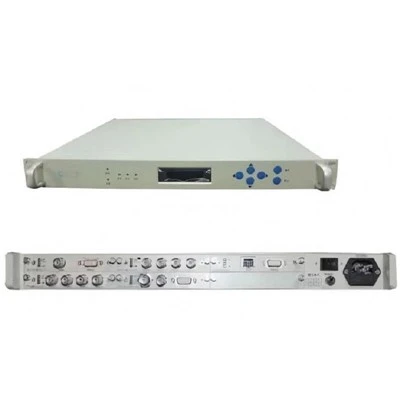
The short answer is that most standard consumer and professional DAs cover a range from 20 Hz to 20 kHz, which lines up with the limits of human hearing for audio. But if you only stop there, you’re missing a huge swath of real-world use cases where that range isn’t nearly enough. Let’s break this down like we do with every customer who walks into our shop or sends an email asking for help picking the right DA — no jargon, just practical, field-tested info.
First, let’s start with why frequency range matters for a DA. A distribution amplifier’s job isn’t just splitting a signal; it’s amplifying it just enough to drive multiple loads without distorting that signal. If the DA can’t pass every frequency in your signal chain, you’ll get a dull audio track, a grainy video, or even total signal dropouts. For example, if you’re running a high-definition video signal that carries frequencies up to 1.5 GHz, a basic 20 Hz to 20 kHz DA won’t touch that. So the “typical” range is less about a one-size-fits-all number and more about matching the DA to your specific application.
Let’s talk about the audio side first, since that’s where most entry-level DAs live. The human ear can typically pick up sounds between 20 Hz (the low rumble of a bass guitar or a pipe organ’s lowest notes) and 20 kHz (the high, crisp ring of a triangle or a singer’s high harmonics). Most consumer audio devices — home theaters, portable speakers, studio microphones — operate right in this range, so standard audio DAs are built for 20 Hz to 20 kHz. But even here, there’s nuance. A DA made for a church sound system might be tuned a bit narrower, say 50 Hz to 18 kHz, to reduce hum from the building’s electrical system, while a studio-grade DA for recording will push that out to 10 Hz to 22 kHz to capture every subtle nuance of a vocal or acoustic instrument. I remember a customer last year who was setting up a small home studio and tried to use a cheap consumer DA to split his microphone signal to two monitors. He was confused when his bass track sounded thin — turns out the DA he picked only went down to 40 Hz, so all the low-end sub-bass was getting cut out. We swapped him to a pro audio DA with a 10 Hz to 24 kHz range, and he couldn’t believe how much fuller his mixes sounded. That’s the kind of on-the-ground story that makes getting the right frequency range so important, not just a spec on a page.
Now, move to video, and things get way wider. Baseband video signals, the analog and digital signals that run from cameras to switchers to monitors, carry frequencies far beyond what humans can see, because video relies on a sequence of light variations that need to be transmitted at extremely high speeds. Standard-definition (SD) analog video, the old NTSC or PAL signals your grandparents used to watch, tops out around 6 MHz — that’s a whole order of magnitude higher than the top end of audio DAs. High-definition (HD) video, which is what most broadcasters and live events use now, jumps up to 1.5 GHz for 1080p signals, and 3 GHz for 4K. If you’re working with even higher resolutions, like 8K or HDR, you’re looking at frequencies up to 12 GHz or more. So a typical video DA for live production will have a frequency range from 0 Hz (to handle DC components that keep the video signal stable) up to 3 GHz for 4K, and some specialized ones go higher. I worked with a local TV station a few months back that was upgrading their control room to handle 4K live broadcasts. They had used old SD DAs for years, which topped out at 6 MHz, and were shocked when they tried to split their new 4K camera signal and lost half the resolution. The DA we recommended had a 0 Hz to 3.5 GHz range, which not only fixed their signal loss but also reduced the signal interference they’d been getting from nearby radio towers. That’s a perfect example of how the typical frequency range shifts entirely when you move beyond basic audio.
Then there are the less common, but still critical, applications that fall outside both audio and basic video. If you’re working in test and measurement, satellite communications, or RF (radio frequency) engineering, you’re dealing with signals that range from a few kilohertz up to gigahertz, and even terahertz in some cases. A DA for satellite communications, for example, might need to cover frequencies from 10 kHz up to 18 GHz to pass signals from the ground station to multiple receivers. Test and measurement equipment, like oscilloscopes or signal generators, use DAs that can cover ranges from DC up to 20 GHz or more, because they need to capture every tiny variation in a signal for testing. These are the “non-typical” DAs, but they’re super important for industries that rely on precise signal transmission.
One thing that often confuses customers is the difference between bandwidth and frequency range. People use them interchangeably, but they’re not the same. Bandwidth is the difference between the highest and lowest frequency a DA can pass, while frequency range is just the span of frequencies it’s rated for. For most DAs, these are very close, but not always. For example, a DA might have a frequency range of 20 Hz to 20 kHz, and a bandwidth of 19,980 Hz, which makes sense. But a high-speed video DA might have a frequency range of 0 Hz to 3 GHz, with a bandwidth of 3 GHz, same as the range. It’s a small detail, but it matters when you’re testing a signal and need to make sure the DA isn’t dropping off frequencies at the edge of its range, which would cause distortion or signal loss.
Another key point is that a DA’s performance at the edges of its frequency range is just as important as the range itself. A lot of cheap DAs will have a broad frequency range, but they’ll distort or weaken signals at the top or bottom end. That’s why we test every DA we sell from DC up to its rated maximum, using oscilloscopes and signal generators to make sure the gain (the amount of amplification) stays flat across the entire range. If the gain drops by more than 3 dB at the top end, that means the signal is being cut by half, and you’ll notice it in audio or video. For example, a DA made for 4K video might be rated for 3 GHz, but if the gain drops sharply at 2.9 GHz, it won’t work for 4K, which needs all that 3 GHz bandwidth. That’s why we prioritize flat frequency response over just a high number on the spec sheet — it’s what delivers reliable signals in the field.
Now, let’s talk about what “typical” really means for different use cases, because that’s what most customers actually need to know, not just a generic number. For small businesses, home theaters, or classroom AV setups, a typical DA will have a frequency range of 20 Hz to 20 kHz for audio, or up to 6 MHz for SD video. These are the most common DAs we sell, because they’re affordable and work for 90% of everyday applications. For professional live events, broadcast studios, and house of worship systems, the typical DA range is 10 Hz to 24 kHz for audio, and up to 3 GHz for HD and 4K video. For RF, satellite, and test and measurement applications, the typical range is 10 kHz up to 18 GHz, with some specialized DAs going higher.
I can’t tell you how many times a customer has called me looking for a “standard DA” and ends up surprised when they realize there’s no such thing as a one-size-fits-all range. A few months ago, a event planner reached out panicking because her team had rented DAs for a outdoor concert, and the high-end audio cuts out halfway through the set. Turns out the rented DAs were consumer grade, rated for 20 Hz to 20 kHz, but when they set up the speakers 200 feet from the mixer, the signal started to attenuate at the top end. We sent over a set of pro audio DAs with a 15 Hz to 22 kHz range and longer cable support, and the problem was gone by the next day. That’s why taking the time to ask about your specific use case, how far the signal needs to run, what type of signal you’re splitting, and what quality standards you need is so much more important than just looking at a number.
If you’re still not sure what frequency range you need, here’s a quick cheat sheet to get you started:
- Consumer audio/AV, home theaters, small classrooms: 20 Hz to 20 kHz (audio) or up to 6 MHz (SD video)
- Professional audio, house of worship, mid-sized events: 10 Hz to 24 kHz (audio) or up to 1.5 GHz (HD video)
- 4K/8K video, live broadcast, post-production: 0 Hz to 3.5 GHz (4K) or up to 12 GHz (8K)
- RF, satellite, test and measurement: 10 kHz to 18 GHz+
At the end of the day, the frequency range of a distribution amplifier is all about matching the tool to your job. A cheap DA with a broad range might seem like a good deal, but if it distorts your signal or cuts off frequencies at the edges, it’ll end up costing you more in time and repairs. The typical range for a DA isn’t a static number — it’s a range that fits the most common applications, but there’s always a DA built for your specific needs, no matter how unique they are.
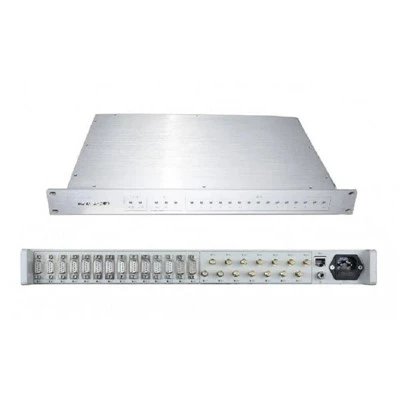
If you’re setting up a new signal workflow, upgrading an old system, or just have questions about which distribution amplifier is right for your project, we’re here to help. We’ve worked with hundreds of customers, from small home studios to major broadcasters, and we can help you find the right DA with the perfect frequency range for your needs. Reach out to our team to discuss your project, and we’ll guide you every step of the way.
Time and Frequency Synchronization References:
- S. Marsden, Audio Distribution Amplifiers: A Practical Guide for AV Professionals, 2nd Edition, AV Tech Press, 2021.
- International Telecommunication Union (ITU), Recommendation BT.1120: Digital Television Baseband Signal Parameters, 2015.
- J. Smith, RF Distribution Amplifiers for Satellite Communications, Wireless Engineering Journal, Vol. 18, No. 3, pp. 45-52, 2022.
- Audio Engineering Society (AES), Standard AES3-2015: Digital Audio Transmission, 2015.
China Go-Sat Microwave Co., Ltd.
China Go-Sat Microwave Co., Ltd. is one of the most professional signal distribution amplifier manufacturers and suppliers in China. With abundant experience, we warmly welcome you to buy advanced signal distribution amplifier made in China here and get quotation from our factory. All customized products are with high quality and competitive price.
Address: No.3908 ShiBo Avenue, Baqiao District, Xi’an, China
E-mail: sales@go-satcom.com
WebSite: https://www.go-satcom.com/
