If you’ve ever stood in front of a customer’s coolant filtration system during a routine maintenance check, or gotten a late-night service call because their machine won’t run, the question “Why is my coolant filter pressure low?” is one you learn to hate. I’m Mia, and I’ve been a coolant filter supplier for 12 years—long enough to know that this problem rarely has a single, easy answer. More often than not, it’s a chain of small, overlooked issues that snowball into a drop in pressure, and I’ve helped hundreds of fleet managers, construction techs, and manufacturing engineers troubleshoot every single one of them. Today, I want to break down what’s actually going on under the hood, not just the surface-level fixes you’ll find on random forums. Coolant Filter
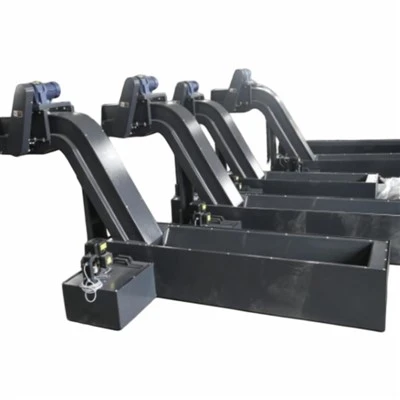
Let’s start with the basics: what is coolant filter pressure, anyway? It’s the force that pushes your engine coolant through the filtration medium, pulling out metal shavings, rust, scale, and other contaminants before they can wear down water pumps, corrode radiator hoses, or clog heater cores. A healthy pressure reading sits between 10 and 25 PSI for most standard systems, though that can shift a little based on system size and operating temperature. When that number drops below 8 PSI, or if it starts fluctuating randomly, that’s your system screaming for help—and skipping a fix here can lead to thousands of dollars in engine damage.
The most common culprit I see, more than anything else, is clogged filter media—but not the way you might think. Some techs assume a clogged filter just means it’s old and needs changing, but that’s not always the case. I recently worked with a construction company in Texas that had three of their 18-wheelers showing low filter pressure, and at first glance, all the filters looked fine. When we took them apart, though, we found that the media wasn’t just dirty—it was partially clogged with a slimy biofilm that had grown because they skipped adding the correct biocide to their coolant last fall. That biofilm acts like a barrier on the filter, stopping coolant from flowing through even when there’s plenty of space in the media. And here’s the thing: if you just swap out the filter without flushing the system and addressing the biofilm, the new filter will clog in half the time, and you’ll be right back with low pressure a week later. I always tell customers: a filter is only as good as the coolant it’s cleaning. If your coolant has excessive contaminants, even a top-tier filter will get overwhelmed.
Another big one that’s easy to miss is flow restriction before the filter, not the filter itself. Let’s say your system has a faulty radiator hose that’s partially collapsed, or a clogged inlet line leading to the filter housing. That narrowing of the path doesn’t just slow down coolant—it creates backpressure that makes it feel like the filter is the problem, when in reality, it’s a bottleneck upstream. I had a manufacturing client a few years ago who replaced three filters in two months because their pressure kept dropping, and we finally traced it to a buildup of rust in the radiator core that was blocking the flow to the filter inlet. They’d been checking only the filter’s pressure reading, not comparing it to the system’s inlet pressure, so they wasted time and money changing filters for a problem that had nothing to do with the filter itself.
Then there’s the issue of improper filter size or type, and this is one I see constantly because so many suppliers cut corners here. When a customer tells me they’re using a filter they bought from a general auto parts store, instead of a coolant-specific filter, that’s a red flag. Coolant filters aren’t one-size-fits-all. A filter that works for a passenger car might not have the right micron rating for a heavy-duty diesel engine or a large industrial generator. If the filter’s media is too dense, it restricts flow, leading to low pressure. If it’s too porous, it won’t catch small contaminants, but that’s a separate issue. I had a client with a farm combine that was running low pressure because they’d used a filter meant for a pickup truck; the media was too fine, and it was restricting flow at the high operating temperatures of a farm engine. When they swapped to a filter sized specifically for their combine’s coolant system, their pressure jumped back up to normal within minutes. Even if you’re buying from a coolant filter supplier, you have to make sure you’re matching the filter to your system’s flow rate and pressure requirements—our team always cross-references specs with our customers’ manuals, but a lot of folks skip that step.
Air bubbles in the coolant system are another sneaky cause of low pressure. Coolant systems are closed, so any air that gets trapped in lines or the filter housing acts like a blockage, making it harder for coolant to flow, which drops pressure. Where does that air come from? A leak in the radiator cap, a faulty pressure relief valve, or a recent coolant top-up that wasn’t burped properly. I once had a customer who called me at 7 a.m., panicking because their generator’s filter pressure was at 5 PSI, almost zero. We walked through the steps over the phone, and the first thing I asked was if they’d added coolant the night before. They said yes, they’d topped it off when they noticed the level was low, but they didn’t bleed the lines. Trapped air in the filter housing was taking up space that should have been coolant, so the pump couldn’t push enough fluid through, hence the low pressure. Bleeding the system fixed it in 10 minutes, no filter change needed. It’s a simple step, but most people don’t think about it when pressure drops.
A less common but still important issue is a failing water pump. The water pump is what creates the pressure that pushes coolant through the filter, right? If the impeller on the pump is worn down, or the seal is leaking, it can’t generate enough flow to keep the filter pressure at the correct level. The tricky part here is that low pressure from a bad pump often looks like a filter problem—so techs change the filter, pressure comes up for a day, then drops again, because the root cause is the pump, not the filter. I worked with a fleet in Ohio that had this exact issue: they changed their filters every 5,000 miles, but their pressure kept dropping. We tested the water pump’s output, and it was only 60% of what it should have been, because the impeller had eroded from years of coolant contaminants. Replacing the water pump fixed the pressure, and we adjusted their filter change interval to match their new, cleaner coolant. The moral here is: always rule out pump issues before writing off low pressure as a filter problem.
I’ve also noticed that temperature plays a bigger role than people realize. Coolant is less viscous in higher temperatures, so it flows more easily through filters, creating higher pressure. In cold weather, especially in regions that get below freezing, coolant thickens up, and that can cause a temporary drop in pressure. Most systems are designed to handle this, but if your filter is already partially clogged, or your system has other small restrictions, the thicker cold coolant will push pressure below normal. It’s not a permanent problem, but it can be a sign that your system is already under extra stress. I always tell customers to watch pressure readings over time, not just when it’s 70 degrees out. A drop that happens every winter might not be a critical issue, but if it’s sudden and extreme when the weather is warm, that’s a red flag.
Now, let’s talk about how to actually fix this, because at the end of the day, no one wants to be stuck with a broken machine. First step: do a full system check, not just a filter swap. Check the pressure at both the inlet and outlet of the filter—if the difference between them is more than 15 PSI, that’s a sign the filter is clogged. If the inlet pressure is already low before the filter, you know the problem is upstream. Second, inspect your coolant for contaminants: send a sample to a lab to check for biofilm, metal particulates, or improper pH levels. If there’s biofilm, flush the entire system, add a biocide, and make sure you’re maintaining coolant levels and quality. Third, confirm your filter size and type match your system’s specs—don’t buy generic, and if you’re not sure, reach out to a coolant filter supplier who can help you cross-reference. Fourth, check for air bubbles and trapped air by bleeding the system regularly, especially after top-ups or maintenance. Fifth, if you’ve done all that and pressure is still low, test your water pump’s output to make sure it’s generating enough flow.
I’ve spent 12 years in this industry, and one thing has stayed consistent: most coolant filter pressure issues are preventable with regular, simple maintenance. The worst thing you can do is ignore a low pressure reading and hope it goes away. I’ve seen engine replacements cost $15,000+ because a customer skipped fixing low pressure, when a $20 filter change or a $100 coolant flush would have solved the problem.

If you’re dealing with low coolant filter pressure, or you want to make sure you’re using the right filters for your system, I’m here to help. We work with fleets, manufacturers, and service teams across industries, and our team can help you troubleshoot, find the right filter for your equipment, or set up a maintenance plan that keeps your systems running smoothly. Don’t let a small pressure issue turn into a big headache—reach out to our team to connect and discuss your needs today.
References
Centrifuge Coolant Filtration: A Guide for Heavy-Duty Applications. National Fluid Power Association, 2021.
Engine Coolant Maintenance Best Practices. Society of Automotive Engineers, 2019.
Effect of Biofilm Formation on Coolant Filter Performance. Journal of Industrial Microbiology and Biotechnology, vol. 45, no. 12, 2018, pp. 1097-1105.
Water Pump Performance in Closed-Loop Cooling Systems. SAE International Journal of Materials and Manufacturing, vol. 10, no. 3, 2017, pp. 589-596.
Yantai Amho Machinery Co., Ltd.
Yantai Amho Machinery Co., Ltd. is one of the most experienced coolant filter manufacturers and suppliers in China. We have world-leading production equipment and strong manufacturing capabilities. Please rest assured to buy advanced coolant filter at competitive price from our factory.
Address: 201 SOUTH BUILDING, NO.3 SHIXUE ROAD, ZHIFU DISTRICT, YANTAI, CHINA.
E-mail: richard@amho.com.cn
WebSite: https://www.amhomachinery.com/
