If you’ve ever shopped for air quality gear or worked in a space that needs consistent, clean airflow, you’ve probably stumbled on two terms: FFU and HVAC. At first glance, they might sound like they do the same thing—move air around, right? But here’s the thing: they’re not interchangeable at all, and as a FFU supplier who’s answered this question a hundred times over coffee with clients, I thought I’d break it down in plain English, no fancy engineering jargon to make your head hurt. Let’s start with the basics because that’s where most of the confusion comes in. Fan Filter Unit

First, let’s talk about HVAC. If you’ve been in an office, a mall, a school, or even most homes built in the last 50 years, you’ve used HVAC. It stands for Heating, Ventilation, and Air Conditioning, and it’s basically a whole-system air solution. The goal of HVAC is to control the entire environment of a space: heat it up when it’s cold, cool it down when it’s hot, pull in fresh outdoor air to replace stale indoor air, and filter out big, obvious stuff like dust and pollen. It’s designed for general comfort, not for super-specific air quality needs. Think about how your office has that big, noisy air handler in the basement that pushes air through long ducts all over the building— that’s HVAC doing its thing.
Now, FFUs (Fan Filter Units) are way more focused, and that’s their superpower. An FFU is a compact, self-contained unit that combines a fan, a HEPA or ULPA filter, and a housing—all in one small package. Their whole job is to move ultra-clean, particulate-free air in a very targeted area, not the entire building. If you’ve ever walked into a hospital operating room, a pharmaceutical clean room, a semiconductor factory, or even a high-end lab, those white boxy units hanging from the ceiling? Those are FFUs. They don’t heat or cool air (usually, anyway—though some specialized ones do a tiny bit), and they don’t pull in outdoor air to vent the space. They take the air already inside the room, blow it through that high-performance filter, and push out air that’s basically free of 99.97% of particles 0.3 microns and bigger—way more than any standard HVAC filter can handle.
Let’s get into the key differences that actually matter, not just textbook definitions. First, scale and purpose. HVAC is a whole-building or whole-zone system. If your 10,000-square-foot warehouse is too hot, HVAC is going to adjust the temperature for every corner, push air through ducts, and move massive amounts of air to keep the entire space consistent. FFUs are point-source: if you have a 100-square-foot work area in that same warehouse where you assemble sensitive electronics, you don’t need to cool the whole warehouse, you just need that 100 sq ft area to be dust-free. That’s where FFUs come in—they’re installed only where you need that specific air quality, and you can add or remove them as your workspace changes, no major ductwork or renovations required.
Next, filtration. This is the biggest one that trips people up. Standard HVAC systems use MERV-rated filters—usually MERV 8 to MERV 13, if you know those numbers. MERV 8 filters catch things like big dust, pollen, and lint, which is fine for keeping an office from feeling dusty, but they can’t catch tiny particles like airborne bacteria, mold spores, or the micro-dust that ruins semiconductors or messes with medication. FFUs use HEPA (High Efficiency Particulate Air) filters, which are a whole different level. A true HEPA filter catches 99.97% of 0.3 micron particles, and ULPA filters go even higher at 99.999% of 0.12 micron particles. That’s not just better—it’s a different class of filtration. HVAC filters are about comfort, FFU filters are about purity.
Then there’s airflow and control. HVAC systems have big fans that move tons of air, but they’re designed for general air circulation, not laminar flow (that’s the smooth, un-turbulent air that’s critical for clean rooms). FFUs are built to push air in a uniform, straight line—so when you have a ceiling full of FFUs, the air flows down evenly across the entire clean room, carrying particles away from your work surface like a gentle, invisible conveyor belt. HVAC airflow is more chaotic; it mixes air around the space, which is fine for a waiting room but bad if you don’t want particles floating right back onto your delicate parts. Also, HVAC is controlled by a thermostat that adjusts temperature based on the whole space. FFUs, especially the variable-speed ones, let you adjust airflow per unit—so if you have one FFU over a workbench that needs extra air, you can crank it up, and leave others lower, no need to re-program the entire building’s system.
Energy use is another big one, especially for small business owners or operations managers watching their utility bills. HVAC systems are constantly running (or cycling) to heat and cool the entire space, which uses a lot of energy. FFUs use way less power because they’re smaller, only running where you need them. Wait, but hold on—some people will tell you FFUs use a lot of power if you have a whole room full of them, but compared to running an HVAC system 24/7 for the same space, it’s night and day. For example, a 10-unit FFU setup for a clean room uses way less electricity than an HVAC system that’s heating and cooling that same 1,000 sq ft space year-round. The only time FFUs might add up is if you have way too many for your actual needs, but that’s just bad sizing, not a flaw in the system.
Wait, let’s clear up a common myth: do people ever use both? Absolutely! A lot of my clients (I work with a lot of biotech labs and medical device makers) use HVAC to keep the general building comfortable, then layer FFUs in the specific clean zones where they need HEPA-level air. You don’t have to pick one or the other—they complement each other. I once had a client who tried to use only HVAC in their pharmaceutical packaging area, and they kept getting rejected by regulators because their air had too much micro-dust. We added 12 FFUs above their packaging line, and they passed their audit on the first try. That’s the kind of real-world example that makes this stuff click, right?
Another difference is installation and maintenance. HVAC is a big job—you need to run ducts, hook up to a refrigerant line, install a thermostat, and usually bring in a licensed tech to do it. If you move your office, you can’t take your HVAC with you. FFUs are way easier. Most are ceiling-mounted, plug into a standard 110V or 220V outlet, and you can move them yourself if you rearrange your workspace. Maintenance? HVAC filter changes are every 1-3 months, depending on use, and you have to hire someone sometimes to clean the ducts too. FFU filters last 1-5 years (HEPA ones go longer if you don’t have super dusty environments), and cleaning the unit itself is just wiping down the housing with a damp cloth. No ducts to clean, no specialized service calls—way simpler for small teams.
Wait, what about ventilation? That’s a key part of HVAC’s job. HVAC has to bring in fresh outdoor air to dilute carbon dioxide, volatile organic compounds (VOCs) from paint or cleaning supplies, and other indoor pollutants. FFUs don’t do that—they recirculate the air already inside the space. That’s why you can’t just replace your entire HVAC system with FFUs in a regular office; you still need that ventilation part to keep indoor air from feeling stale or causing health issues. But in a clean room, you don’t want fresh outdoor air anyway because it brings in outside dust and particles, so FFU recirculation is exactly what you want.
Let me wrap this up with when you’d pick which, because that’s what people actually care about. If you need to control temperature, humidity, and overall air quality for an entire space (home, office, school, warehouse), go with HVAC. If you need ultra-clean, particle-free air in a specific zone or area where you’re working with sensitive materials—semiconductors, vaccines, medical devices, art restoration, even a photography dark room that needs no dust—FFUs are the way to go. And if you have both needs, use them together.
I’ve been in this business for 7 years, working with all kinds of businesses to set up their air systems, and I still get questions all the time. Most of the time, the confusion is because people think “better air” means the same thing as “HVAC,” but it really depends on what you’re actually trying to achieve. At the end of the day, HVAC is comfort for the whole building, FFUs are precision for where you need it most.
If you’re wondering which is right for your space, or you’re looking to add FFUs to a specific work area, I’m here to help. No sales pitch, no complicated spreadsheets—just straight talk about what will actually work for your operations. Reach out to chat, and we can figure out the best setup for you.
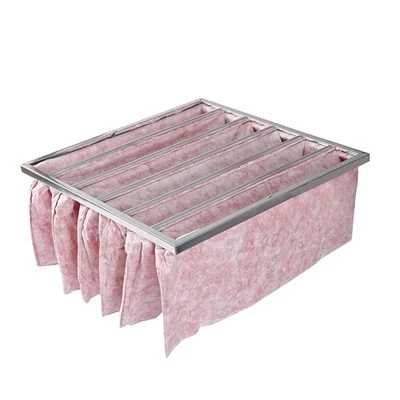
G3-F9 Filter Media References:
ASHRAE Standard 52.2, Method of Testing General Ventilation Air-Cleaning Devices for Removal Efficiency by Particle Size
ISO 14644-1, Cleanrooms and associated controlled environments — Part 1: Classification of air cleanliness by particle concentration
United States Food and Drug Administration (FDA), Guideline for Industry: Sterile Drug Products Produced by Aseptic Processing
Snyli Environmental Technology (Shandong) Co., Ltd.
Snyli Environmental Technology (Shandong) Co., Ltd. is well-known as one of the leading fan filter unit manufacturers and suppliers in China. Please feel free to wholesale high quality fan filter unit at competitive price from our factory. Contact us for more details.
Address: Room 907, Building 1, Qisheng Plaza, 1666 Xinluo Street, Jinan Area, China (Shandong) Pilot Free Trade Zone
E-mail: info@snyli.com
WebSite: https://www.snylifilter.com/
