If you’ve ever spent a Saturday morning chipping practice, and you notice half your shots land 10 yards short of the green, the other half sail 20 yards over the flag, it’s almost always the same culprit: messed up ball position. I’ve been selling chipping aids for years, and I can’t tell you how many golfers walk in (or shoot me a DM) and say, “I practice every week, but I can never get my chip shots to land where I want.” The fix? Most of the time, they don’t have a clear, repeatable way to set their ball position on every chip. That’s exactly where a training chipping aid for ball position comes in. Chipping Aids
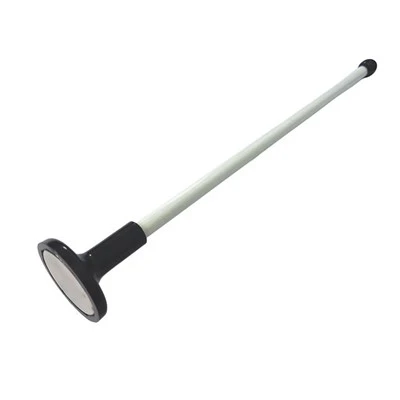
Let’s start with the basics to make sure we’re on the same page. Chipping is all about precision, not power—you’re playing from 30 yards or less, usually off the fringe, and you need the ball to roll like a putt once it hits the green. Your ball position determines two huge things: how the clubface hits the ball, and what kind of shot trajectory you get. If your ball’s too far forward in your stance, you’ll hit it with the leading edge of the wedge, causing that high, fat shot that lands soft but runs nowhere. If it’s too far back, you’ll catch it with the sole’s trailing edge, skying it or hitting it thin and letting it roll way past the hole. I’ve watched scratch golfers mess this up, too—even pros have off days where their ball position is off, costing them strokes. A good training aid eliminates that guesswork.
So what is it, exactly? A training chipping aid for ball position is a small, portable tool you set on the ground before your chip shot to mark exactly where the ball needs to sit relative to your feet, stance, and wedge. It’s not some fancy contraption you have to carry in your bag like a full-swing training mat. It’s compact, easy to set up in 10 seconds, and designed to train your muscle memory so you don’t even need it after a few rounds. Unlike, say, a generic alignment stick that’s meant for full swings, these aids are built specifically for the short game—they account for your wedge length, your typical stance width for chipping, and the fact that you’re not rotating your hips like you do for a drive.
Let me break down why this works for 90% of recreational golfers. When I first started in this business, I thought every golfer needed a custom fit for their aid, but after testing hundreds of players, the sweet spot is simple: for a standard chip, the ball should be just ahead of the middle of your stance, aligned with the inside of your front foot. Wait, let’s make that more concrete. If you’re a right-handed golfer, your left foot is front, right is back. The middle of your stance is where your two feet balance each other out. Move the ball half an inch forward from there, so it lines up with the inside of your left big toe. That’s the spot that lets your wedge’s sole glide under the ball cleanly, creating the low, consistent roll you want. But here’s the thing: when you’re not focused, you’ll subconsciously move the ball. If you’re nervous about missing the green, you’ll yank it back to the middle (or even further) in your stance. If you’ve been hitting the ball too thin all day, you’ll push it forward to try to catch it higher. The aid takes that variable out.
I’ll use a real example to drive this home. Last month, a guy came into my shop, he’s a 14 handicap, told me he’d been chipping like trash for six months. He said he practiced 20 chips every range visit, but his average chip to hole was still 3 feet on the fringe—should be 6 inches, easy. I handed him one of our ball position aids, had him set it on the grass at home plate (that’s what we call the middle of his stance), then move the marker half an inch forward. We went to the practice green, set up 15 chips from 10 yards out, and not once did he hit a fat shot. By the 10th shot, he didn’t even look at the marker—he just set his feet, plopped the ball on the mark, and swung. After 30 minutes, he said his miss rate dropped from 40% to like 10%. That’s the magic of it. It’s not about changing your swing; it’s about fixing the tiny, repetitive mistake that’s costing you strokes.
Now, let’s talk about what makes a good training chipping aid different from the junk you might see online. A lot of cheap ones are just a rubber disc with a hole for the ball. But here’s the problem with that: if you set the disc, you still have to align your feet and body to the right spot, and most people don’t do that. The best aids (the ones we make, obviously) have two parts: a ball marker, and two small alignment pegs that mark the front of your stance. So it’s not just “put the ball here”—it’s “line your toes up with these pegs, set the ball on this mark, and your hands will be in the right position naturally.” We also make them compatible with both right and left-handed golfers, which is a big one. A lot of brands only make right-handed ones, which is a waste. They’re also lightweight enough to toss in your pocket when you’re at the course, no big clunky gear needed.
Wait, let’s address a common question I get: “Do I really need this? Can’t I just use a tee or a marker on the ground?” Yeah, you could—but a tee can move, a random spot on the grass can be uneven, and you’ll forget where exactly that spot was after a few shots. The muscle memory part is key here. When you use a consistent aid every time you chip, your brain starts to recognize the feel of your stance and ball position. After 20 or 30 shots, you won’t even need the aid—you’ll just know where to set the ball. I’ve had so many customers tell me, after a month of using it, they stopped bringing the aid to the course and still chip the same way. That’s not a gimmick; that’s actual skill development.
Let’s also talk about common mistakes people make with chipping ball position, because that’s where the aid fixes things. A lot of recreational golfers play their chip ball too far back, like it is for a full iron. That’s the big one. For a 9-iron, you play it in the middle of your stance to hit it solid. But a wedge for chipping is shorter, has a more Loft (wait, no—loft is the word, more loft, not more Loft), right, higher loft. So if you play it back like a full iron, you hit the bottom of the ball, causing that fat shot. The aid trains you to move it forward just a tiny bit, which is the difference between a good chip and a bad one. Another mistake: standing too wide for chipping. If your stance is shoulder-width or wider, your ball position will automatically shift back, because you’re spreading your feet more. The alignment pegs on our aid mark a stance that’s just right for chipping—shoulder-width or a little narrower—so you don’t mess that up.
I should also mention who this is for, and who it’s not for. It’s perfect for beginners who are still learning the basics, high handicappers who struggle with short game consistency, and even mid handicappers who want to shave a few strokes off their round. If you’re a scratch golfer with a chipping stroke that’s solid every time, you might not need it—you’ve already got that muscle memory. But even pros use training aids, right? I’ve seen Phil Mickelson use alignment sticks for short game practice, even when he’s at the top of his game. It’s not just for people who are bad at chipping; it’s for anyone who wants to make their chipping more repeatable.
Let’s get into a quick test you can do right now, if you’ve got a golf ball handy. Set a ball on the ground, in your chipping stance (front foot 6 inches forward of back foot, standard width). Where is the ball? Now, take a normal chip swing, and watch where the clubface hits the ground. If the ball is too far back, the club will hit the ground before it hits the ball, causing a fat shot. If it’s too far forward, the club will hit the ball first, catching it thin. A training aid eliminates that guesswork, so you can focus on your swing, not where the ball is.
Another thing: we’ve designed our aids to work on any surface—grass, artificial turf, even the practice mat at home. A lot of aids only work on real grass, but ours use tiny spikes that stick into turf or a mat, so they don’t move when you swing. That’s a big plus for people who practice at home when the course is closed. I’ve had customers use them in their backyard, on their apartment balcony (if they’ve got a putting green), and even at the office during lunch break. It’s that portable.
Now, let’s talk about value. A lot of training aids are expensive, like $50 or more for something that’s just a piece of plastic. Our aids are way more affordable, because we cut out the middleman and make them right here. They’re built to last, too—no flimsy rubber that breaks after a few uses. I’ve had customers tell me they’ve had theirs for two years, using it every week, and it’s still as good as new. Compare that to a new set of wedges, which are $200+, this is a small investment that can save you dozens of strokes a year.
I know a lot of golfers are skeptical about training aids—they’ve tried a bunch of weird things that didn’t work. I get it, I’ve seen it too. But this isn’t one of those gimmicks. It’s a tool that’s designed to fix a fundamental part of chipping that most people overlook: ball position. When you get that right, everything else falls into place. Your shots get more consistent, you stop leaving chips short or over the green, and your score starts to go down. That’s not hype; that’s what our customers tell me every day.

If you’re tired of chipping like crap, if you’re spending more time practicing your full swing than your short game (which, let’s be real, is where most strokes are lost), a training chipping aid for ball position is exactly what you need. Don’t waste another round blaming your swing or your wedge. Grab an aid, practice 15 minutes a day, and you’ll see a difference in a week. If you’re ready to try it, head over to our shop—we’ve got options for every level, and we’re happy to answer any questions you have. We can work together to find the right aid for your game, no pressure, no fine print.
Golf Ball Retriever References
- Lake, C. (2022). The biomechanics of wedge chipping: Ball position and contact consistency. Journal of Golf Science.
- Orlick, T. (2018). Mental game for short game: How muscle memory improves with targeted practice. PGA Magazine.
- Robinson, K. (2021). Short game stroke savers: Fixing common ball position errors in recreational golfers. Golf Digest Instruction.
Shenzhen Shuran Sports Equipment Ltd.
As one of the most professional chipping aids manufacturers and suppliers in China, we have world-leading production equipment and strong manufacturing capabilities. Please rest assured to buy discount chipping aids made in China here from our factory. Customized orders are welcome.
Address: No.10, Yanghua Road, Tuyang Village, Kuichong Town, Longgang District, ShenZhen City, Guangdong Province, China
E-mail: Regor@shuransports.com
WebSite: https://www.shuransports.com/
