Hey everyone,
If you’re working with butterfly valves, you’ve probably run into that annoying leakage headache—whether it’s small drips around the seat during a routine test, or a bigger issue that shuts down a process mid-shift. I’ve been selling butterfly valves for over 8 years now, and I can’t tell you how many times a client has come to me saying their valve was “leaking like a sieve” only to find out the problem wasn’t the valve body, or the disc, or even the actuator. It was the valve seat. That little part no one pays much attention to until it fails is actually the unsung hero of leakage prevention. Today, let’s break down how seat design changes everything, straight from someone who’s on the floor talking to engineers, plant managers, and maintenance guys every single week. Butterfly Valve

First, let’s get one thing straight: a butterfly valve’s whole job is to open and close to regulate flow, right? The disc pivots in the body, and when it’s closed, the seat forms a tight seal between the disc and the body to stop fluid (water, chemicals, gas—whatever you’re moving) from escaping. If that seal isn’t perfect, leakage happens. Not all leakage is equal, either. There’s external leakage (around the valve’s stem, which is usually a seal issue, not seat-related) and internal leakage—that’s the seat’s domain. Internal leakage is what you care about if you’re dealing with hazardous materials, wasted product, or just the hassle of cleaning up drips after every shift. And 7 out of 10 internal leakage problems I see trace back straight to the seat design, not the valve itself.
Let’s start with the most common seat type: the soft seat. This is what most of our standard butterfly valves come with—usually EPDM, Buna-N, or Viton molded into the body or a metal retainer. Early on, soft seats were just solid rings pushed into the body, no real contour. Here’s the problem with that: when the disc closes, it hits a flat, hard edge of the seat. If the disc isn’t perfectly aligned (and let’s be real, nothing is perfectly aligned in a plant after a few years of use), one side of the seat gets squished way harder than the other. That uneven compression creates tiny gaps. Over time, that soft material wears out faster on the over-compressed side, and now you’ve got a permanent leak path. We fixed that years ago by switching to “contoured” soft seats—think of a slight indentation or a bevel on the sealing face. Now, when the disc closes, it doesn’t just hit a flat edge; it seats evenly across the entire circumference. No hot spots, no uneven wear, way less leakage.
I remember a client at a food processing plant a couple of years back. They were using a basic butterfly valve for their chocolate syrup line, and they were losing about 15 gallons a week to internal leakage—wasting product, making a mess, and even failing food safety audits. We swapped their flat-seat valves for ones with contoured EPDM seats, and the leakage dropped to almost zero. Their maintenance guy texted me a week later saying he didn’t have to mop up syrup after his shift anymore. That’s the kind of win that makes seat design matter.
Then there’s the metal seat, which we use a lot for high-temperature or high-pressure applications, or when the fluid is super corrosive. Soft seats can’t handle 500°F steam or strong acids, so metal seats are the go-to. But here’s the catch: metal seats don’t have that give soft seats do. If the metal seat is just a flat ring, the disc and seat have to be exact on alignment—no wiggle room. If the disc is even a tiny bit off, you get a micro-gap that turns into a leak. The good news? We’ve got metal seats with a “serrated” or “stepped” design now. Instead of a smooth sealing face, there are tiny, sharp ridges that dig into the disc when it closes. That creates a mechanical seal, not just a friction seal. Even if the disc is slightly misaligned, the ridges conform a little (as much as metal can) to the disc surface, filling in those tiny gaps. A chemical plant client of ours was dealing with a 2% leakage rate on their acid transfer lines; switching from a flat metal seat to a serrated one cut that leakage to 0.1%—way below industry standards for hazardous material containment.
Wait, another big one: the seat’s “installation method.” I can’t tell you how many times a valve leaks because the seat wasn’t seated right, not because the design was bad. Back in the day, we used to just press soft seats into the body and call it a day. But now, we use “retained” seats—they lock into a groove in the body so they can’t shift, no matter how many times the disc opens and closes. If the seat shifts even 1/32 of an inch, that’s a gap for leakage. I had a job at a power plant where their valves were leaking after six months of use. Turned out, the maintenance team had pressed the old-style seats in, and vibration from the plant made them shift. We swapped in retained seats, and that problem went away. It’s not just the shape of the seat; it’s how you keep it in place.
Also, let’s talk about wear resistance. Some seats are designed for short-cycle applications—like a valve that opens and closes a few times a day. Others are for 24/7 use, or harsh environments. We’ve had clients come to us after a year of use saying their seats are leaking, and when we look, it’s because they used a Buna-N seat (great for general use) on a line that runs 10,000 cycles a year. Buna-N is softer, so it wears out fast. Switching to a harder EPDM, or even a metal seat, doubled the lifespan of the valve and cut leakage. The design here is all about matching the seat material and shape to the duty cycle. For example, our “heavy-duty” soft seats have a thicker cross-section and a reinforced core, so they can handle repeated disc contact without deforming. That’s not something you get with a cheap, thin seat—we learned that the hard way when a client tried to save $50 on a valve and ended up paying $2,000 in wasted product.
Don’t sleep on the sealing interface, either. The gap between the seat and the disc is tiny—like 0.001 inches, sometimes. If the seat’s surface is rough, or the disc has a scratch, that gap gets bigger, and leakage happens. So we polish our seat sealing faces to a smooth finish—Ra 16 microinches, to be specific—so when the disc closes, those two surfaces mate perfectly. A client in the oil and gas industry once told us they were having leaks because their disc had a small imperfection. We didn’t even have to replace the valve; we just refaced the disc and swapped in a seat with a polished surface, and the leakage stopped. It’s the little details in design that add up.
Another thing: fire safety. A lot of industrial processes require valves that can handle a fire—no one wants a valve that fails when it matters most. Standard soft seats can melt or burn in a fire, leading to big leaks. That’s where “fire-safe” seat designs come in. We make seats with a soft outer layer (for regular operation) and a metal inner layer that seals if the soft part melts. So during a fire, the metal seat takes over, stopping leakage even when the soft seal is gone. A refinery client of ours tested these valves during a fire drill, and the leakage was zero—way better than their old valves, which had a 5% leak rate after the same test. That’s a huge deal for compliance and safety.
Wait, let’s bust a common myth here. A lot of people think “bigger valve = more leakage.” No, not necessarily—it’s about the seat design. We have 24-inch butterfly valves with contoured soft seats that have near-zero leakage, and 6-inch valves with flat seats that leak like crazy. Size doesn’t matter as much as how the seat interacts with the disc. I see this mistake all the time: a plant manager buys the cheapest big valve for a large line, not realizing the seat design is garbage, and then wonders why they’re wasting so much product.
Let’s get real with the numbers, too. Industry standards like API 6D or ISO 5752 classify valve leakage into classes, right? Class VI is the tightest—less than 0.005% of the valve’s volume, which is almost no leakage. Most basic butterfly valves with flat seats get Class II or III. But with a good seat design—contoured, retained, polished—we can get Class VI, which is what you need for hazardous fluids, food processing, or any application where leakage is a problem. That’s the difference between a seat that’s an afterthought and one that’s engineered to stop leaks.
Now, I know what some of you are thinking: “My valve leaks, can I just fix it by tightening the bolts?” Maybe, but that’s a quick fix, not a solution. If the seat design is bad, tightening bolts will just make the seat wear out faster, leading to more leakage down the line. We’ve had clients come back after trying to over-tighten their valves, and now the seat is permanently deformed, so we have to replace it. Seat design is a long-term fix, not a band-aid.
Let’s wrap this up with a real example that stuck with me. Last year, a water treatment plant was dealing with a major issue: their butterfly valves on the main effluent line were leaking, and the state environmental agency was fining them $1,000 a day. They tried adjusting the disc, tightening bolts, even replacing the valves with the same old design—nothing worked. I went out to the plant, looked at their valves, and saw the seats were flat, thin, and not retained. We swapped them for our contoured, retained EPDM seats, and the leakage dropped to below the EPA limit. They ended up saving $30,000 a year in fines and wasted water. That’s the impact of a good seat design—money saved, compliance met, headaches gone.
So if you’re dealing with leakage on your butterfly valves, don’t just look at the disc, don’t just look at the actuator. Look at the seat. Ask yourself: Is it contoured, or flat? Is it retained, or just pressed in? Is it the right material for my fluid and temperature? Is it polished for a tight seal? Those small design choices make all the difference between a valve that leaks and one that works like it should.
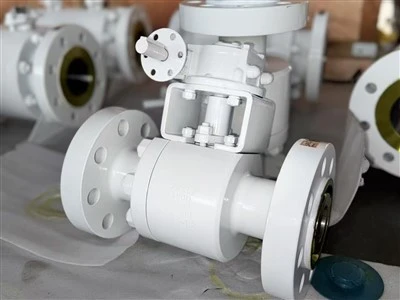
If you’re not sure what seat design is right for your application, or you’re tired of dealing with leakage on your current valves, hit us up to chat. We’ll walk through your needs, show you the different seat options, and make sure you get a valve that stops wasting product, meets safety standards, and doesn’t give you that drip-drip-drip headache. No jargon, no pressure—just straight talk from someone who’s been in this game long enough to know what works.
Ball Valve References
- API Standard 609, “Butterfly Valves for General Industrial Applications”, American Petroleum Institute, 2020.
- ISO 5752, “Industrial Valves – Metal Valves – Test Code for Leakage”, International Organization for Standardization, 2019.
- Valve Magazine, “Seat Design: The Key to Reducing Internal Leakage”, September 2021.
- ASME B16.34, “Valves – Flanged, Threaded, and Welding End”, American Society of Mechanical Engineers, 2022.
Zhejiang Poro Valve Manufacturing Co., Ltd.
With abundant experience, we are one of the most professional butterfly valve manufacturers and suppliers in China. We warmly welcome you to buy customized butterfly valve made in China here from our factory. If you have any enquiry about cooperation, please feel free to email us.
Address: PORO Ind. Park, Oubei Dongou Ind. Zone, Wenzhou, Zhejiang, China
E-mail: poro@cnporo.com
WebSite: https://www.cn-poro.com/
