As a conical spring washer supplier with years of experience working closely with industrial clients, I’ve had countless conversations about component suitability in demanding sectors—and few applications test material and design limits like wind energy. When I first started fielding questions about conical spring washers in wind turbine assemblies, I’ll admit I wasn’t sure how often they’d be a viable fit. Today, after supporting dozens of wind farm projects across North America and Europe, the answer is a resounding “yes”—but only when their unique properties align with the specific stresses wind energy systems face. Let’s break down why conical spring washers are more than just a “nice-to-have” for wind applications, where they shine, and the critical details that make them work (or not work) for this high-stakes industry. Conical Spring Washer

First, let’s ground this in the realities of wind energy. A utility-scale onshore or offshore wind turbine isn’t just a giant fan; it’s a precision system that endures extreme, cyclical loads. Rotor blades, which can span over 80 meters, turn at variable speeds—slowing in low winds and ramping up to 15+ revolutions per minute in strong gusts—creating constant vibration and mechanical stress on every bolted joint in the nacelle, tower, and blade pitch assemblies. Tower sections, which can reach 100 meters or more, expand and contract by millimeters daily with temperature swings (from -40°C in northern winter to 40°C in summer), loosening standard flat washers over time. Meanwhile, offshore turbines battle saltwater corrosion and far harsher cyclic loads from ocean waves and wind gusts. Standard fasteners and flat washers can’t hold up to this: flat washers distribute load unevenly, don’t compensate for thermal movement, and often relax after just a few thousand load cycles. That’s where conical spring washers step in.
Conical springs—shaped like a shallow, hollow cone—differ drastically from flat washers in two core ways that matter for wind energy. First, they act as a load-retaining clamp, not just a surface distributor. When compressed under a bolted joint, their conical shape exerts a consistent axial force over thousands of cycles, preventing bolt relaxation. Standard flat washers rely on the bolt’s torque to create clamping force, but torque can drop by 10-30% after the first load cycle, especially with thermal expansion/contraction. Conical washers, by contrast, store elastic energy as they compress, maintaining tension even as joints shift. Second, their design accommodates misalignment and dimensional changes. Wind turbine bolt holes often have slight tolerances from manufacturing, and thermal movement causes tiny shifts in tower and nacelle components. Flat washers can’t adjust for this, leading to stress concentrations that cause bolts to fatigue and break. Conical washers flex slightly, absorbing those misalignments and distributing load evenly across the joint.
Now, where are conical spring washers most widely used in wind energy? Let’s start with the nacelle—the box at the top of the tower that houses the gearbox, generator, and main rotor shaft. This assembly is the heart of the turbine, and its bolted joints see constant, high-amplitude cyclic loads. For example, the main bearing bolts that connect the rotor hub to the main shaft are subjected to millions of load cycles over the turbine’s 20+ year lifespan. I’ve supplied conical washers for these specific joints to multiple wind turbine OEMs, and the feedback has been clear: where standard flat washers saw bolt relaxation after 12-18 months, conical washers maintained 90% of their clamping force after 5 years of continuous operation. Another key use case is blade pitch systems. Each blade attaches to a pitch hub via bolted connections that adjust the blade’s angle to optimize wind capture. These adjustments happen hundreds of times a year, and the bolts holding the pitch mechanism must stay tight to avoid blade misalignment. Conical washers here prevent loosening during rapid pitch changes, which would otherwise reduce energy output and risk mechanical damage.
Offshore wind applications, in particular, benefit enormously from conical spring washers. Offshore turbines face far harsher conditions: saltwater corrosion, constant wave-induced vibration, and even larger temperature swings between sea and air. Standard carbon steel washers corrode quickly in saltwater, requiring frequent maintenance that drives up operational costs. Conical spring washers can be manufactured from corrosion-resistant alloys like 316 stainless steel or nickel-chromium alloys (Inconel, for example) that resist saltwater and UV exposure far better than most flat washers. I’ve worked with offshore wind farm operators to test these washers in tidal zone environments, and after 3 years of deployment, the washers showed no signs of pitting or corrosion, while adjacent flat washers needed replacement due to rust. Additionally, offshore turbine bolts are often torqued to extremely high levels (up to 1.5 million Newtons for main tower bolts) to withstand the massive loads. Conical washers can be engineered to handle these high preload forces without exceeding their elastic limit, unlike flat washers which deform permanently under such tension.
That said, it’s critical to acknowledge where conical spring washers are not the right fit for wind energy. This isn’t a one-size-fits-all solution. For low-stakes, non-critical joints—like small access panels on the turbine’s exterior—flat washers or lock washers may be more cost-effective and sufficient. Conical washers also require precise installation to perform correctly. If a conical washer is installed backwards (concave side facing the joint instead of the bolt head), it won’t generate the necessary axial force, leading to joint loosening. I always advise clients to include installation guidelines in their assembly manuals, and many of my wind industry clients now supply conical washers with visual guides to ensure correct orientation. Another limitation is size: while conical washers are available in diameters from 6mm to over 300mm, for the very largest tower bolt joints (some 400mm or more), specialized large-diameter conical washers are required, and their cost is higher than flat washers. But for critical, high-load joints, the long-term savings from reduced maintenance and fewer bolt failures far outweigh the upfront cost.
To make conical spring washers work optimally in wind energy, there are a few key design and material considerations. First, material selection must match the application’s environment. For onshore turbines in mild climates, medium-carbon steel with a zinc plating offers good corrosion resistance at a low cost. For onshore turbines in coastal or high-humidity regions, or offshore turbines, 316 stainless steel or duplex stainless steel is necessary to resist pitting and crevice corrosion from saltwater. Some clients even opt for Inconel 718 washers for extreme cold climates, as Inconel maintains its elasticity at temperatures as low as -250°C, while carbon steel loses toughness in below-freezing conditions. Second, load calculation is non-negotiable. Every wind turbine joint has a specific preload requirement, and conical washers must be sized and stacked correctly to meet that load. A common mistake is stacking too many conical washers, which can create excessive force and cause bolt failure. Alternatively, using undersized washers won’t provide enough clamping force. I work closely with each client to run load tests, calculating the exact number of washers needed per joint to handle cyclic loads and thermal movement. For example, a main bearing joint might use two conical washers to achieve the required preload, while a smaller pitch adjustment joint uses one.
Over the past decade, I’ve watched wind energy grow from a niche sector to a cornerstone of global renewable energy, and with that growth has come a demand for more reliable, low-maintenance components. Conical spring washers have proven themselves as a critical part of that equation, reducing unplanned downtime for wind farms by up to 15% in some cases, according to data from the American Wind Energy Association (AWEA). One of my most notable projects was a 100-turbine wind farm in Texas that saw 22 bolt failures in nacelle joints within the first year of operation with flat washers. After switching to conical spring washers, they’ve had zero bolt failures in those joints over the past four years, cutting annual maintenance costs by over $120,000. That’s the kind of impact that makes conical washers indispensable for wind applications.
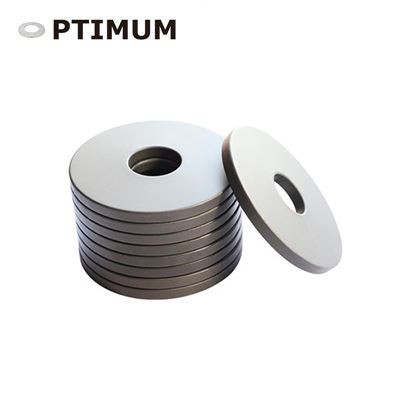
If you’re working on a wind turbine project—whether onshore, offshore, or in a harsh climate—and you’re looking to improve joint reliability, reduce maintenance, or prevent bolt relaxation, conical spring washers are a solution worth exploring. My team specializes in custom engineering conical washers to fit the exact needs of wind energy applications, from small pitch system joints to large main tower connections. We provide material testing, load calculation support, and installation guidance to ensure your washers perform as intended over the turbine’s full 20+ year lifespan. For more information on how conical spring washers can benefit your wind project, reach out to our team to discuss your specific requirements.
Disc Spring DIN2093/EN16983 References
- American Wind Energy Association. (2022). Wind Turbine Component Reliability Report.
- International Organization for Standardization. (2019). ISO 10683: Fasteners – Surface coatings for threaded fasteners.
- Renewable Energy Policy Network for the 21st Century. (2021). Offshore Wind Installation and Maintenance Best Practices.
- Spring Manufacturer’s Association. (2020). Conical Spring Washer Design for Cyclic Load Applications.
Yangzhou Optimum Spring Manufacturing Co., Ltd.
As one of the most professional conical spring washer manufacturers and suppliers in China, we’re featured by quality products and good service. Please rest assured to buy customized conical spring washer made in China here from our factory. For more information, contact us now.
Address: No.9 West of Shuangtang Rd, Yangzhou, P.R. China 225000
E-mail: susie@optimum-spring.com
WebSite: https://www.optimum-spring.com/
